

The Paseo of Colombia
Overview
Ramón Linares
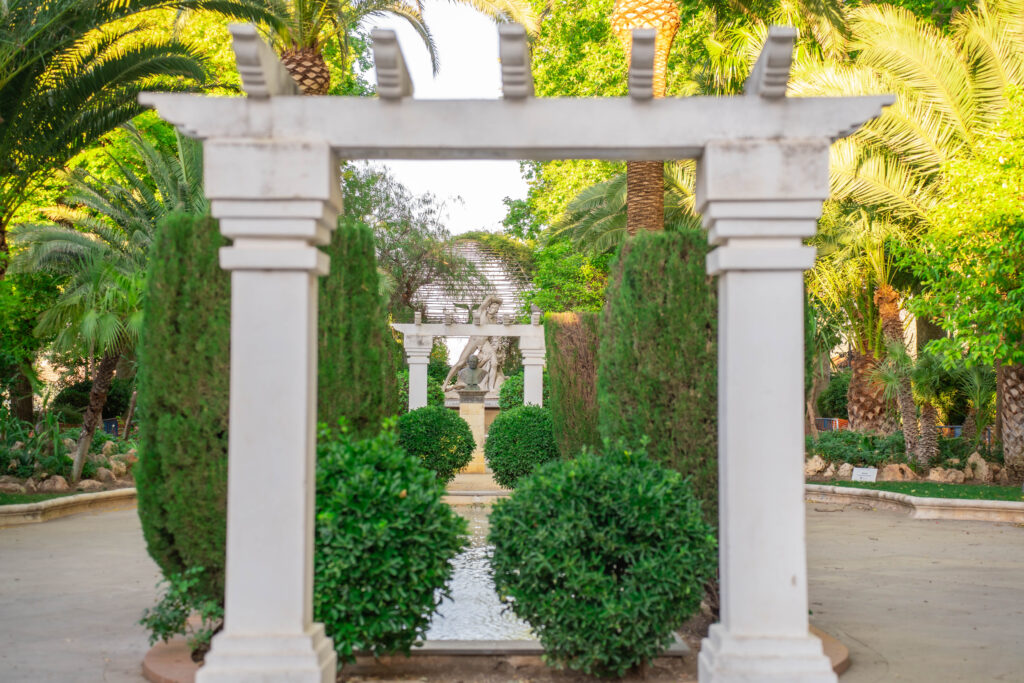
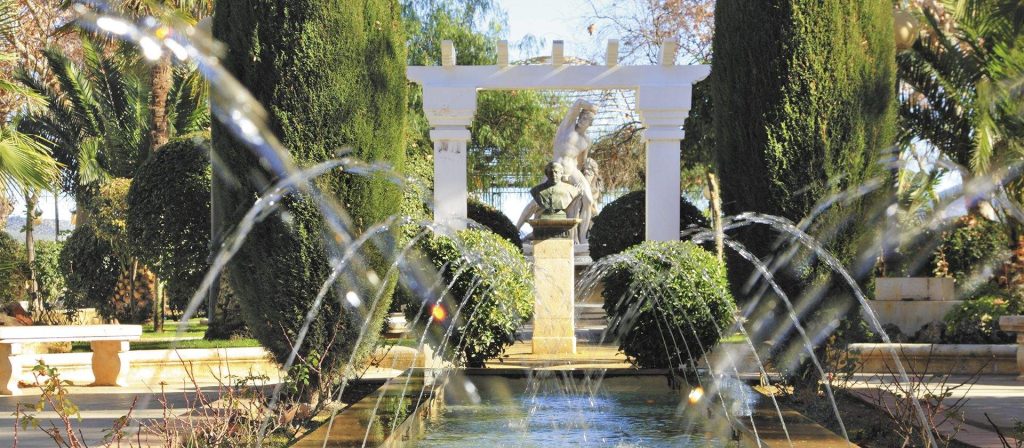
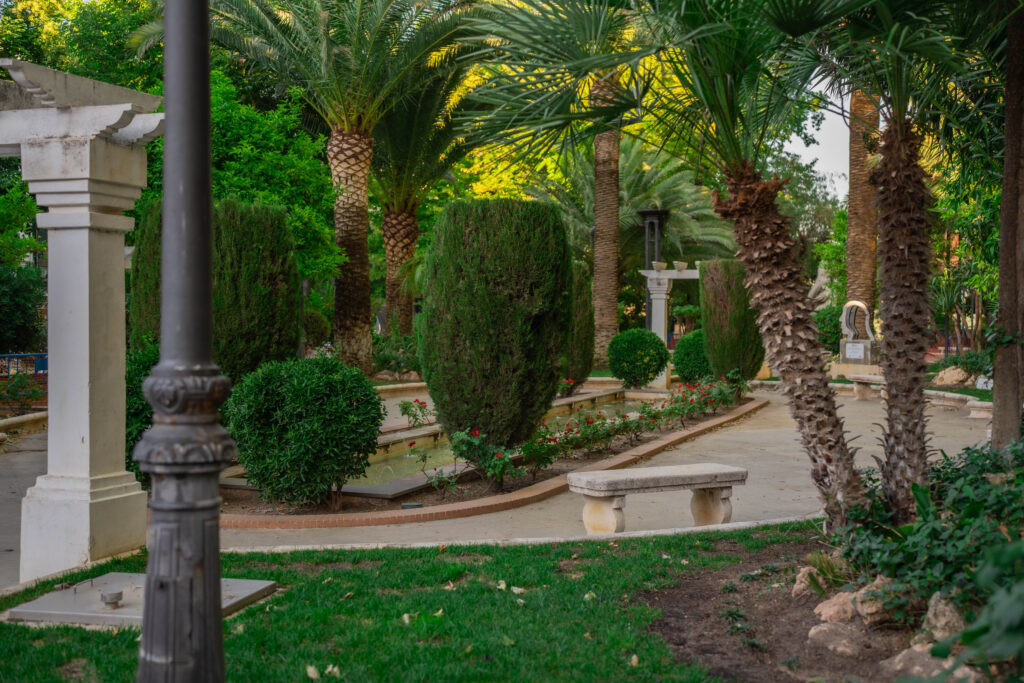
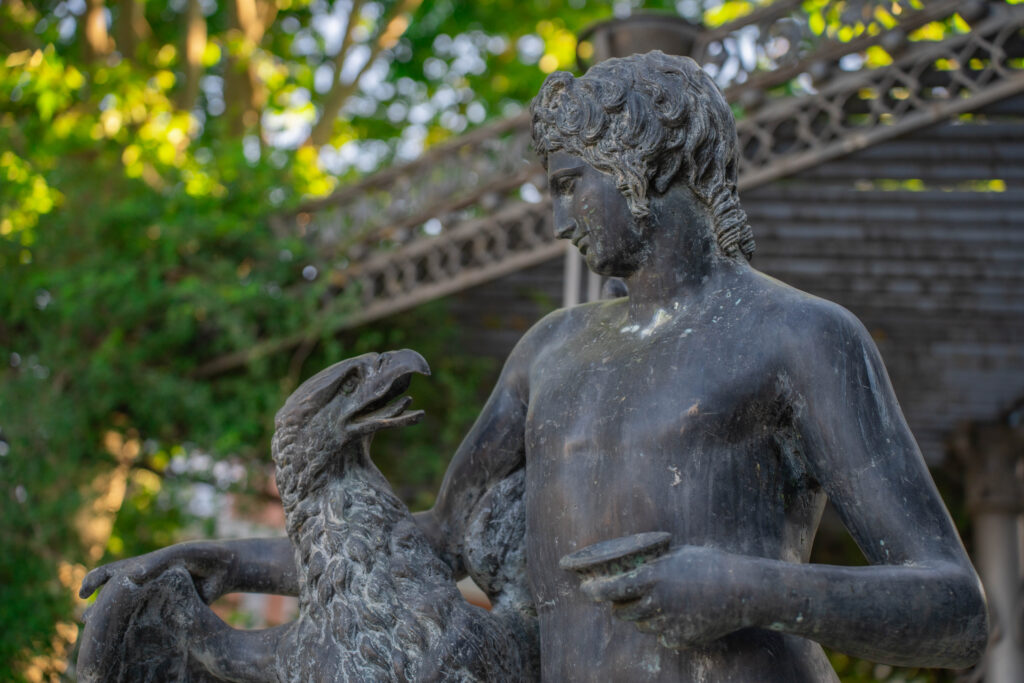
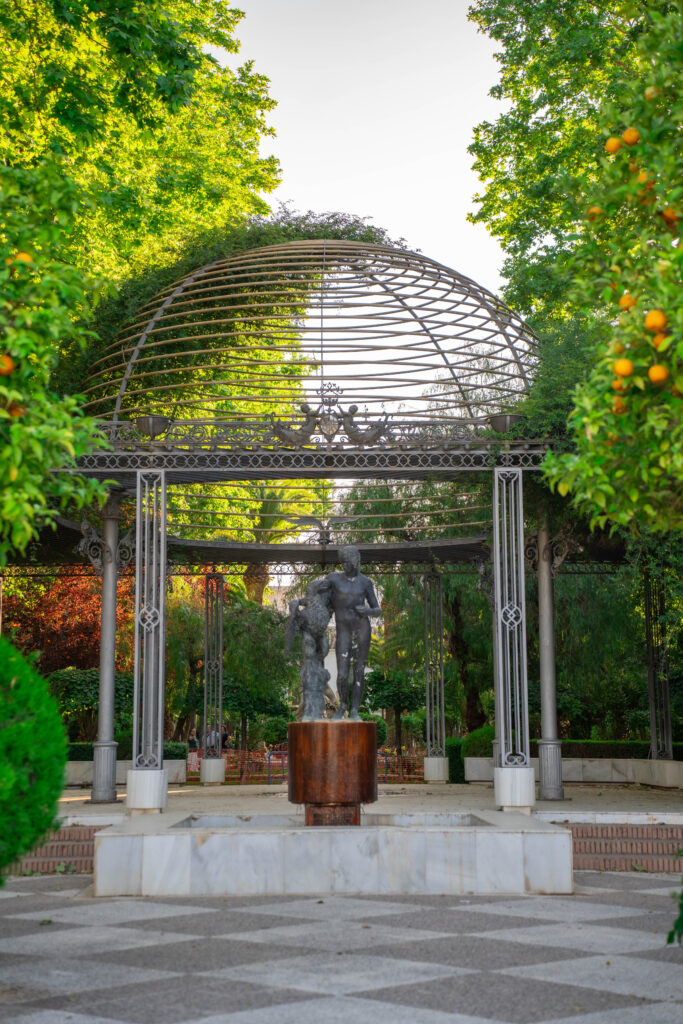
The modern design of the Paseo de Colombia as a public space was the project by Ramón Linares in 1898: he oversaw its construction and promoted the private fundraising which made it possible. The Paseo owes its layout to its location on the edge of the Adarve cliff: it is defined by two wide terraces lined with wrought-iron lanterns, from which one can contemplate the countryside. The central space is awash with plants, with a number of fountains of varying designs and vintage, which give an idea of the number of renovations carried out. In the latest of these, a pergola was erected in honour of important local figures, and in front of it, a bronze reproduction of the statue of Ganymede by Álvarez Cubero.
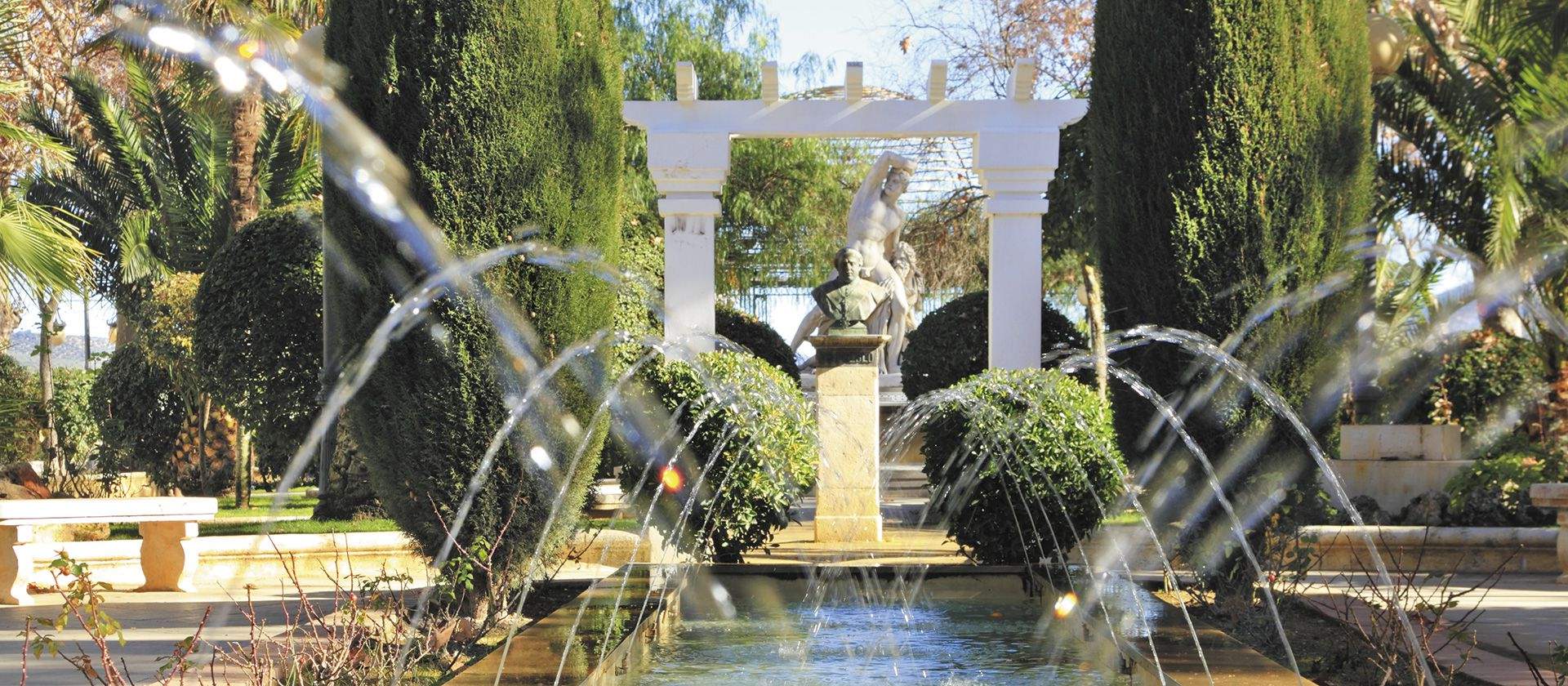
The park was called the Paseo del Adarve until 1923, when the name was changed to celebrate the second centenary of the birth of archbishop Caballero y Góngora, the viceroy of Nueva Granada in Colombia. There is a bust of the archbishop in the centre of the garden, which is also known commonly as the Paseo de las Rosas – the rose path.
The Paseo has the most varied vegetation of all Priego’s parks: on its edges, enormous banana trees lend cool shade, and there are splendid examples of horse chestnut, lime, acacia, cedar, and maple. The flowerbeds abound with mimosa, pyracanthus, lilac, euonymus – and above all, the rose which gives the park its popular name.
LA DEFENSA DE ZARAGOZA
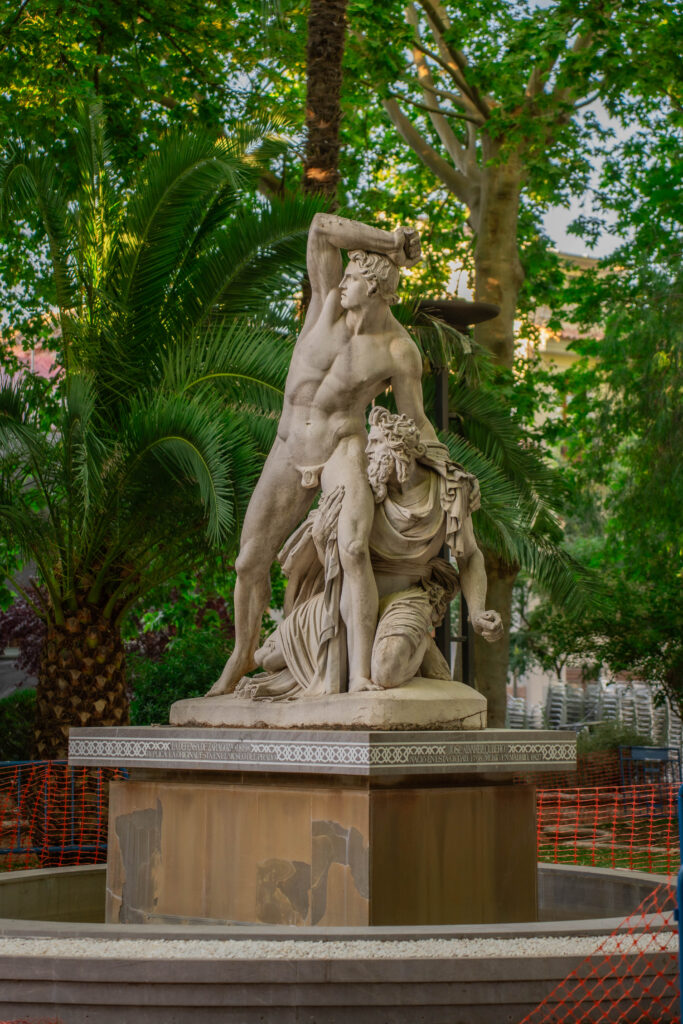
The sculptural group La Defensa de Zaragoza (“The Defence of Saragossa”) was created by José Álvarez Cubero in Rom in 1818 and became immediately his masterpiece.
There are two theories about its meaning. Some experts say Álvarez Cubero was inspired by the Iliad and the sculpture represents Nestor, King of Pylos, mortally wounded, and his son, Antilochus, who protects him. Other historians claim that this work represents an episode of the Spanish War of Independence (1808-1814) in the Aragon Autonomous Community. José Álvarez Cubero, who had received a prize from hands of Napoleon in Paris in 1804, opposed him later, when the emperor usurped the throne of Spain and invaded the country.
In 1823, with financial support of King Ferdinand VII, Álvarez Cubero created this marble sculpture (there was a first version made of plaster) which was moved to Madrid.
La Defensa de Zaragoza was located in different places of the capital: the gardens of the National Library, the Casón del Buen Retiro during the 1900s… In 2005, the sculpture was brought to the Museo del Prado in order to be restored. Nowadays, we can admire this sculpture in the hall of this museum.
“LA DEFENSA…” in Priego.
The idea of creating a copy of the Defensa de Zaragoza for Priego arose in 1968, when José Luis Gámiz Valverde became a member of the Royal Academy of Sciences, Letters and Arts of Cordoba. He gave a speech about Álvarez Cubero, who was almost unknown. However, the project fell into oblivion until 2005, when some inhabitants of Priego living in Madrid told our local government that the sculpture was about to be restored and it was their chance to make a copy.
The city council of Priego made contact with the sculpture section deputy director of El Prado and got her authorisation. The enterprise Factum Arte made the copy. In Priego, there was a long debate about the location of the sculpture, which was finally placed in the park Paseo de Colombia in 2010.
In this park there is another sculpture of Álvarez Cubero: a bronze copy of Ganímedes: el copero de los Dioses (“Ganymede: the cupbearer of the Gods”), located under a pergola, in front of the Balcón del Adarve.
José Álvarez Cubero en Priego de Córdoba : https://onx.la/30df0
José Álvarez Cubero en Europa : https://onx.la/0d425
Key details of the place
Gallery