Natural Environment
Priego in a thousand colours
In the Subbética Cordobesa lies the Sierras Subbéticas Natural Park, an area of great ecological, geological and scenic wealth that stretches across eight municipalities, including Priego de Córdoba.
This area is also part of the Sierras Subbéticas UNESCO Global Geopark, recognised for the value of its mountains, karst landforms, fossils and geological formations.
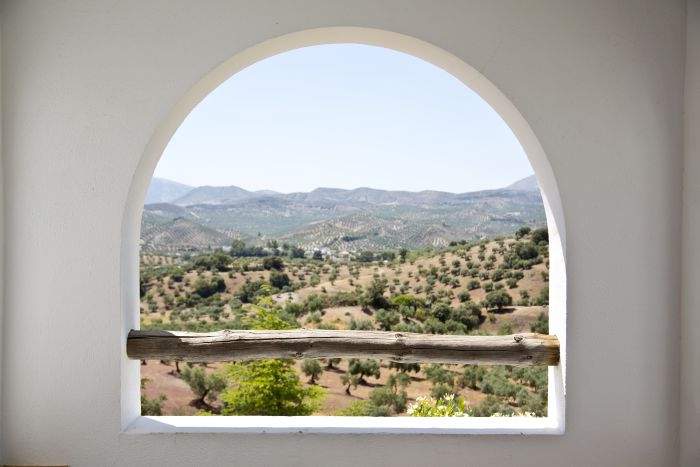
Priego is nature in the heart of Andalusia: the blue of the sky, the greys and ochres of the rock, the green of olive groves and holm oaks, and the yellow, pink and violet hues of its vegetation create a landscape full of colour and biodiversity.
Sierras Subbéticas Natural Park
The Subbetica region in the southeast corner of the province of Córdoba covers an area of 159,190 hectares, and has a population of some 113,000 people, spread over 14 towns and villages. The Andalucian government’s environment agency has declared part of the region a national park, the Parque Natural de las Sierras Subbéticas de Córdoba, an area of major ecological importance and natural beauty, which includes the mountain ranges of Cabra, Rute and the Horconera, near Priego. The park covers an area of 31,568 hectares, uniting the towns of Cabra, Carcabuey, Doña Mencía, Iznájar, Luque, Rute, Zuheros and Priego itself.
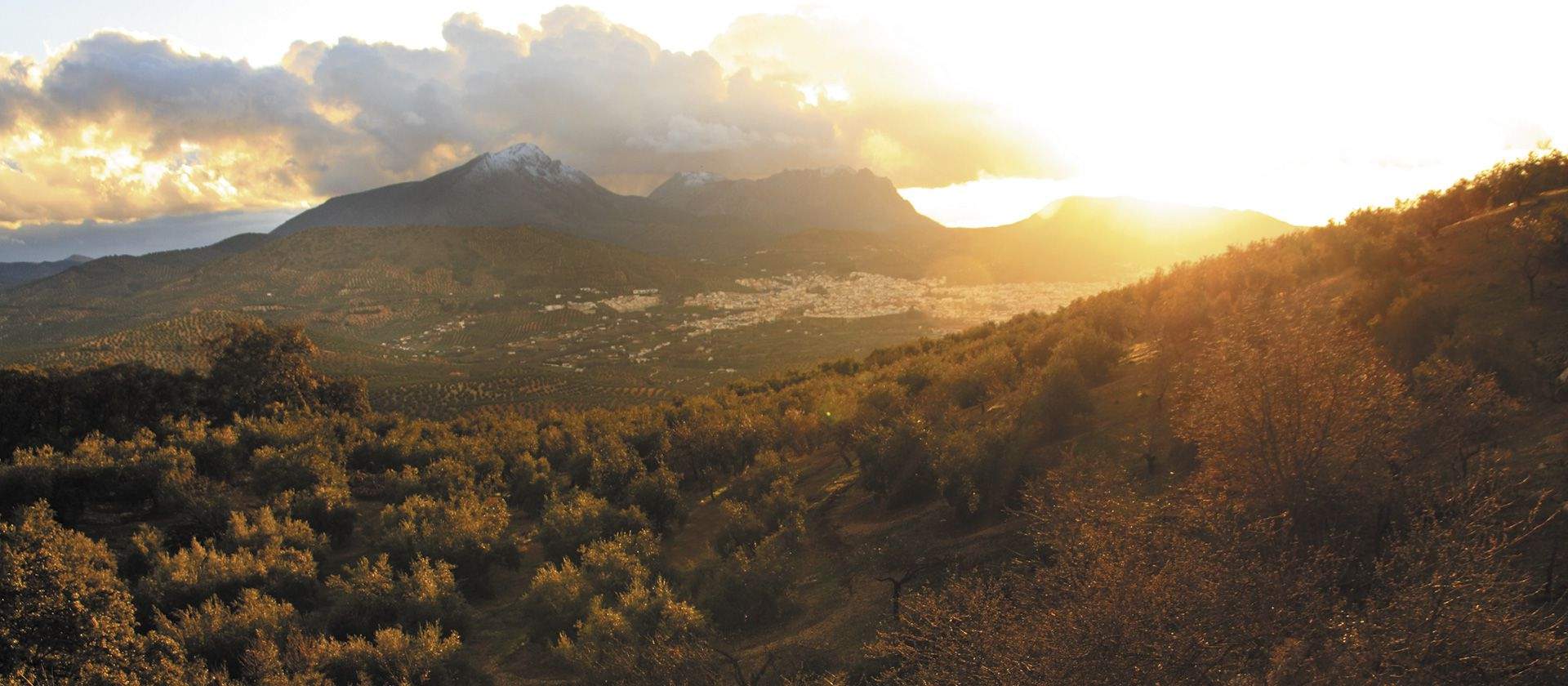
The Sierra Horconera is particularly interesting to geologists, with its own flora and fauna, and stunningly varied scenery. Towering above it are the peaks of Bermejo, 1,476 metres high; and the highest mountain in Córdoba province, La Tiñosa , 1,570 metres, which combine to form an impressive limestone massif.
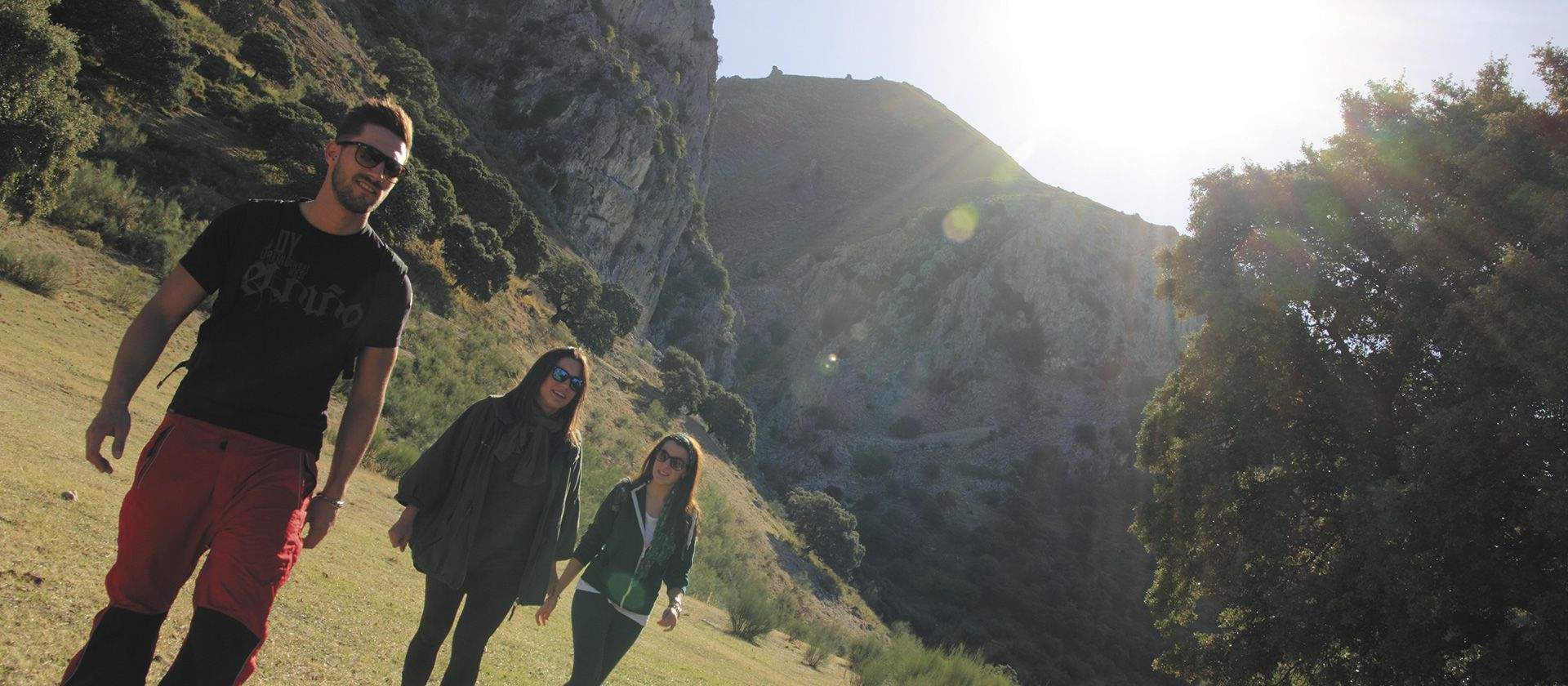
Deep valleys, soaring peaks, and almost vertical rock faces make up a rocky terrain which can be sometimes covered with snow.

The rock, grey and ochre, contrasts with the green of the vegetation that grows out of it. The vegetation of this protected area, typically Mediterranean, is rich in holm oaks and gall oaks, along with maples and nettle trees.
One of the Park’s great attractions is its many endemic species (Iberian, Baetic, Ibero-North African and local) and others whose flowering follows one another throughout the year, such as irises, daffodils, peonies and orchids; alongside them stand out beautiful shrubs such as mastic and wild olive, among others.
When you set off on your walk, don’t forget to pack a pair of binoculars: with a bit of skill you will spot in the sky the unmistakable silhouette of the golden eagle, which nests every year on one of the steepest cliffs, often accompanied by the peregrine falcon and the griffon vulture, which has numerous breeding pairs in this part of the Subbéticas.
At lower altitudes you may come across black wheatears, hoopoes, bee-eaters, cuckoos or red-legged partridges. Notable mammals include the wildcat, wild boar, rabbit, fox and a very peculiar species, Cabrera’s water shrew. Among the reptiles, the Montpellier snake stands out.