


Traditional Recipes
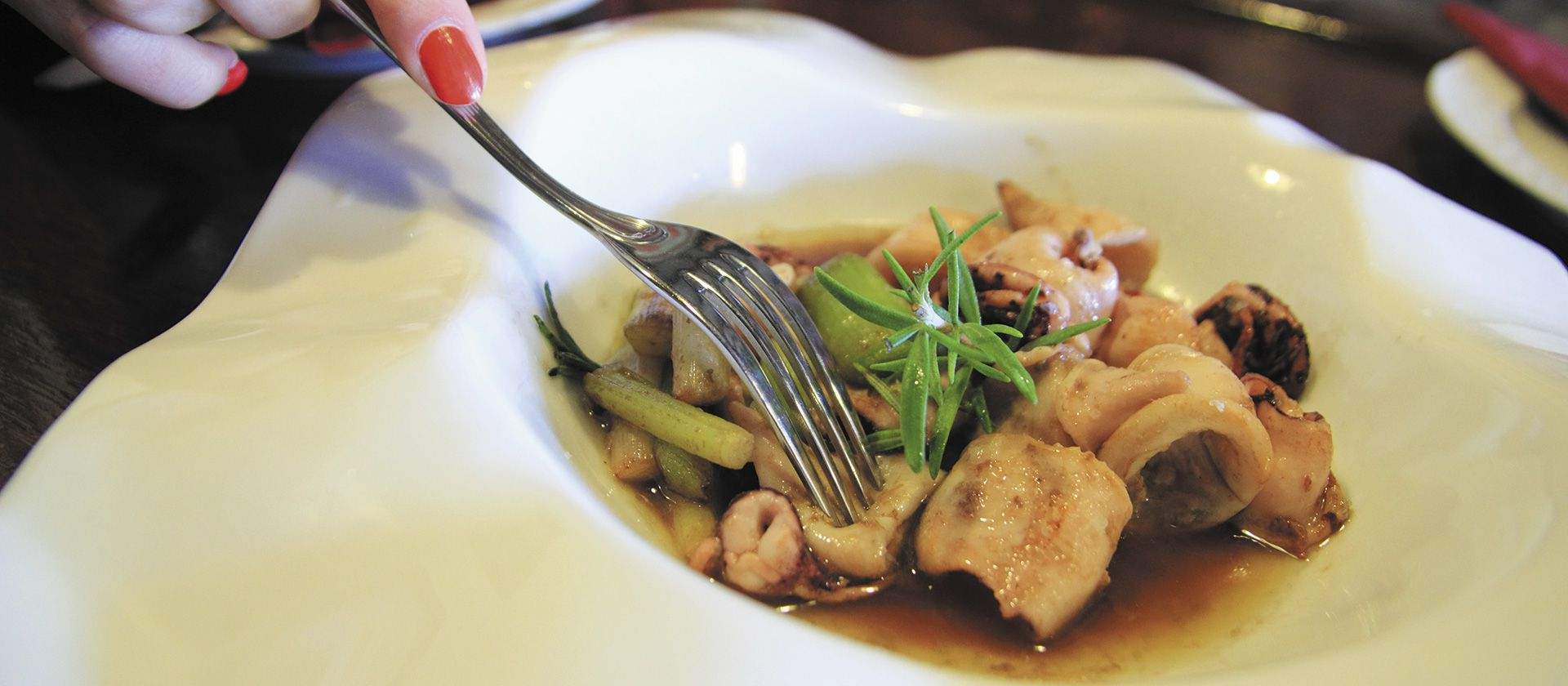
One of your reasons to revisit Priego will be undoubtedly its traditional cuisine: olive oil juices, artisanal products like “turrolate” or sausages like “relleno de Carnaval”, an explosion of flavour in your mouth.
Wisdom in this land is not only transmitted orally, but also through taste. Our traditional cuisine is full of dishes you can cook at home thanks to the cookery book “Entre olivares”, a selection of recipes whose star product is always the Extra Virgin Olive Oil (AOVE).
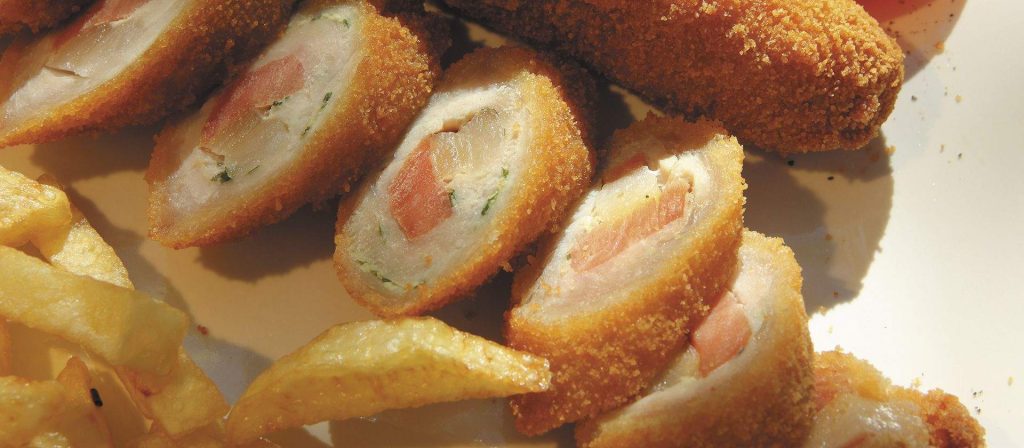
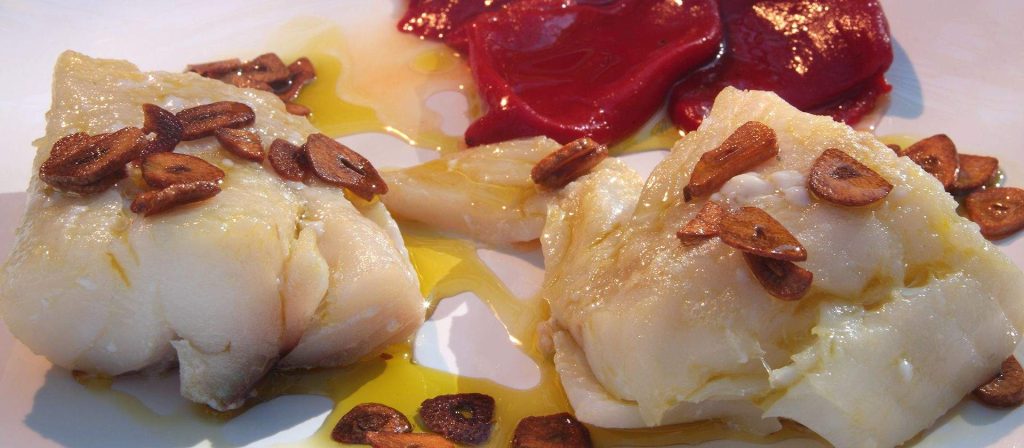
In this book, you will find traditional dishes ranging from scrambled eggs to meat and fish recipes like “rabo de toro” (oxtail), cod with Extra Virgin Olive Oil, “flamenquín”, etc.
However, if you do a culinary tour to discover the most typical dishes of our region, you will not only be surprised by its taste and aroma, but also by its colour.
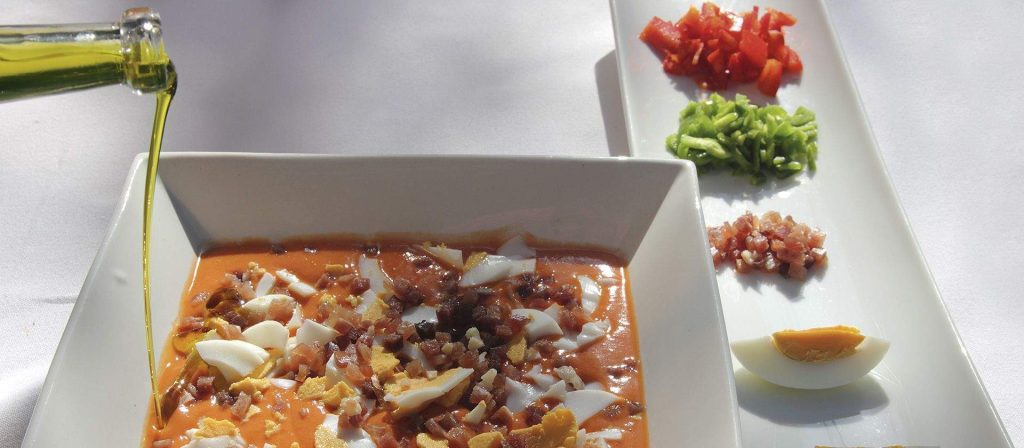
Red tomatoes, green Extra Virgin Olive Oil and a white and yellow garnish of egg merge together to create the “salmorejo”, one of our most surprising recipes.
“Remojón” will make your mouth water as well. This is a typical dish made of oranges, cod and, obviously, Extra Virgin Olive Oil. Can you imagine the colour of this dish?
The “Relleno de Carnaval” is a kind of sausage that we made for this celebration and which has become very typical of our region.
Another example of our traditional cuisine is the “revuelto de collejas” (scrambled eggs with bladder campion), that you can find in many of our restaurants and tapas-bars.
In addition, Priego offers you a delicious selection of traditional sweets like “barquillos”, “isabelas”, “tocino de cielo”, millefeuilles…
But our star product is undoubtedly the “turrolate”, a chocolate bar with almonds or hazelnuts.
During Easter Week we also elaborate traditional products like “pestiños” and sweet pasties; in Christmas, you could taste our delicious “mantecados” and the “arresoli”, a drink made of coffee, anisette, sugar, cinnamon and herbs.
A cuisine full of typical products to be tasted and shared with your loved ones. .
Recipe book
The aim of this recipe book is not to offer a gastronomic study of the area, but rather to take you on a brief culinary journey through our district. The recipes have been chosen to showcase a traditional cuisine that can still be enjoyed today in the restaurants and tapas bars of the towns that make up the D.O.P. Priego de Córdoba (Protected Designation of Origin) district: Almedinilla, Carcabuey, Fuente Tójar and Priego de Córdoba, prepared with our finest product: extra virgin olive oil with D.O.P. Priego de Córdoba.
It is a clear example of the Mediterranean diet, recognised as Intangible Cultural Heritage of Humanity, in which extra virgin olive oil is the essential ingredient around which most of our dishes are prepared. We hope this guide to the gastronomy of our land will be all you need to enjoy our exquisite dishes, in a unique setting where olive groves, culture and tradition are closely linked.
- Breakfasts and Afternoon Snacks
Breakfasts and Afternoon Snacks
MILLER'S BREAKFAST
4
10′
Low
Easy
- Ingredients
- "Mollete" (soft bread roll)
- Extra virgin olive oil
- Method
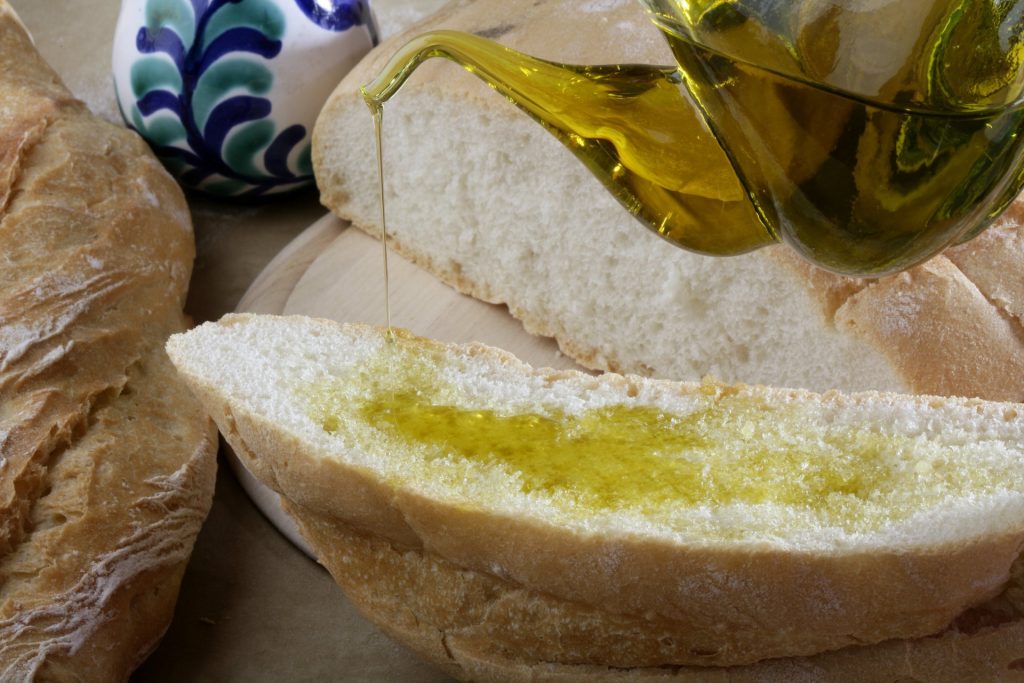
The miller’s breakfast is made with a type of soft-dough bread with a delicately crisp crust and a dense, slightly open crumb; the rolls are small, oval and fairly flat.
This bread is eaten at breakfast and also as an afternoon snack (sandwiches). It is a bread to be eaten on the day, and once it has gone a little stale it is usually toasted to revive it. This kind of breakfast consists of the roll split open with plenty of extra virgin olive oil, and it can be accompanied by:
salted fish, such as salt cod or anchovies; pickles such as olives; sweet things such as chocolate or turrolates; vegetables such as tomatoes, or fruit.
- Tips
With such a wide choice of accompaniments, this breakfast can become a mid-morning snack or an afternoon snack, keeping cured meats or sweet things such as turrolate for the latter. The way the bread is cut also matters: if the mollete is cut lengthways from end to end, like a boat, and a hollow is made in the crumb and filled with oil, it becomes a “hoyo” or “joyo”, very popular as an afternoon snack with a little chocolate. There is also the custom of pouring the oil onto a plate, tearing the mollete into pieces and dipping them in it, accompanied by olives, ham, cheese, fruit, etc., along with milk drinks, coffee, juices and, why not, if the occasion arises and the morning’s work is already done, a glass of wine.
Breakfasts and Afternoon Snacks
TEJERINGOS OR CHURROS
4
30′
Low
Moderate
- Ingredients
- 300 ml of lukewarm water.
- 250 g of flour.
- 5 g of salt.
- 2.5 ml of vinegar.
- 5 g of bicarbonate of soda.
- Extra virgin olive oil for frying.
- Method
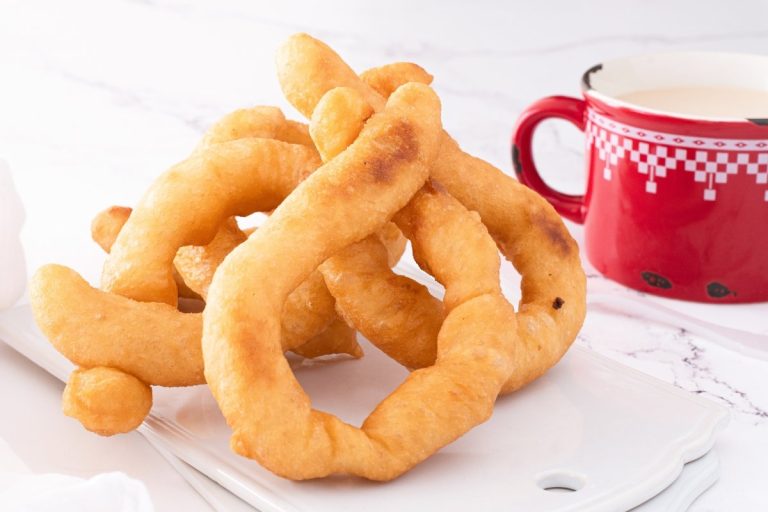
1.- Put all the ingredients in a bowl and mix, then leave to rest for a few minutes.
2.- Put the dough into a churro maker or a piping bag with a plain nozzle and fry in moderately hot oil in circles or loops, turning until golden on both sides.
3.- Serve hot with chocolate, milk or coffee.
- Tips
- This dough is quite soft, which is why we use a churro maker or a piping bag.
- The oil must be hot but not too hot, otherwise the inside will not cook through.
- You can add a little baking powder (raising agent), such as Royal.
- They are usually served threaded on a rush to carry them, because if they are put in a plastic bag they go soft.
- Mainly eaten at breakfast.
Breakfasts and Afternoon Snacks
MAGDALENAS (SPANISH MUFFINS)
10
60′
Low
Moderate
- Ingredients
- 1 kg of cake flour.
- 1 kg of sugar.
- 950 ml of extra virgin olive oil.
- 20 eggs.
- 3 sachets of gaseosa (effervescent raising powder).
- Grated zest of 2 lemons.
- Peel of one orange.
- Sugar for decorating.

- Method
1.- Heat the oil with the orange peel; once fried, strain and leave to cool.
2.- Beat the eggs with the oil, add the sugar and the lemon zest. Keep beating and mix in the flour. Finally, add the gaseosa to the mixture.
3.- Using a spoon or piping bag, pour the mixture into the paper cases (round fluted paper moulds) until just over ¾ full. Sprinkle a little sugar on top.
4.- Bake at 190º for 10/15 minutes or until risen and lightly golden.
- Tips
- Use fresh free-range eggs; they are yellower and have a better flavour.
- When mixing the oil with the eggs, the oil must be cold, otherwise the egg would curdle.
- This mixture does not need excessive beating; beat it just enough for all the ingredients to combine well.
- The larger the moulds, the longer the baking time, and the temperature will need to be watched; the smaller they are, the higher the baking temperature and the shorter the time.
- Magdalenas keep well in a covered container and freeze well, as long as they are properly sealed in a container or bag.
- Starters and Salads
Starters and Salads
DRESSED OLIVES
–
–
Low
Easy
- Ingredients
- Green olives
- Salt
- Water
- Assorted seasonings
- Method
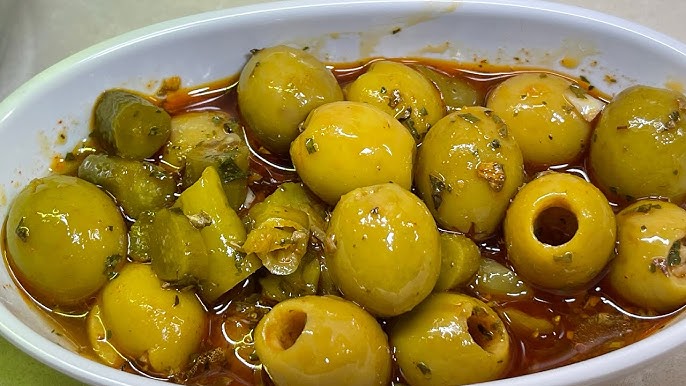
1.- Put the olives in a glass jar with water and seal.
2.- Leave them to stand for several months. By tradition, on the first Friday of Lent the olives are taken out and washed; a layer of olives is placed in the same glass jar and the seasonings are added, such as garlic, lemon and orange peel, thyme, bay leaf, fennel, etc., and the process is repeated until all the olives are used.
3.- A strong brine of at least 10% is added and they are left to marinate again for at least a month. By tradition, they will be ready to eat by Holy Week. In any case, these olives keep for a long time thanks to the salt.
- Tips
- Once you start eating them, they need to be eaten steadily so that they do not turn sour.
- If they are very salty, you can soak them in water (only the ones you are going to eat) to remove the excess salt.
- These olives can even last more than a year, as long as the jar is not opened and they are well sealed with enough water. Because they keep so long, it is very common to eat this kind of olive in summer.
- They can be slit so that they absorb the brine better, but they will always be saltier.
Starters and Salads
OLIVES CURED IN CAUSTIC SODA
–
–
Low
Moderate
- Ingredients
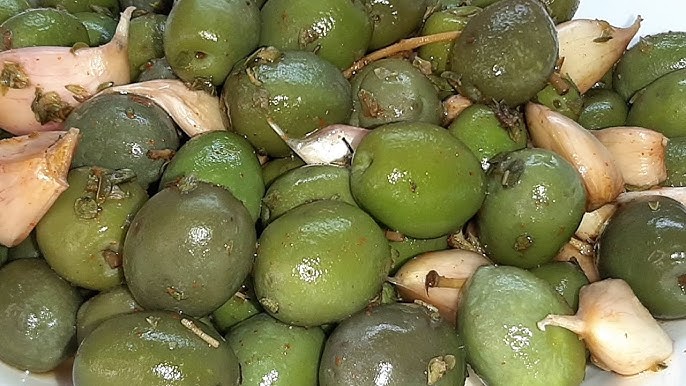
- 10/11 kg of raw green olives.
- 250 g of caustic soda flakes.
- Salt.
- Water.
- Assorted seasonings.
- Lemon.
- Red pepper or corneta pepper (choricero pepper).
- Orange.
- Garlic.
- Method
1.- Put all the ingredients in a bowl and mix, then leave to rest for a few minutes.
2.- Put the dough into a churro maker or a piping bag with a plain nozzle and fry in moderately hot oil in circles or loops, turning until golden on both sides.
3.- Serve hot with chocolate, milk or coffee.
- Tips
- This dough is quite soft, which is why we use a churro maker or a piping bag.
- The oil must be hot but not too hot, otherwise the inside will not cook through.
- You can add a little baking powder (raising agent), such as Royal.
- They are usually served threaded on a rush to carry them, because if they are put in a plastic bag they go soft.
- Mainly eaten at breakfast.
Starters and Salads
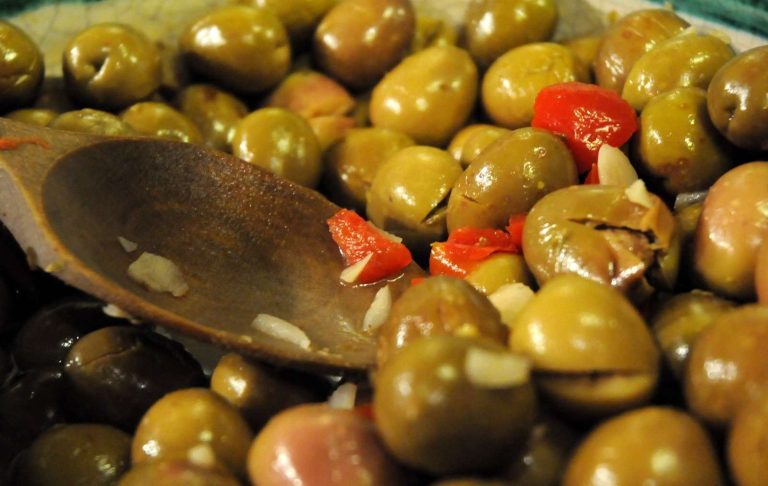
“MAJÁS” OLIVES (CRUSHED OLIVES)
–
–
Low
Moderate
- Ingredients
- Slightly ripe olives.
- Salt.
- Water.
- Assorted seasonings.
- Method
1.- Wash the olives and crush them on a wooden board using a pestle.
2.- Put them in water, changing it every day until they are no longer bitter and the water runs clear (roughly 15 to 30 days).
3.- Put them in a non-reactive container with seasonings such as lemon, orange, fennel, garlic, bay leaf, pepper, oregano, thyme, etc. and add a brine made with unchlorinated water (it can be mineral water), a little salt and vinegar.
4.- Leave them to marinate for a few days until they take on the flavour of the seasoning.
- Tips
- These olives do not keep for long, so they should be made in small quantities so that they can be eaten in time.
- If you like, you can slit the olives instead of crushing them, but they will need more days in water to cure.
- The seasonings are only a guide and depend on the taste of the person making them.
- You can also remove the stone when cracking them; this way they cure sooner, but on the other hand quite a lot of the olive flesh is lost in the washing.
- Meat
Meat
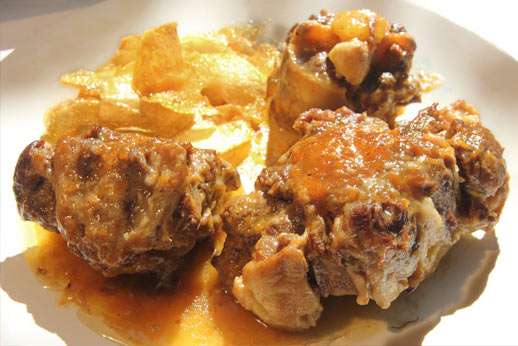
RABO DE TORO (OXTAIL)
2
1h 30′
Medium
Moderate
- Ingredients
- 1 oxtail (1.2 to 1.5).
- 400 g of tomato.
- 200 g of onion.
- 50 g of carrot.
- 50 g of red pepper.
- 50 g of green pepper.
- 50 g of celery.
- 1/2 head of garlic.
- 250 ml of oloroso or amontillado sherry.
- 75 ml of brandy.
- 150 ml of extra virgin olive oil.
- Salt.
- 2 bay leaves.
- 3 or 4 cloves.
- Pepper.
- Paprika.
- Sugar.
- Method
1.- Cut the oxtail through the joints between the bones and trim off any fat if necessary. Set aside, covered, in a container.
2.- Clean and wash the vegetables. Peel the onion and cut it into small pieces, slice the garlic, and peel and dice the carrot. Remove the strings from the celery and cut it into small pieces; finally, peel and dice the tomato. Set all the vegetables aside, keeping the tomato separate from the rest.
3.- Heat the oil in a pressure cooker; when it is hot, add the oxtail and brown it on all sides. Pour in the brandy (careful, as it may catch fire) and let it evaporate, then add the vegetables except the tomato and sauté for a few minutes. When the vegetables are slightly soft, pour in the wine and let the alcohol evaporate, then season with the spices and finally add the tomato and a little sugar. If there seems to be too little liquid, you can add a little meat stock or water (not too much) and put the lid on.
4.- Cook for 25 to 40 minutes, depending on the type of pressure cooker you have. Once the meat is cooked and tender, take it out of the pot and set aside. Use the rest to make the sauce: pass it through a food mill and put it back on the heat; if it is too runny, let it reduce until it has the texture of a sauce, and if it is too thick, add a little liquid (stock or water). Once the sauce is hot, add the oxtail and finish heating through.
- Tips
- To boost the flavour, we can add meat extract when the wine goes into the recipe, or a little soy sauce; this will also give the sauce a darker colour.
- As well as the seasonings already mentioned, you can use: aromatic herbs such as parsley, thyme or rosemary; seasonings such as star anise, cardamom, spice mixes, saffron, cumin, etc.
- Oxtail needs long cooking, so we must keep an eye on how it is cooking: check its tenderness once cooked, and if it is not quite ready yet, put it back on the heat for another five or ten minutes.
Meat
CARRILLADA (BRAISED PORK CHEEK)
4
45′
High
Moderate
- Ingredients
- 1 kg of pork cheeks.
- 300 g of tomato.
- 200 g of onion.
- 75 g of carrot.
- 50 g of red pepper.
- 50 g of green pepper.
- 6 cloves of garlic.
- Salt.
- 3 bay leaves.
- 3 or 4 cloves.
- Saffron threads.
- Pepper.
- Paprika.
- 250 ml of white wine.
- 75 ml of brandy.
- 150 ml of extra virgin olive oil.
- Method
1.- Trim the fat and sinew from the pork cheeks and set aside.
2.- Clean and peel the vegetables, cutting them into even, not too large pieces. Keep the tomato separate from the rest.
3.- Heat olive oil in a pressure cooker. When it is hot, add the pork cheeks and brown them on both sides. Pour in the brandy (carefully, as it may catch fire) and let it evaporate, add the seasonings together with the vegetables except the tomato, cook for a few minutes and add the wine. Let it reduce and add the tomato, the sugar and a little stock or water if necessary.
4.- Put the lid on and cook for 20 to 30 minutes. Take out the pork cheeks and sieve the sauce (with a food mill, as a blender changes the colour and texture). Reheat the sauce together with the pork cheeks and serve.
- Tips
- As well as the seasonings already mentioned, you can use: thyme, oregano, rosemary, aniseed, orange, ginger, cumin, chilli, etc. Use them sparingly, as it is not advisable for one to dominate at the expense of the others.
- The sauce should be nicely thickened; to achieve this, let it reduce if necessary, or thicken it with starch if it is not thick enough.
- To boost the flavour, you can add a little soy sauce, meat juices or glutamate.
Meat
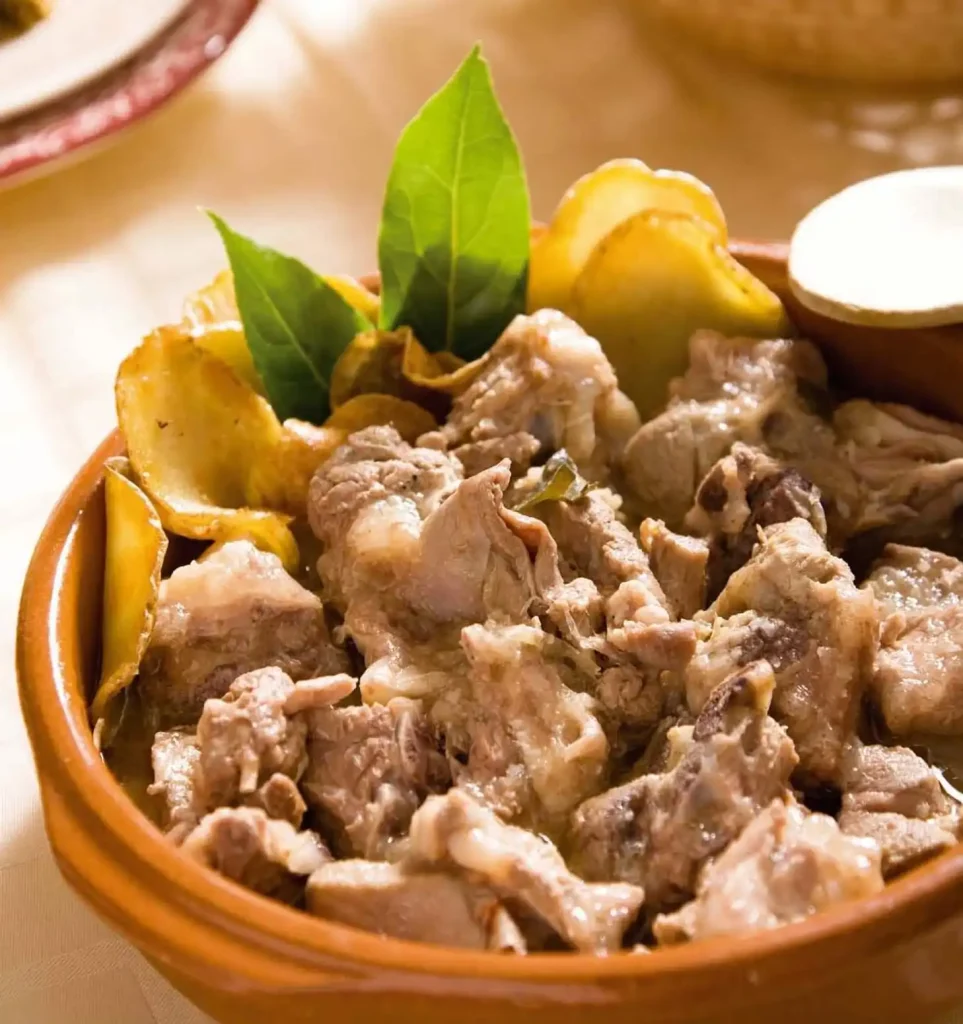
CHOTO AL AJILLO (KID GOAT WITH GARLIC)
4
45′
High
Moderate
- Ingredients
- 1.5 kg of choto (young kid goat).
- 2 heads of garlic.
- 150 ml of extra virgin olive oil.
- 3 bay leaves.
- Black peppercorns.
- Saffron threads.
- Method
1.- Cut the kid into even pieces and add salt, pepper and a few bay leaves.
2.- In a large pan or frying pan, pour in a little olive oil, heat it and add the peeled head of garlic, then add the bay leaves and the kid over a high heat. Brown a little. Add the wine and the saffron threads, leaving it until the liquid has evaporated. Lower the heat, cover and cook until tender. If it is not tender yet, add a little water and leave to cook over a low heat, covered.
3.- Before taking it off the heat, peel a couple of garlic cloves and crush them; add them to the sauce, stir to mix and remove from the heat. It can be served with chips.
- Tips
- Use a young kid with tender meat.
- Cook over a low heat and taste the meat until it melts in the mouth; the signs that the meat is ready are that the liquid has evaporated and the garlic is tender.
- Apart from the seasonings mentioned above, you can add paprika, thyme, oregano, onion, red and green pepper, etc.
- Fish
Fish
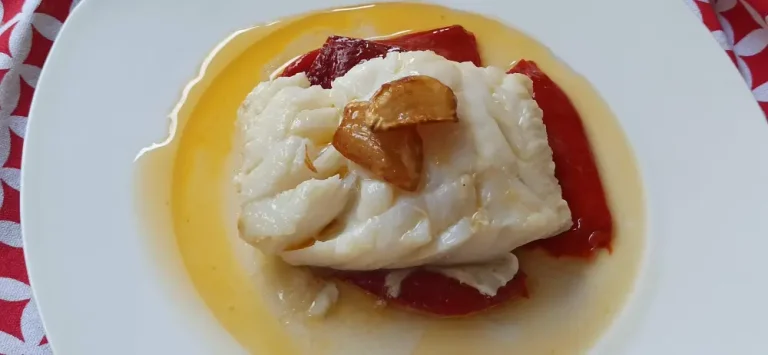
SALT COD CONFIT
4
45′
Medium/High
Easy
- Ingredients
- 1 kg of salt cod.
- 3 cloves of garlic.
- Piquillo peppers (small sweet roasted red peppers).
- 500 l of extra virgin olive oil.
- Method
1.- Cut the salt cod into pieces and soak it for 48 hours, changing the water 4 or 5 times a day.
2.- In a large frying pan, gently heat some olive oil. Add the cod and cook over a low heat until tender.
3.- Slice three garlic cloves and toast them lightly in the olive oil.
4.- Put a few drops of olive oil in a frying pan and sauté the piquillo peppers. Serve the cod with the golden garlic and the peppers.
- Tips
- Use a large salt cod with white loins.
- Always keep an eye on the temperature of the confit; it must never exceed 80º, and when it starts to boil we take it off the heat.
- The gelatine obtained can be kept and used to make a pil-pil (emulsified garlic and oil sauce) for another dish, by emulsifying this gelatine cold with a little water and some of the oil from the confit.
- To keep the cod, put it in a bowl with the oil and cover it with cling film.
- To reheat, put it back on the heat with a little oil in a frying pan, or heat it in the microwave with a lid.
- It can be served cold with a salad or on its own.
Fish
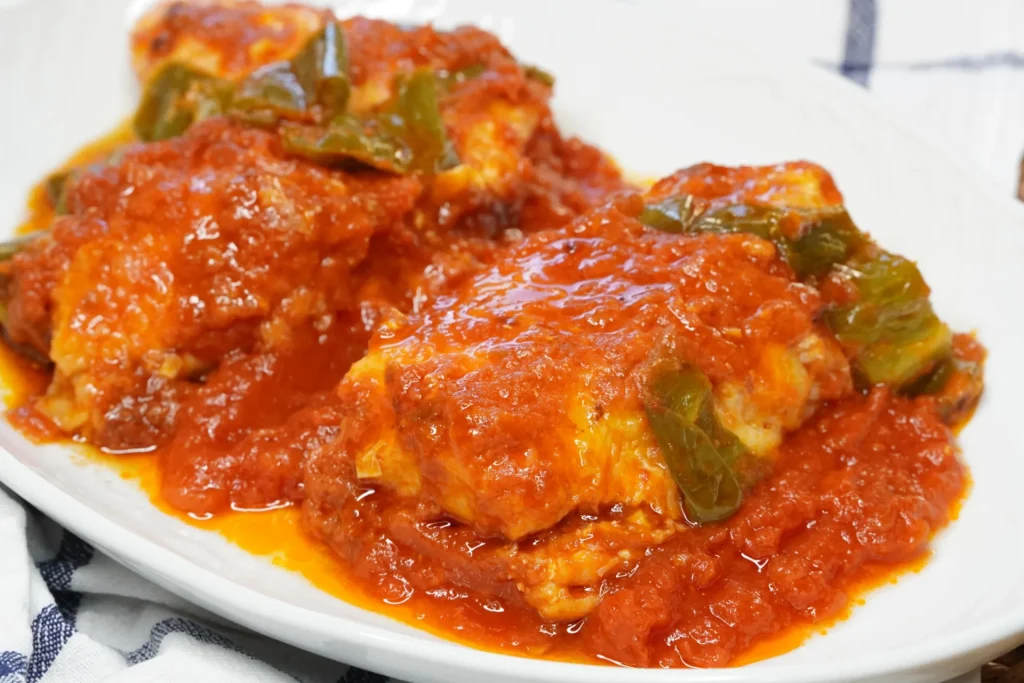
FRIED SALT COD WITH TOMATO
4
1h
Medium
Easy
- Ingredients
- 1 kg of salt cod.
- 1 kg of tomatoes.
- 4 cloves of garlic.
- 50 g of green pepper.
- 100 g of red pepper.
- Salt.
- Sugar.
- Flour.
- Extra virgin olive oil.
- Method
1.- Wash the salt cod and cut it into 50 g to 100 g portions; soak for 48 hours, changing the water 4 or 5 times a day.
2.- For the tomato sauce, wash the tomatoes and blanch them to remove the skin, cut them into small pieces and set aside. Wash the peppers, cut them into strips one centimetre wide by three long and set aside. Put oil in a frying pan and add the peppers, sauté for a couple of minutes and add the tomato. Season with the salt and sugar. Cook gently for 25 minutes over a medium heat. Leave to cool and keep in the fridge.
3.- Wash and dry the cod, dust with flour and fry in oil. Heat the tomato sauce and add the fried cod; serve hot.
- Tips
- Buy salt cod with thick, white loins. Desalt it for at least 48 h, changing the water 9 or 10 times. If the cod is very large, it will need longer to desalt.
- The vegetables should be cut evenly, neither too large nor too small (julienne, mirepoix, brunoise, etc.). They can be seasoned with bay leaf, thyme, rosemary, parsley, coriander, or with spring onion, onion, garlic, leek, etc.
- This dish can be served cold or reheated on the hob, in the oven or in the microwave.
Fish
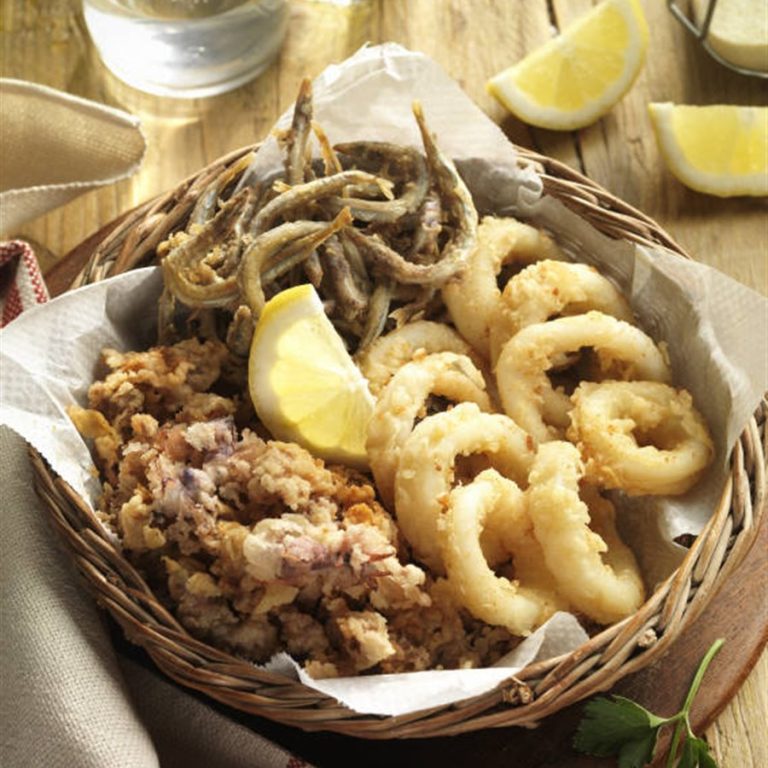
FRIED FISH
4
30′
Medium/High
Moderate
- Ingredients
- Anchovies.
- Squid.
- Peeled prawns.
- Sole.
- Cazón (dogfish).
- Salt.
- Flour for frying.
- Extra virgin olive oil.
- Method
1.- Clean and wash the fish and leave it to drain (cut it into pieces if necessary).
2.- Heat a frying pan with plenty of olive oil. Meanwhile, salt the fish and dust it with flour, then shake it in a sieve (fine strainer) to remove the excess flour. Fry in small batches and leave to drain off the oil. Serve straight away.
- Tips
- The fish must be fresh and small.
- Use special frying flour.
- Fry in plenty of oil and only a small amount of fish at a time, as we want the oil temperature not to drop too much while cooking.
- Do not fry the fish for too long, so that it does not lose its flavour.
- Use a heat source that responds well, that is, one on which we can control the temperature: induction and gas work very well, whereas a ceramic hob is not really recommended.
- The frying pan should be large and not made of very thick material. Woks and enamelled brass frying pans work very well.
- You can use an electric deep fryer, although the oil will need to be cleaned after use.
- The oil can be reused as long as it keeps acceptable organoleptic qualities; discard any oil that has turned black and very thick.