

The Church of Nuestra Señora de la Aurora
Overview
STYILE: Baroque
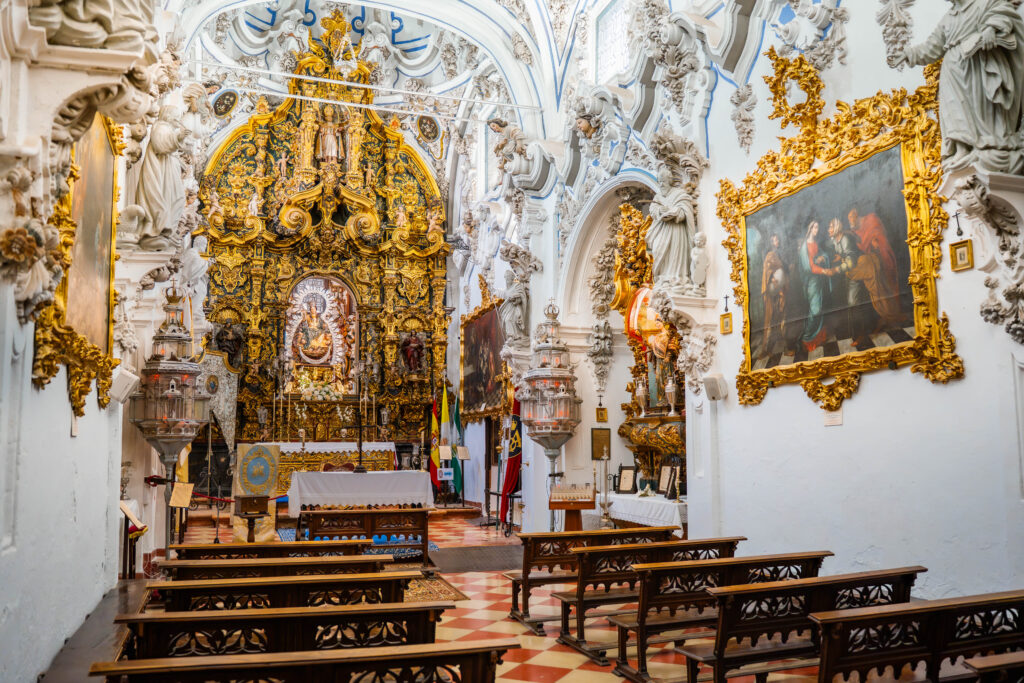
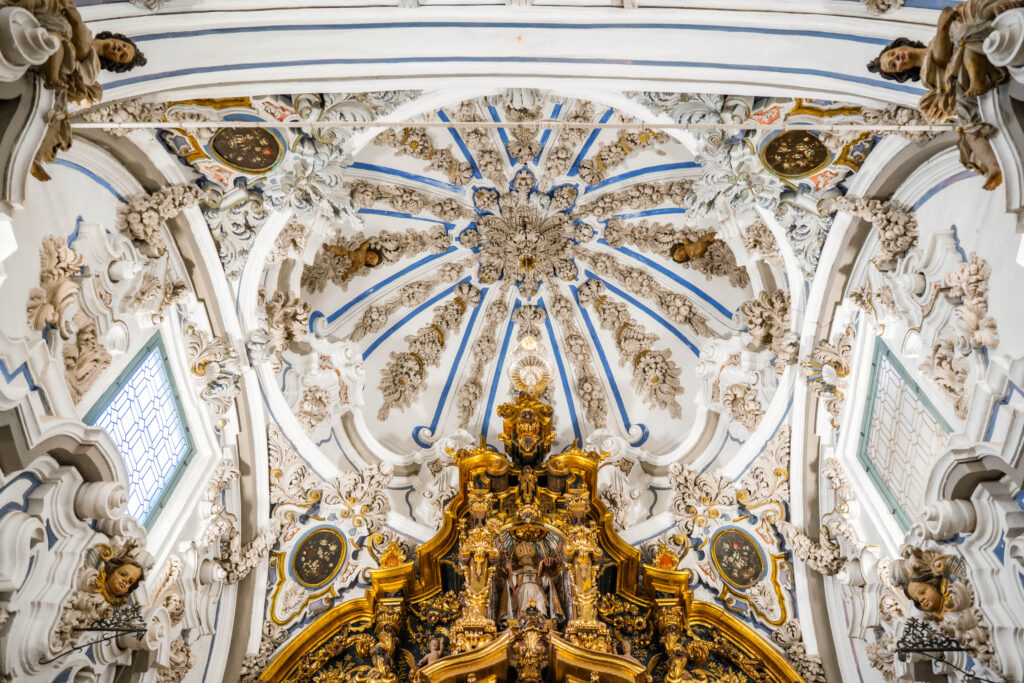
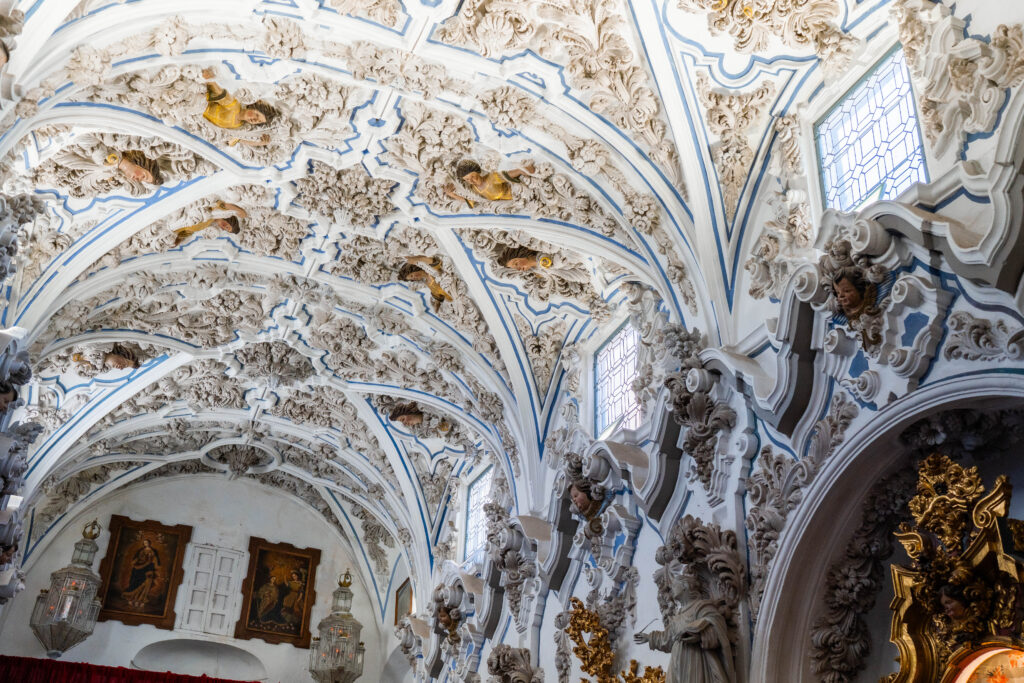
The church of Nuestra Señora de la Aurora was built on the site of a shrine to Saint Nicasio, the patron saint of Priego; records first mention it as a church in 1528. It was rebuilt in the eighteenth century by Juan de Dios Santaella, with a rectangular design, and an arched ceiling in five sections with windows: the main choir is in the first section, and above, there is a “half-orange” segmented cupola resting on ornate corner supports. The arc of the ceiling continues downwards on pillars bearing plasterwork figures of Saint Peter, Saint Paul, and the Evangelists.
There is scacely any free space on the interior walls, because of the exuberant baroque decoration covering the cupola and ceiling, and even around the windows. It is a mixture of geometric designs, plant and flower motifs, and any number of bas-reliefs of angels – all of it set off by a blue painted frieze.
The altarpiece is made up of a base, the main body, and an upper niche, divided into three vertical sections by elaborate pillars. In the niche is the figure of Saint Nicasio, and the whole is flanked by two columns, their intricate decoration spiralling off into the dome above.
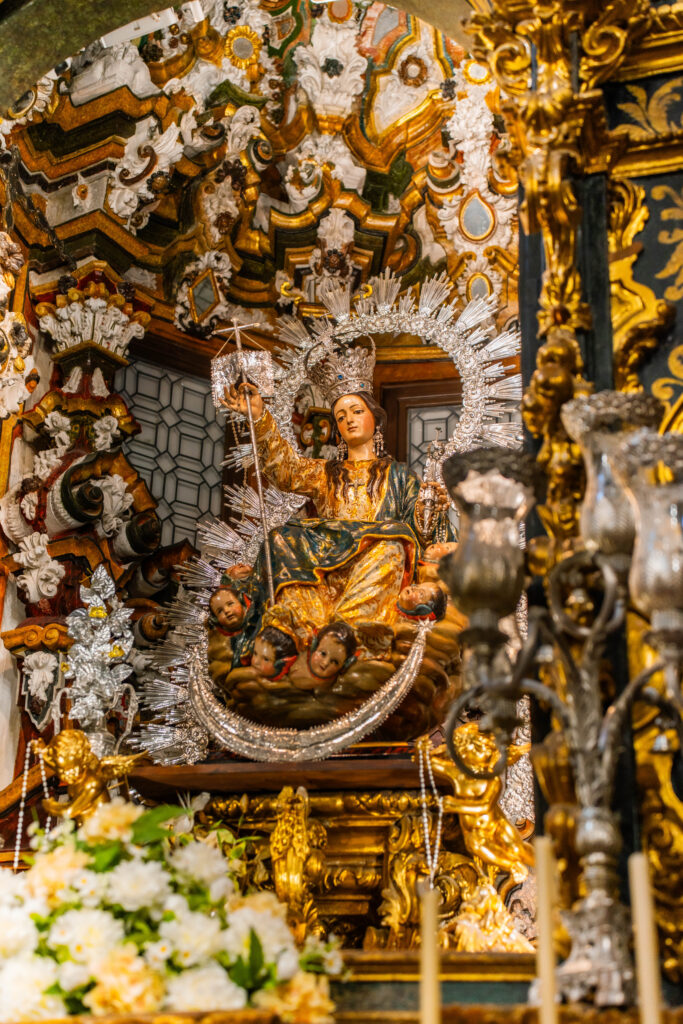
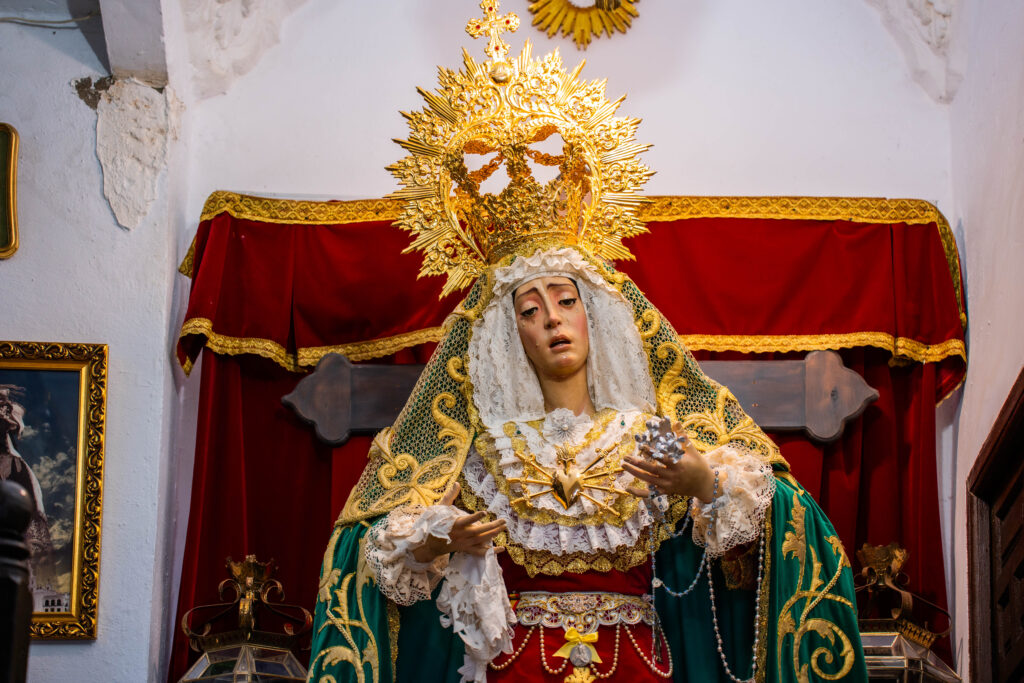
In the central part, a great arch leads to the chapel of The Virgin, with its segmented cupola resting on a corrnice. It is notable for its plasterwork with embedded mirrors, and the rich variety of polychrome, combining gold and imitation marble. The image of the Virgin is attributed to Diego de Mora.
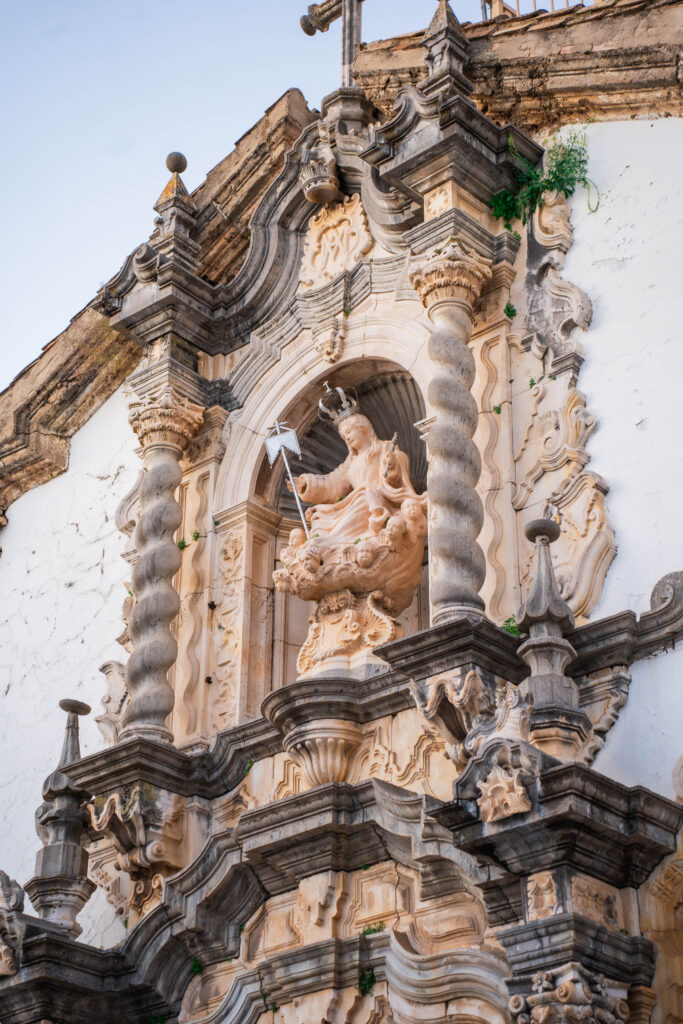
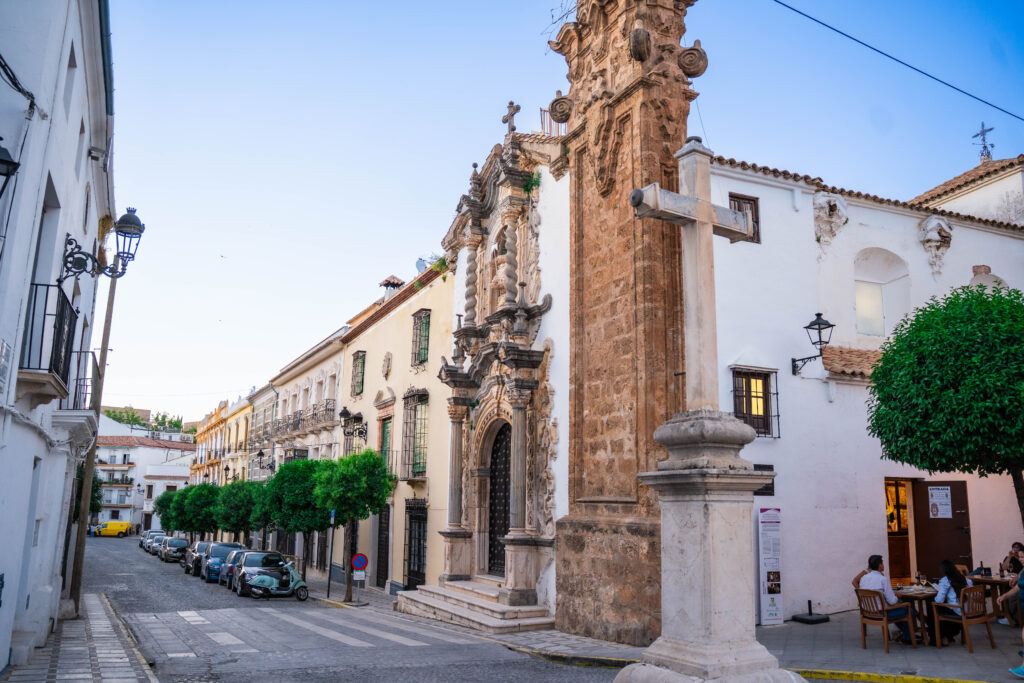
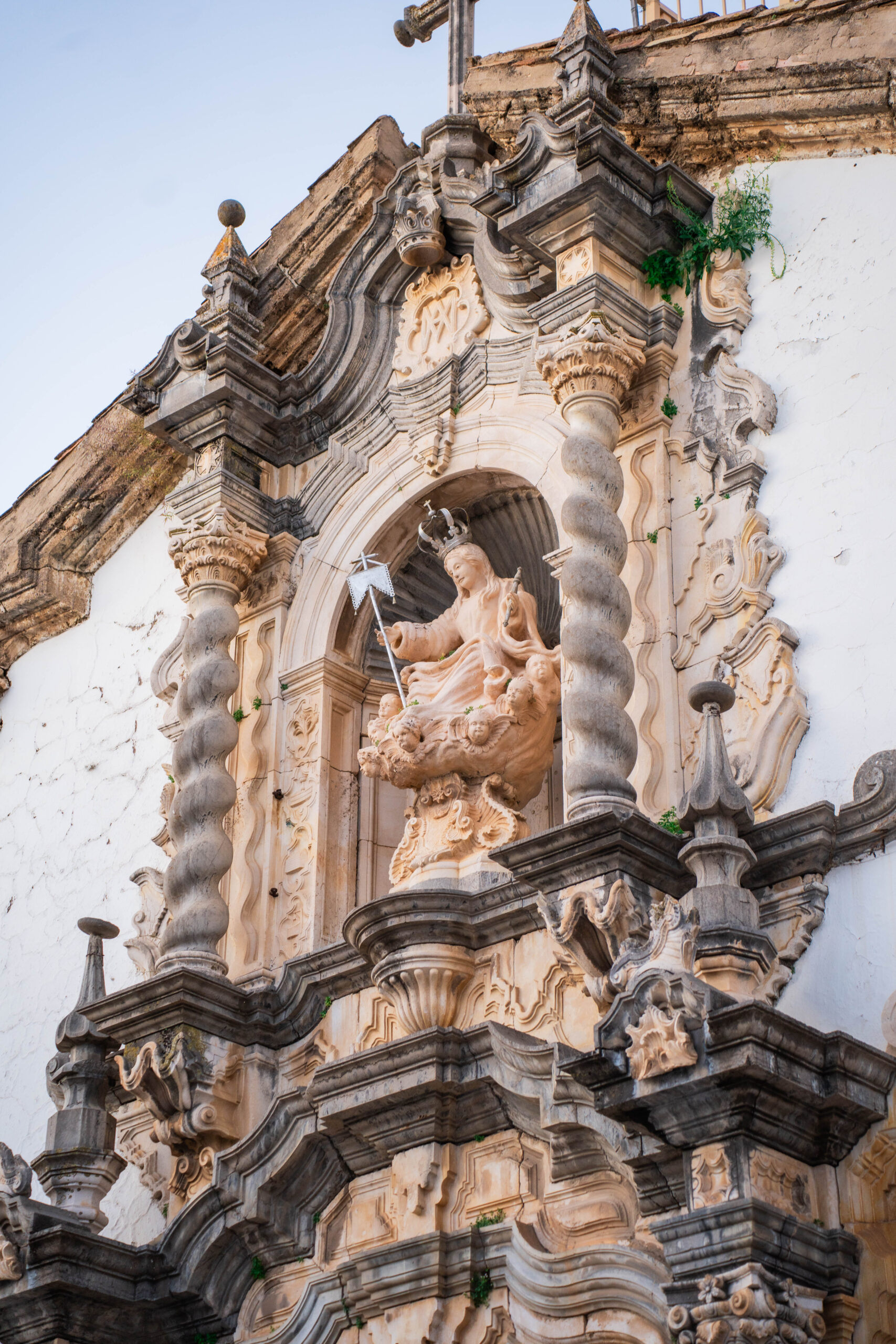
The doorway was finished in 1772, probably by Santaella, and is particularly abundant with polychrome marble. It is built on two levels, the lower with Corinthian columns, and the upper with spiral pillars which frame the niche of the Virgin. On the right is the bell tower, of unmistakeably baroque design.
The church is the base for the Hermanos de la Aurora, a church guild which goes back to 1580. Every Saturday at midnight, members stroll through the streets of the town, singing traditional songs of praise – a custom which the town holds very dear.
Key details of the place
Styles and artistic language
- Baroque
Related artists
- Juan de Dios Santaella
Gallery