

The Shrine of El Calvario
Overview
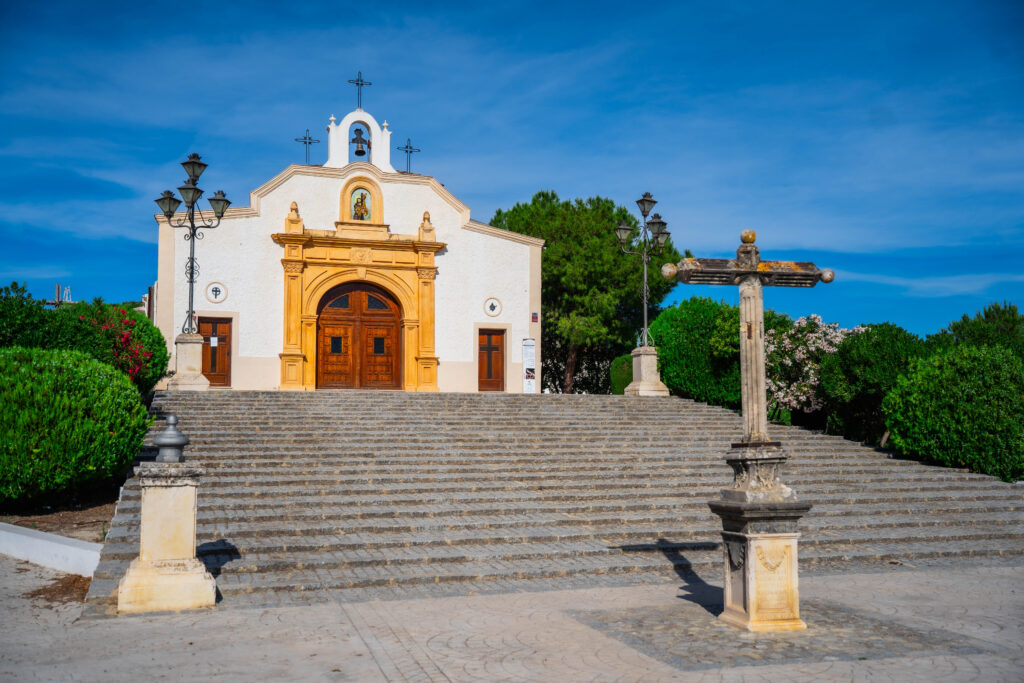
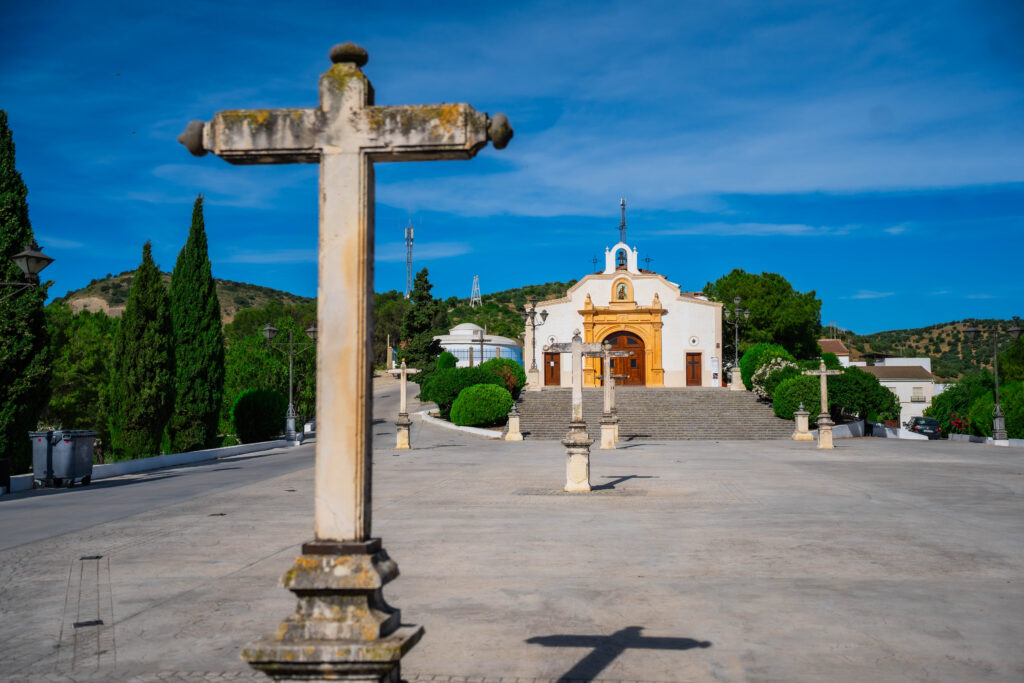
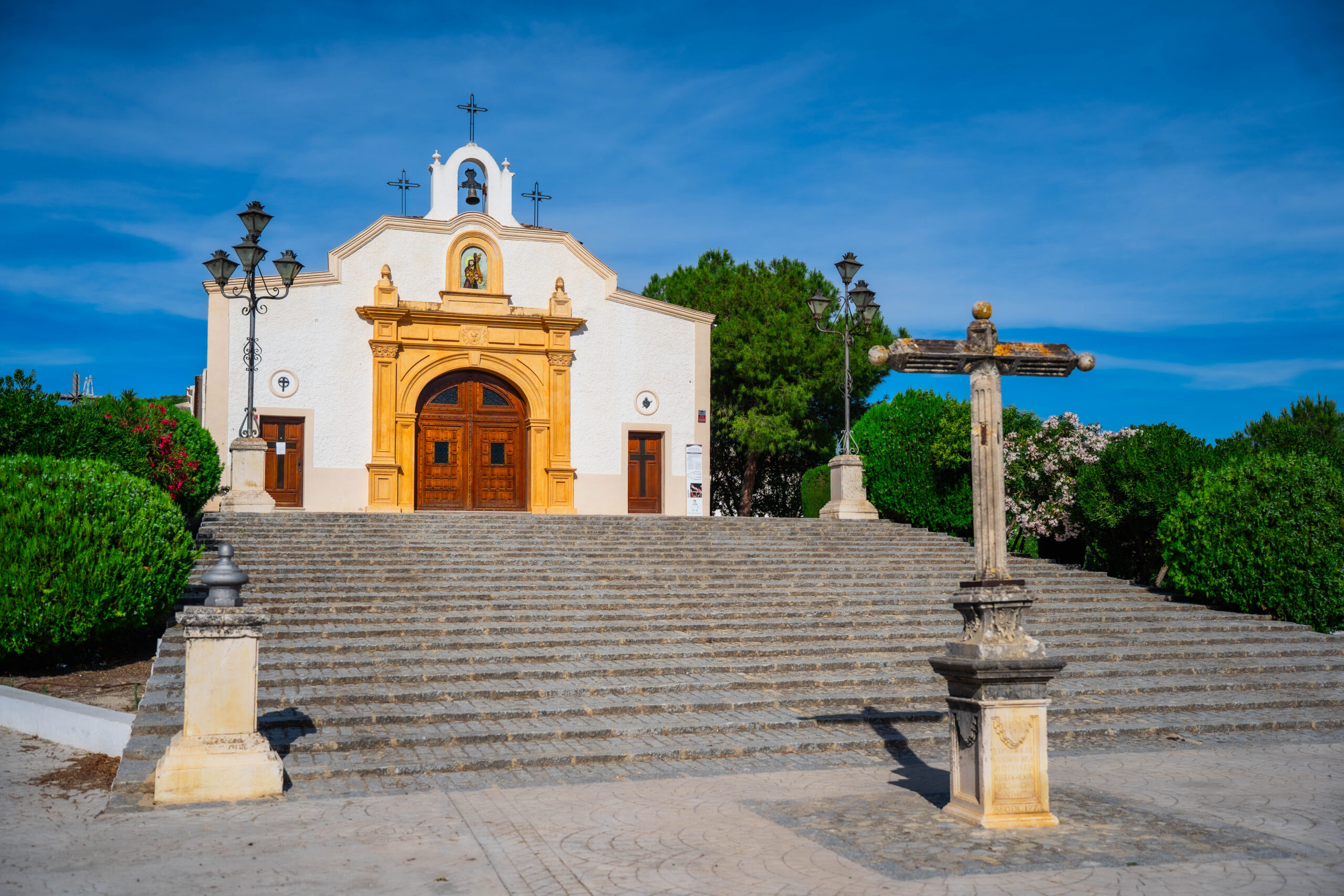
Tradition has it that a shrine of Calvary near the Tiñosa mountain has existed for ever, although there is a lack of documentary evidence. We do know, however, that by 1593 there was a place of worship, with a cross or an icon to which pilgrims would pray on their way in or out of the town. It was a site of great religious ceremony, and it marked the end of the Good Friday procession by the followers of Jesus of Nazareth, a fact which can be learned from the founding statutes of that Brotherhood. It is documented that there were two early crosses on the site, and that others were placed here in the eighteenth century.
In 1707, the shrine of Calvary was built with the aid of public donations and funds from the Third Order of Saint Francis: in the eighteenth century, they undertook the maintenance of the crosses on their processional route, which were in need of repair. In 1708, the town donated the land around the shrine.
In 1938, the Brotherhood cleared the way for the work which the shrine needed, and rebuilt the interior as we see it today, although the rest of the building has undergone a good deal of subsequent change. Improvements were carried out in 1942 and in 1945, but by the early 60s, the shrine was still very run-down in appearance, and the Brotherhood – then as now – stepped in to preserve and extend the building.
The shrine is dedicated to Nuestra Señora de los Dolores, an image which is believed to have been the gift of Marina de Pareja to the shrine of Santo Cristo del Humilladero, and later moved to the shrine of Calvary in the eighteenth century.
It is a figure dating from the seventeenth century, elaborately decked with candles, although the artist is unknown: it forms part of a tradition of richly enrobed figures which embody the seven sorrows of the Virgin – represented here by the flaming heart in the centre of her breast, pierced by seven daggers. Until quite recently, the Virgin carried symbols of the Crucifixion, but these were discarded during the last restoration of the image in 1978.
Key details of the place
Gallery