

The Church of San Pedro
Overview
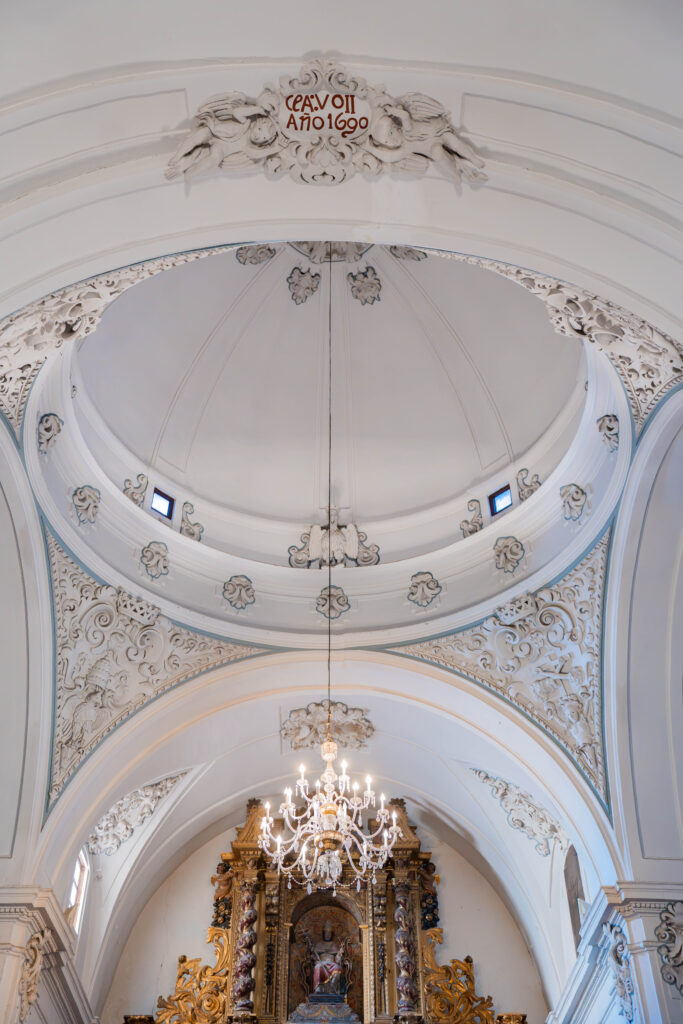
Built on the site of an Alcantarine monastery, the baroque-styled church was completed in 1690: the floor plan is in the form of a cross, with rounded vaulting and a “half-orange” shaped cupola on corner pillars, with little evidence of elaborate plasterwork.
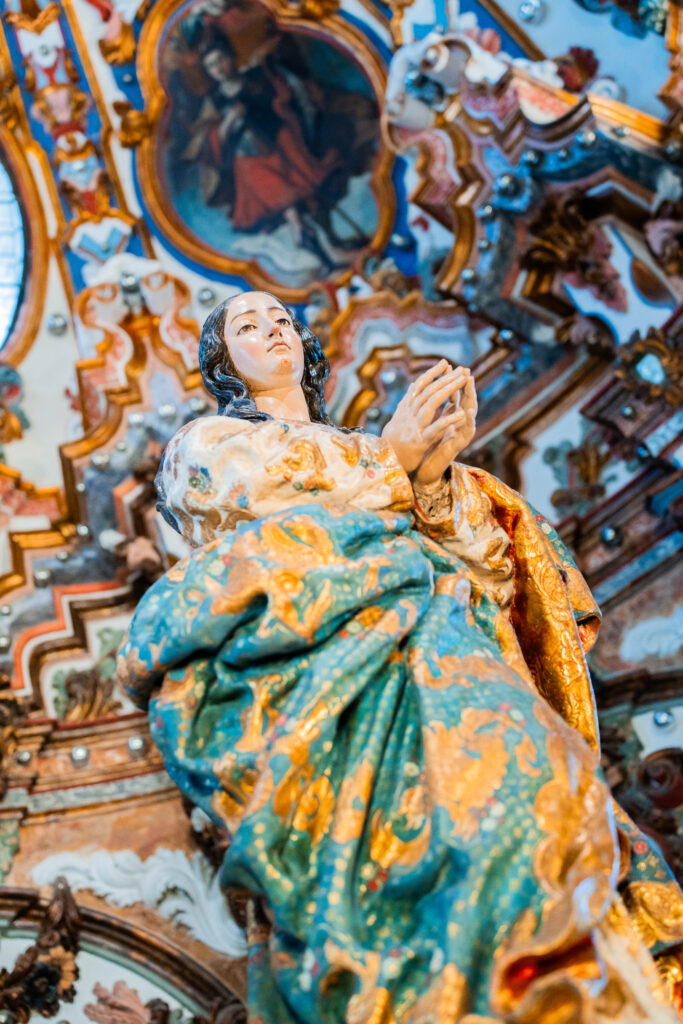
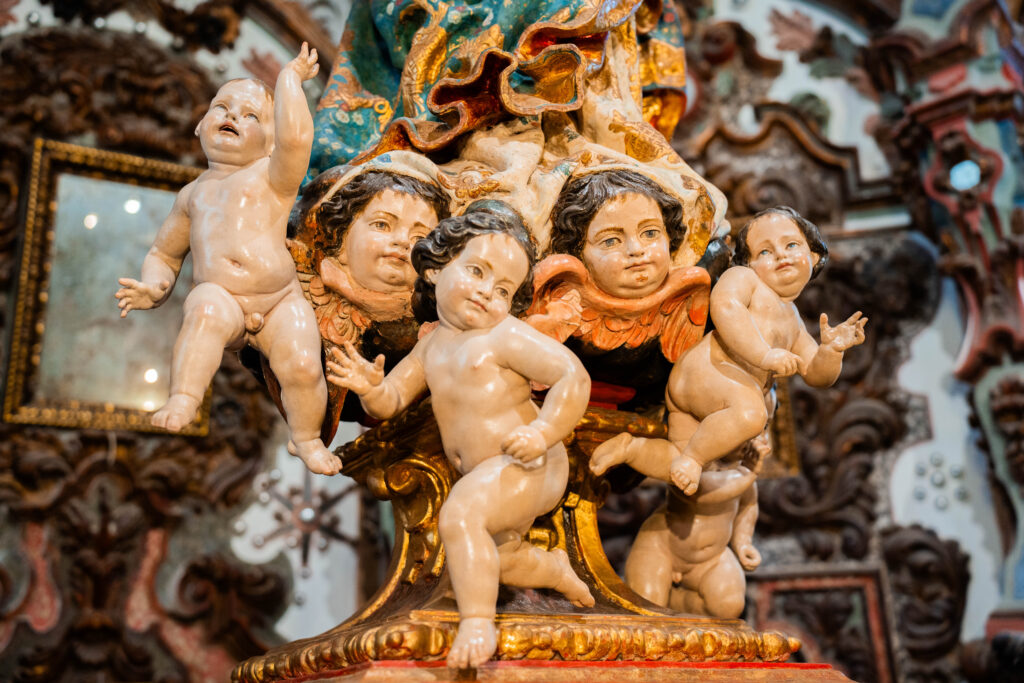
The altarpiece, by the Sánchez de Rueda brothers, has a central body divided into vertical sections by four spiral pillars, framing the chapel which houses a figure of the Virgin by José de Mora – a beautiful work of rich polychrome. On either side are the figures of Saint Rosa de Viterbo and Saint Rosalía, and on high, a niche with the image of Saint Peter, dating from the beginning of the sixteenth century.
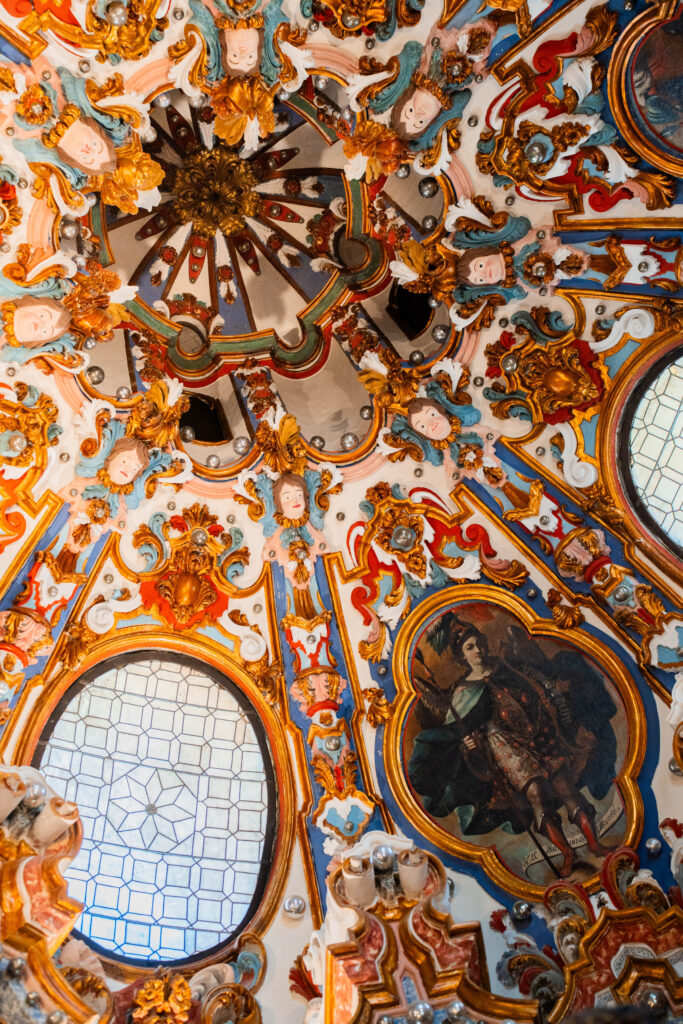
The altarpiece underwent changes in the eighteenth century, with the creation of a large chapel, which was begun by Jerónimo Sánchez de Rueda and completed in 1739 by Juan de Dios Santaella. It is a chamber of octagonal form, with a hemispherical cupola topped by a small decorative tower. The decoration is ornate plasterwork, featuring the heads of angels, with embedded mirrors and silvered spheres which set off the striking colours of the marbling.
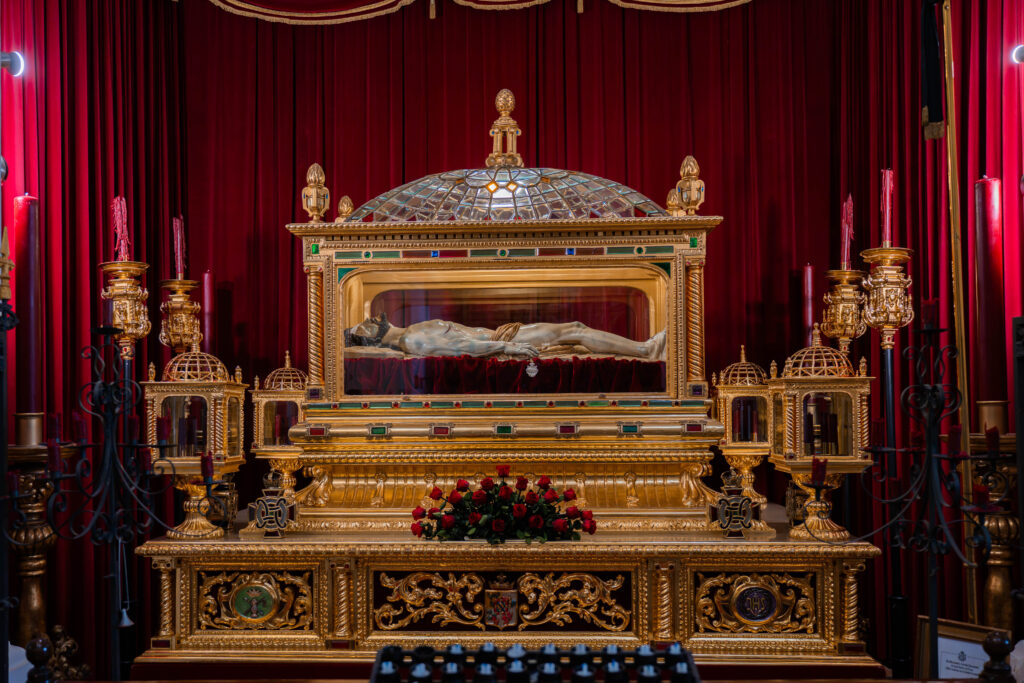
In the chapel of the Worshipful Third Order of St. Francis is the carving of the Burial of Christ, attributed to Pablo de Rojas in 1594.
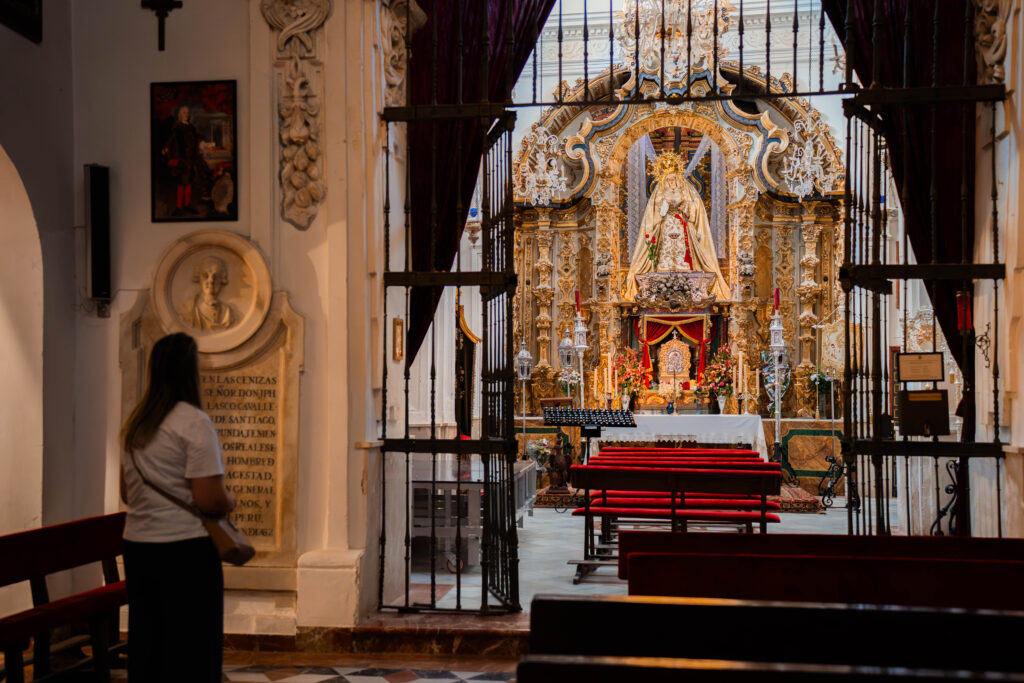
The chapel of Our Lady of Solitude was built in the mid-seventeenth century: it underwent two later transformations – one in the eighteenth century, and another in the nineteenth, which gave it a neoclassical style. The altarpiece, attributed to Francisco Javier Pedrajas, is particularly interesting for its fine rococo detail. The centrepiece is by the Álvarez brothers in 1784, with decoration by Pedrajas: the candle-decked figure of the Virgin of Solitude dates from the early seventeenth century.
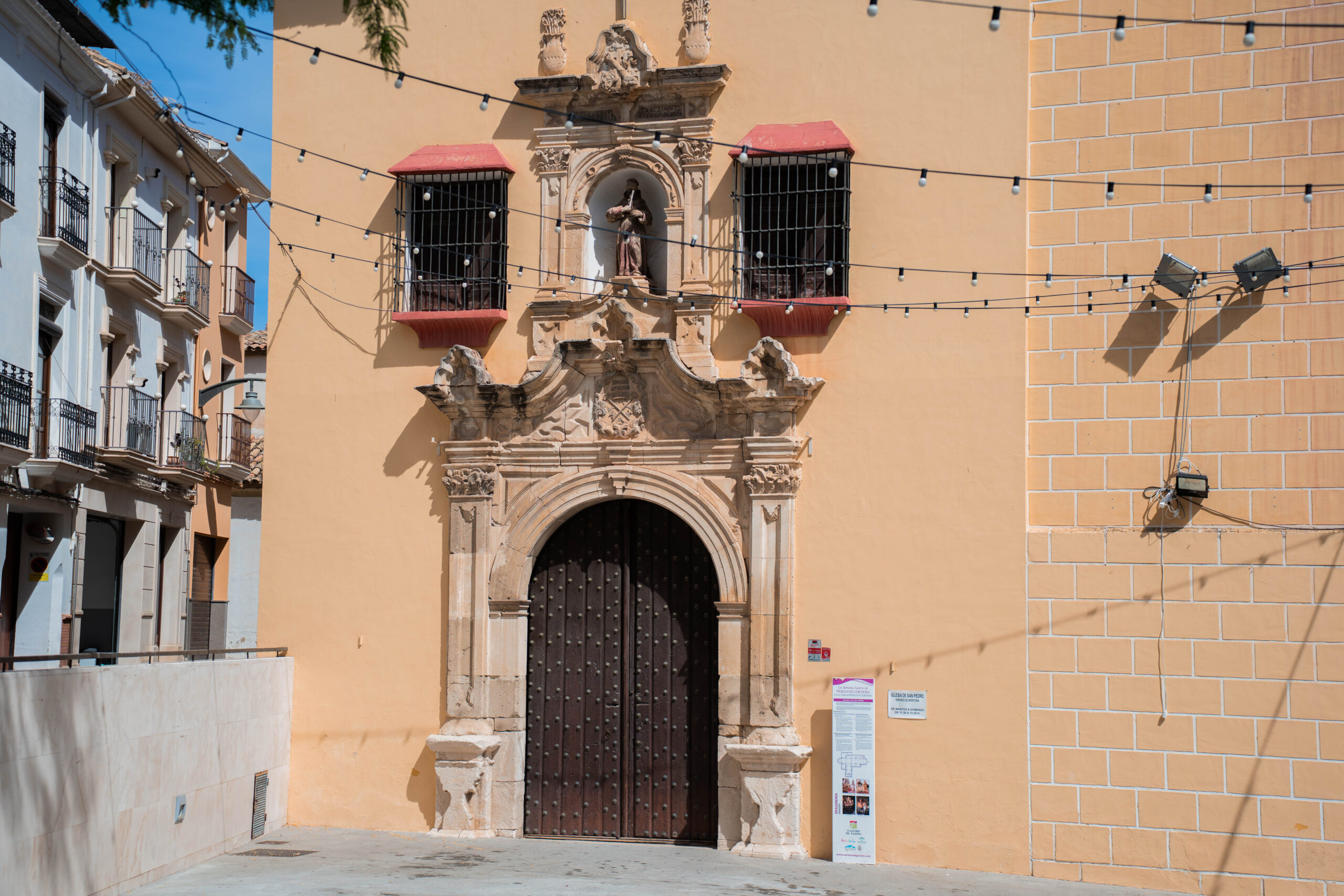
The stone doorway is attributed to Juan de Dios Santaella, and was donated by Juan de Codes in 1785. In the upper niche is the polychrome carved stone figure of Saint Francis of Assisi.
Key details of the place
Related artists
- Hermanos Sánchez de Rueda
- Juan de Dios Santaella
- Francisco Javier Pedrajas
Gallery