


Good Friday
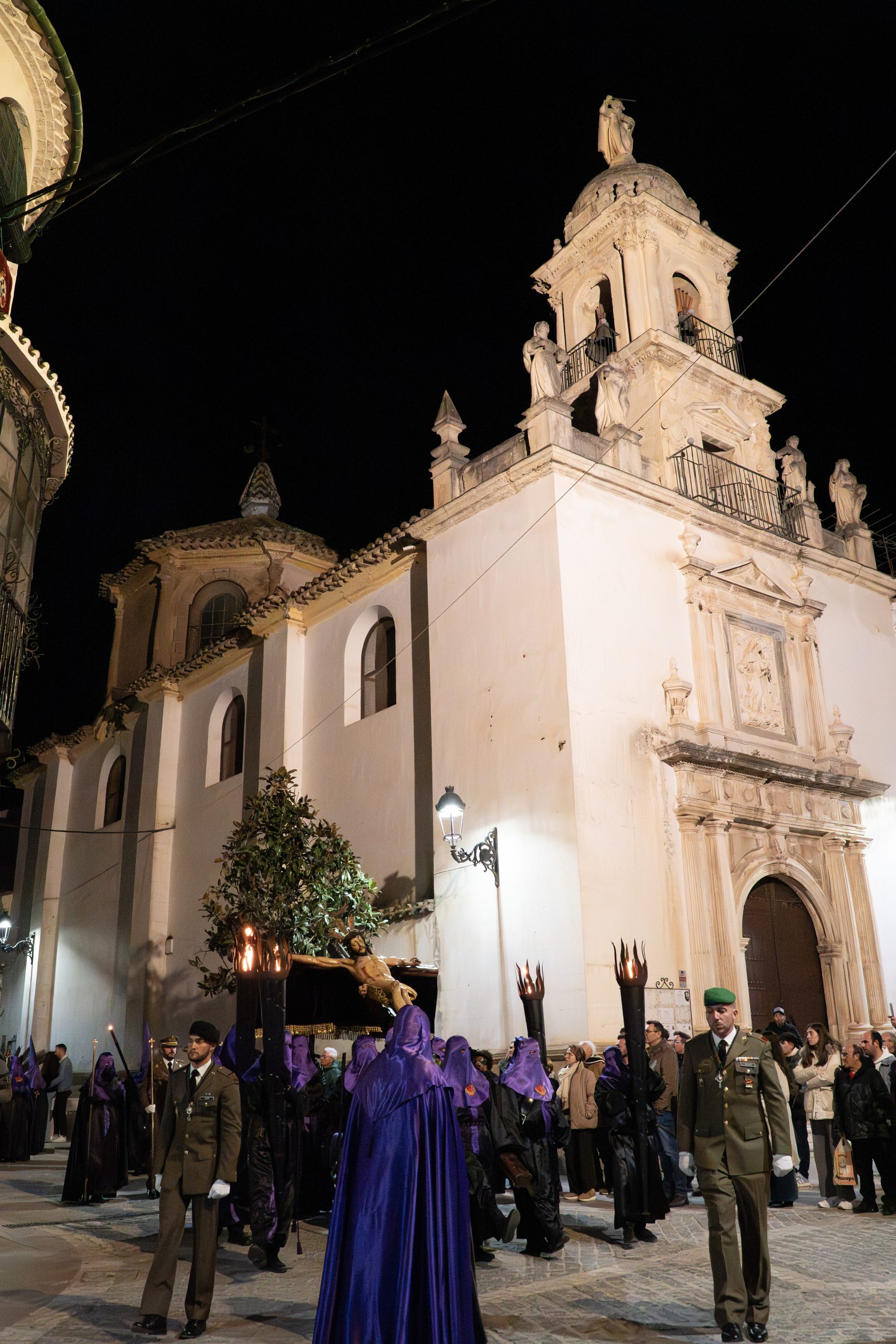
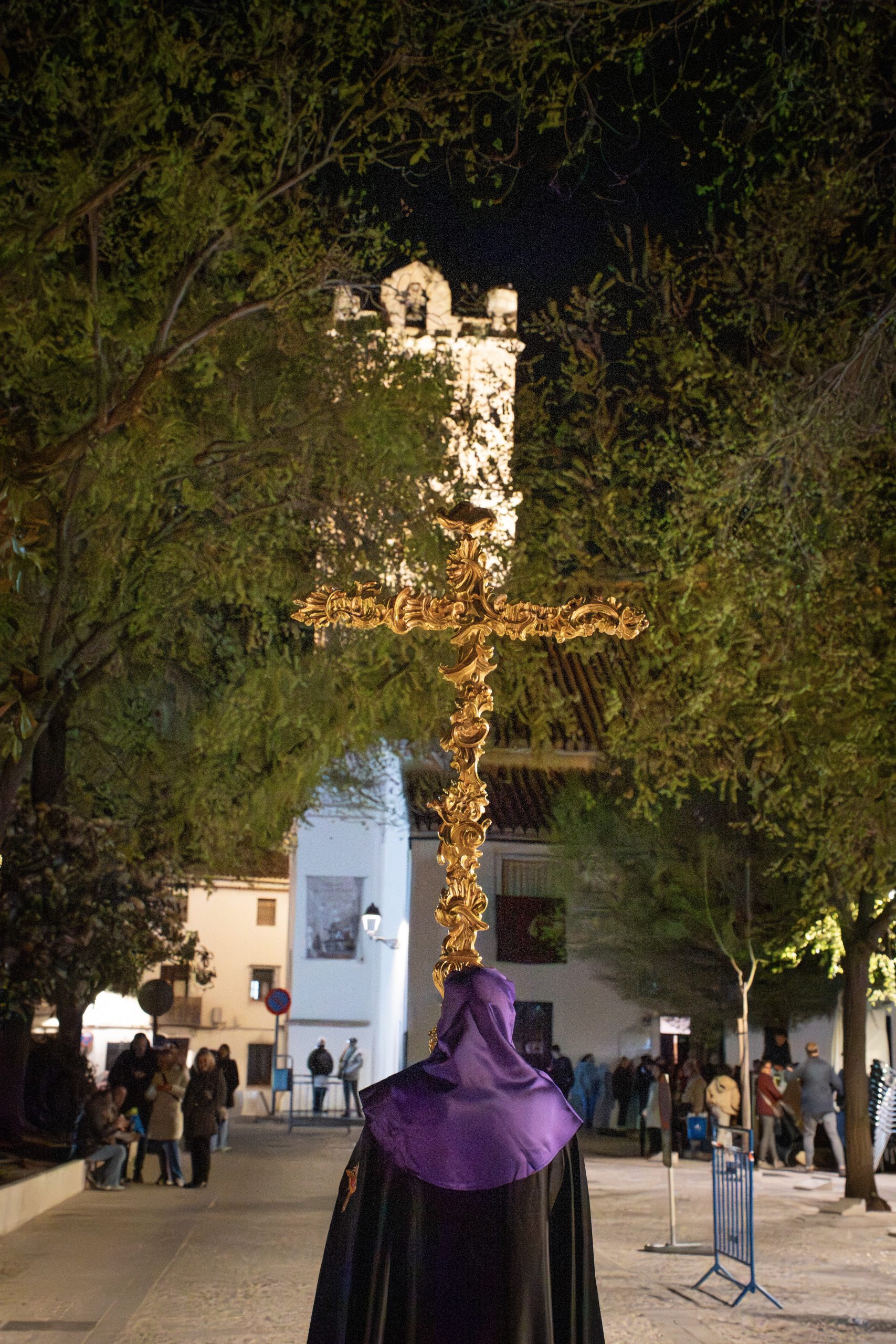
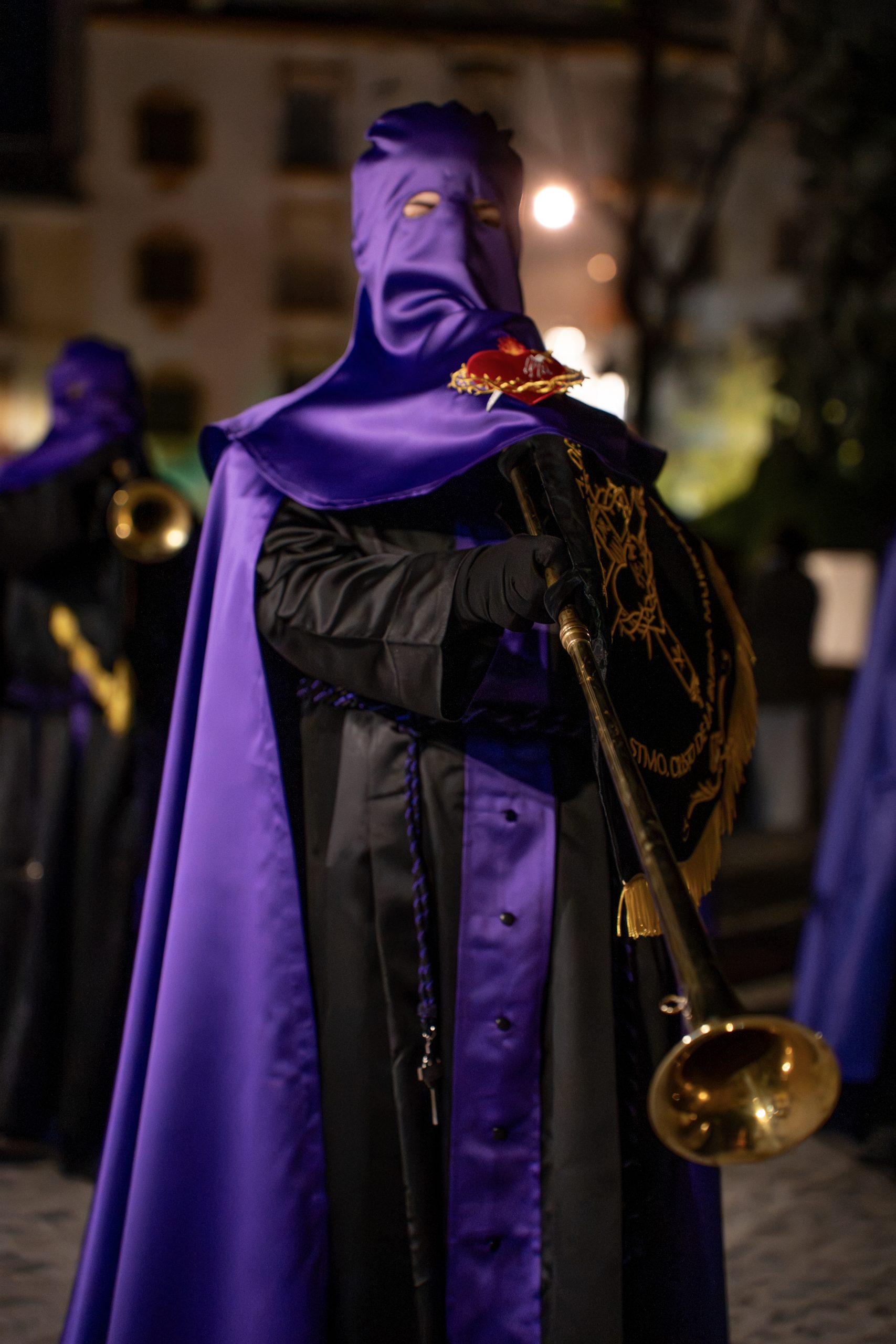
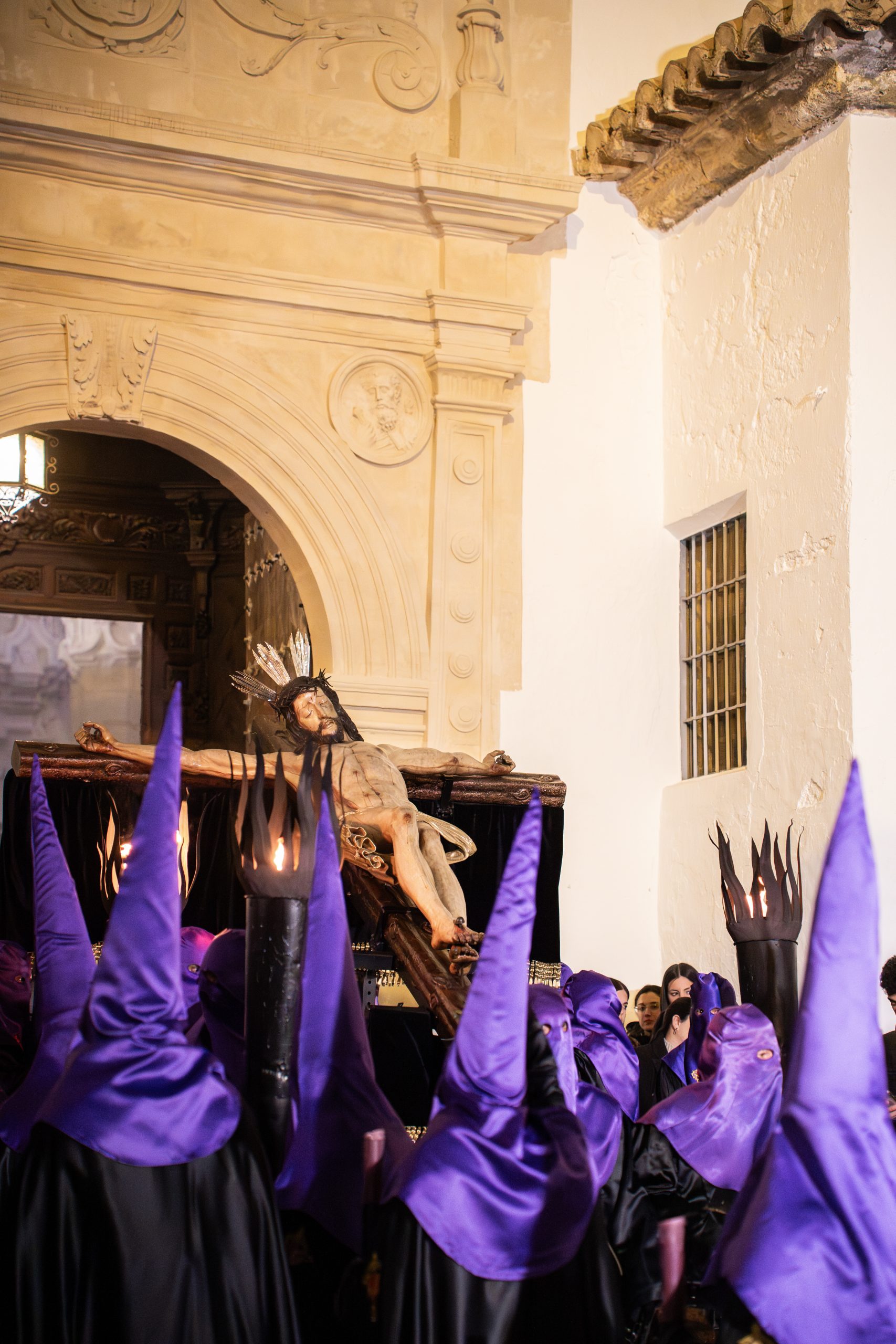
- Cofradía de María Santísima de los Dolores y Cristo de la Buena Muerte
In June 1689, the abbot of Alcalá, Don Pedro de Toledo, approved the constitution of the brotherhood of Holiest Mary of Suffering, then based in the ancient church of Santiago. Nothing more is known of the guild until 1928, when a group of guild members at the shrine of Calvary decided to reconstitute it, and in 1931, the Bishop of Córdoba approved the rules of the new cofradía. Eventually, there was a third reorganisation in 1969, when the guild entered its most significant period.
It is thought that the figure of Our Lady of Suffering was donated to the shrine of Santo Cristo del Humilladero in 1635 by Marina de Pareja, “with all robes provided, ready to adorn the altar”. The icon was moved to the rebuilt shrine of Calvary in the eigtheenth century.
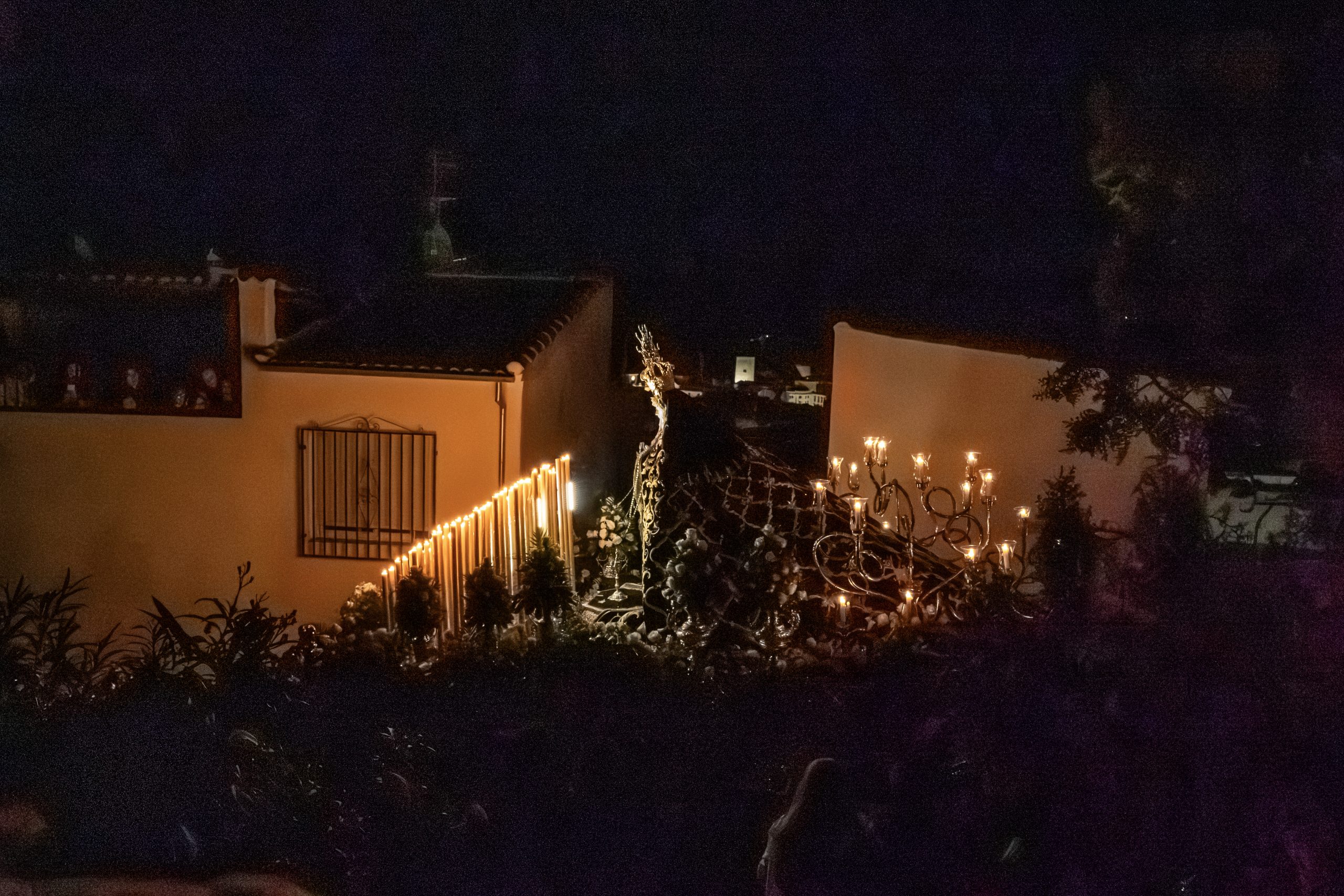
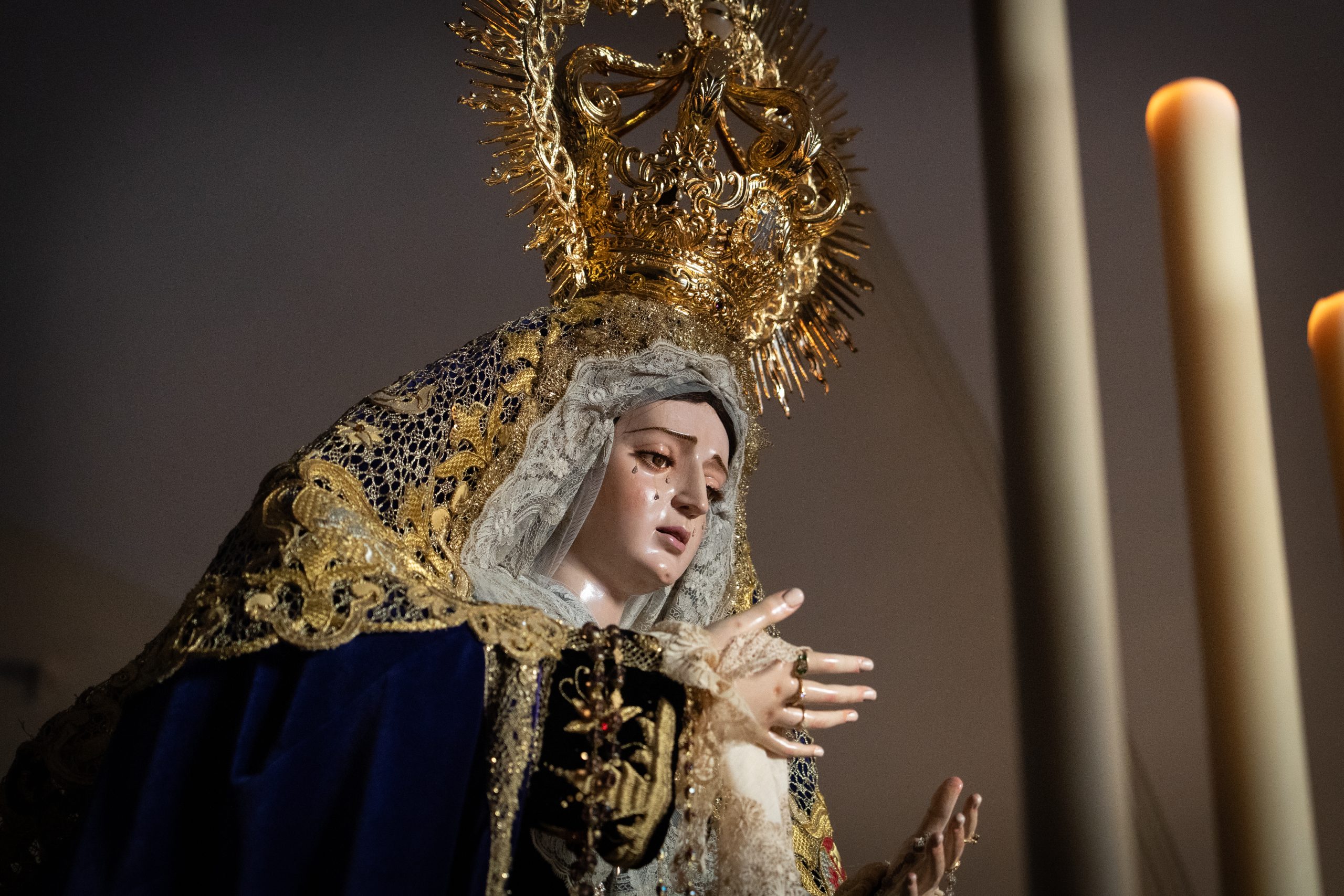
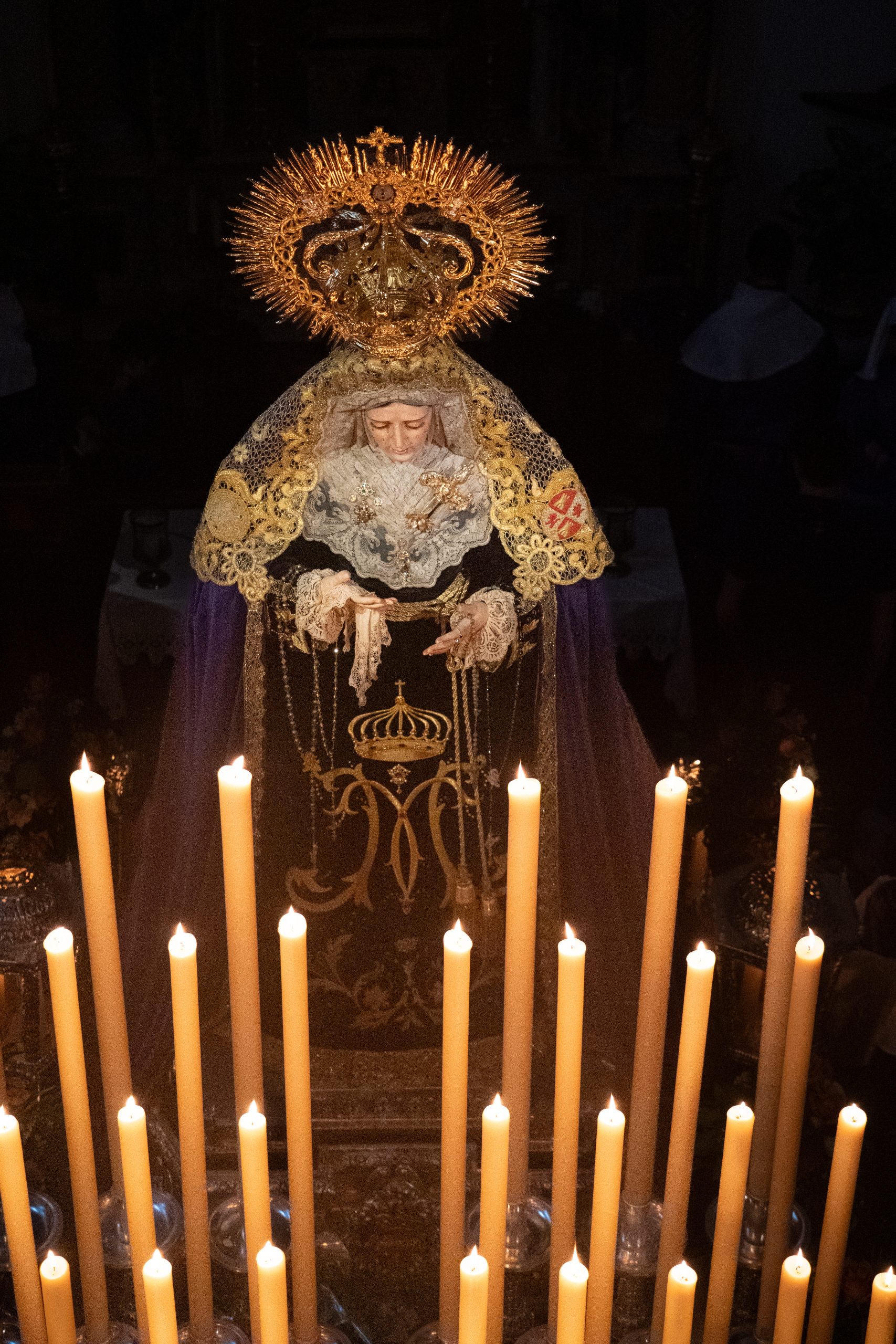
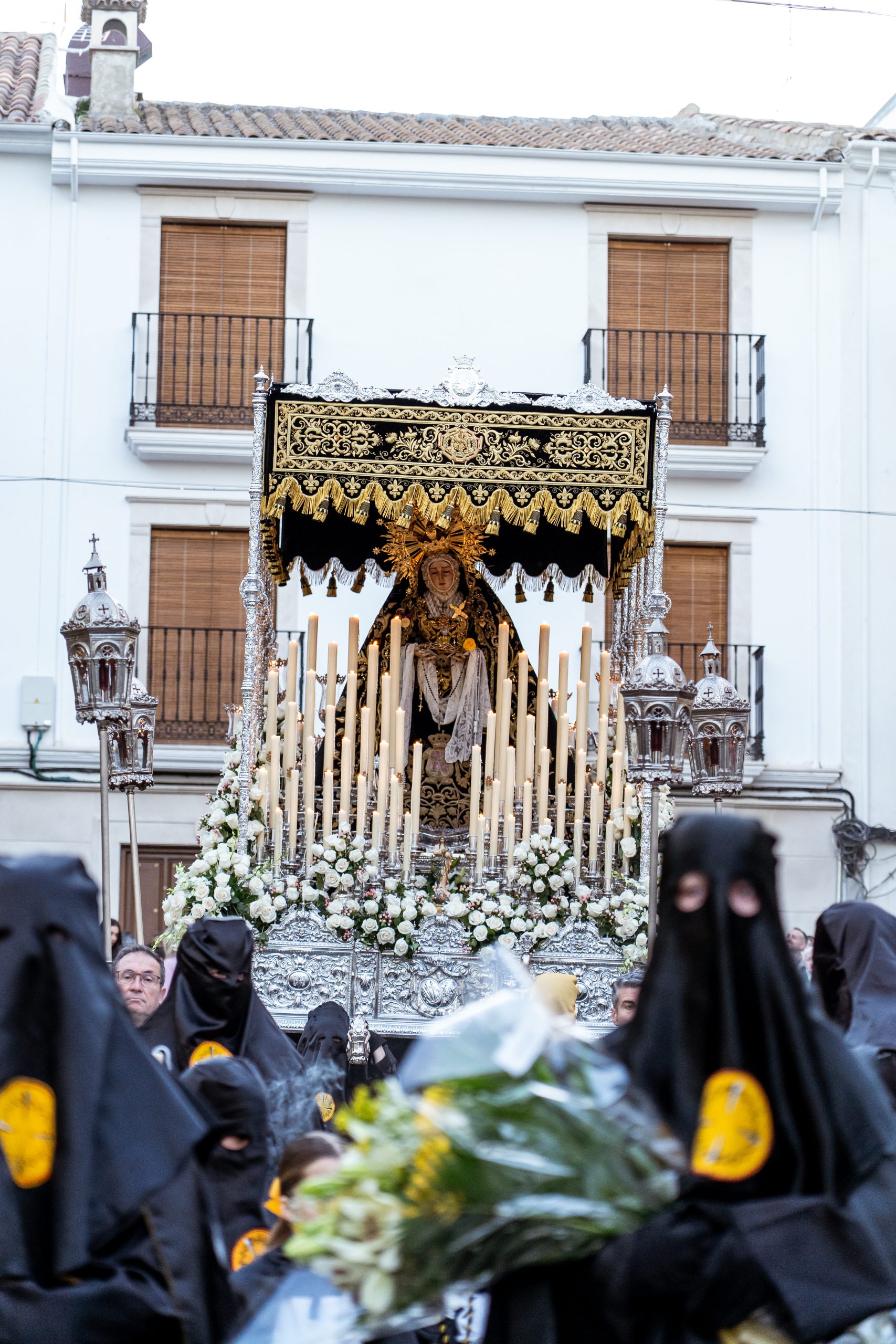
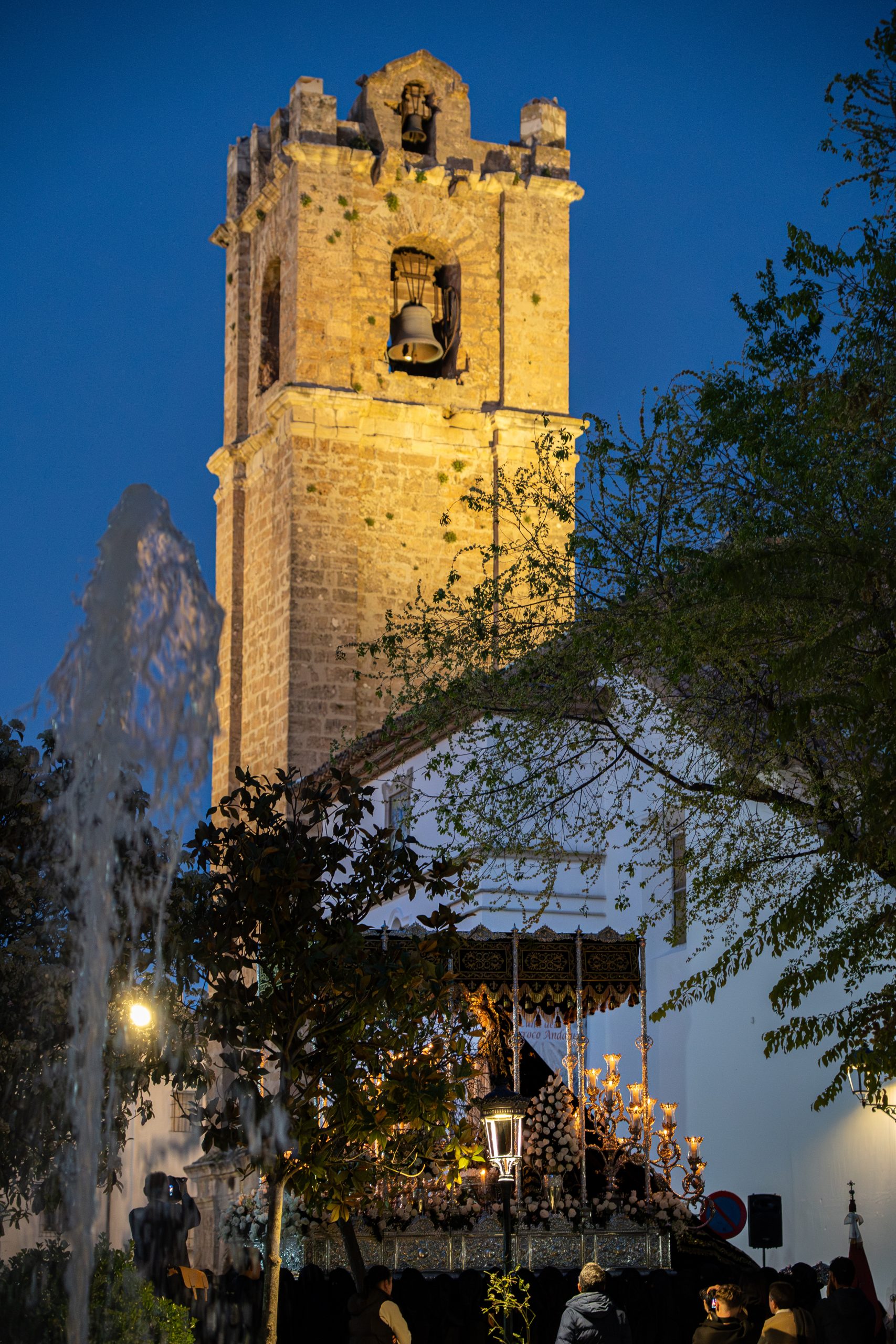
The figure of Our Lady of Suffering, surrounded by its sea of candles, is one of the outstanding icons of the seventeenth century: nothing, however, is known of its provenance. The elegantly-dressed image embodies the suffering of the mother of Christ, her heart consumed with flames, run through with seven daggers, at the centre of her breast. The figure once bore symbols associated with the Crucifixion, but they were removed in the last restoration in 1978.
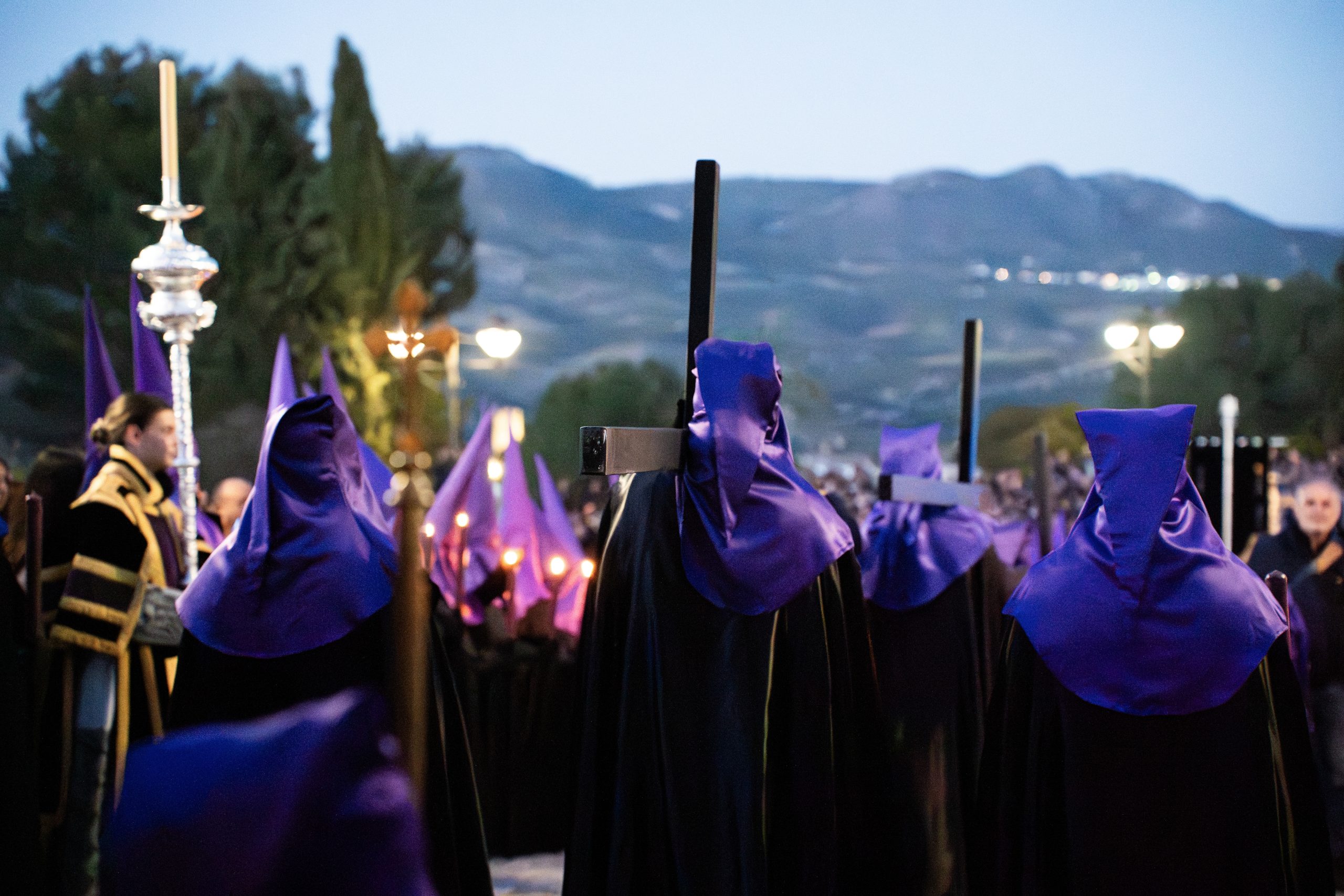
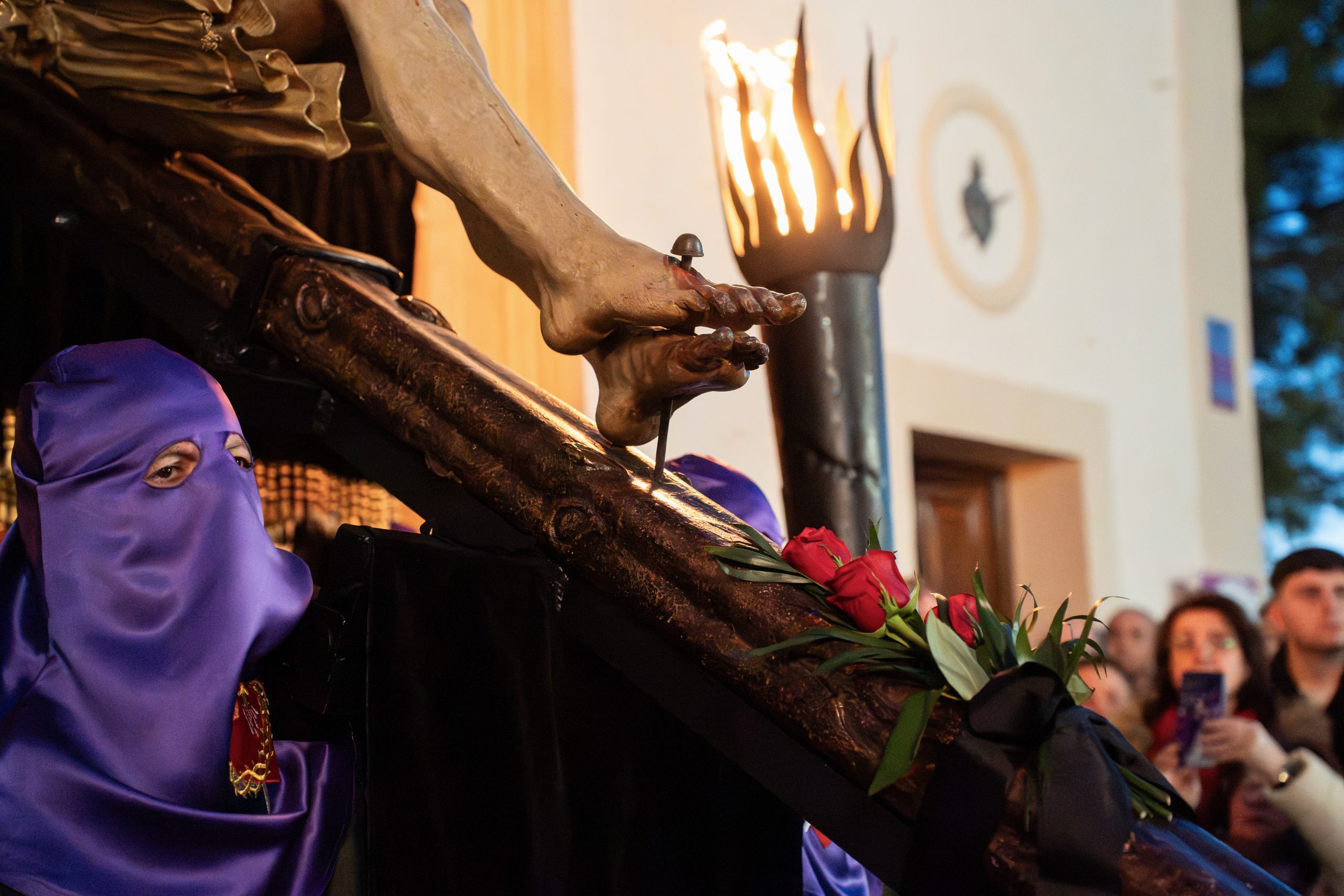
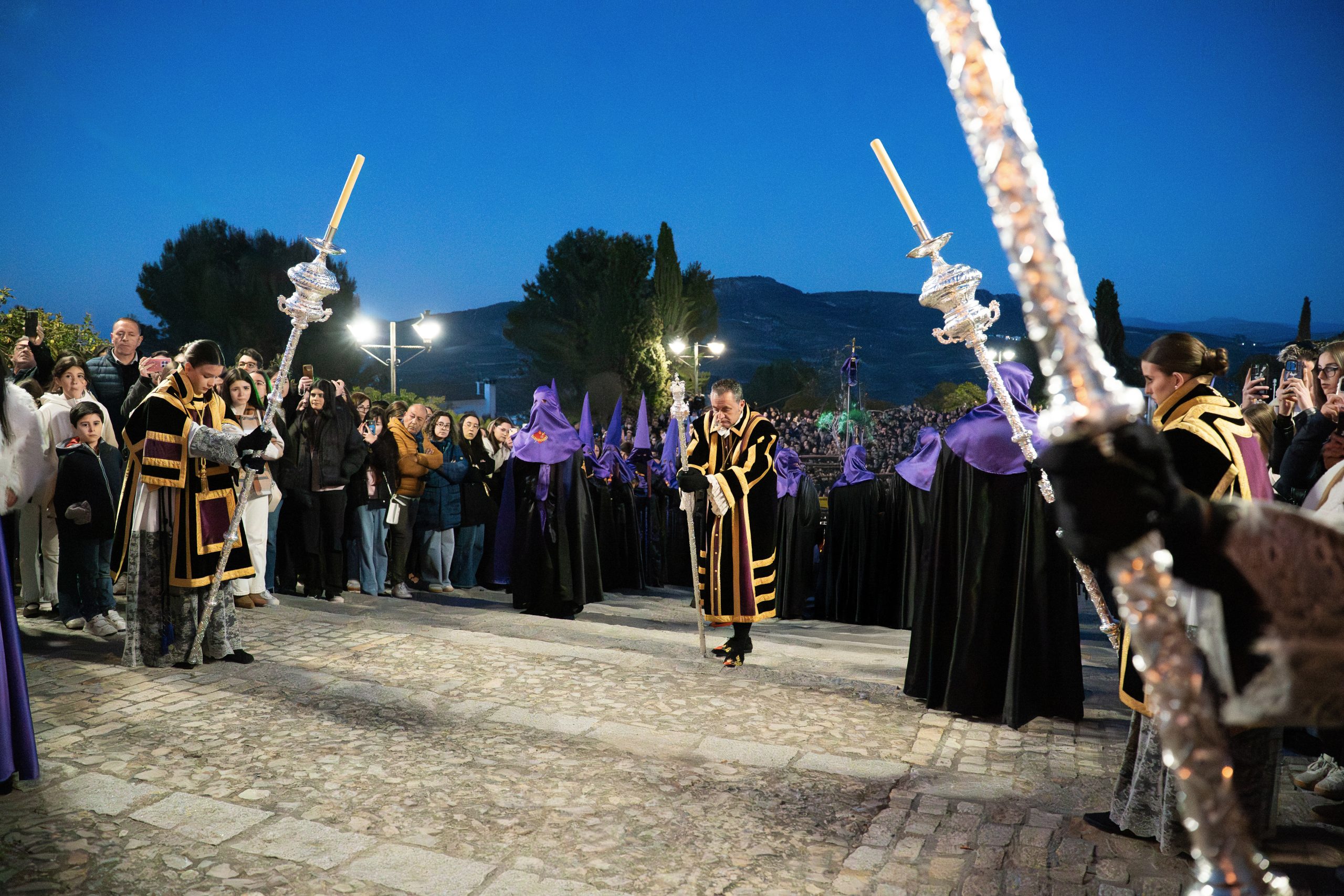
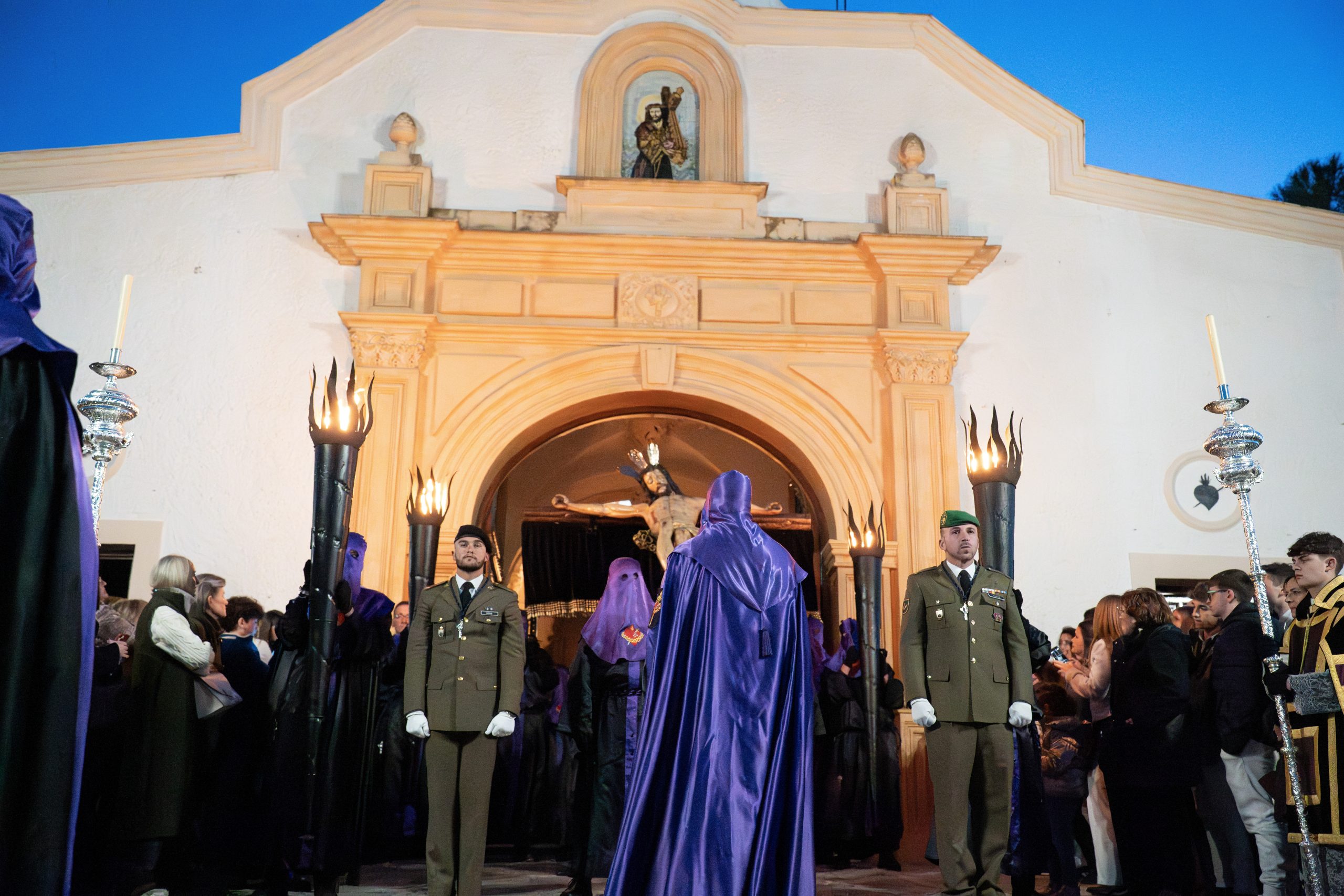
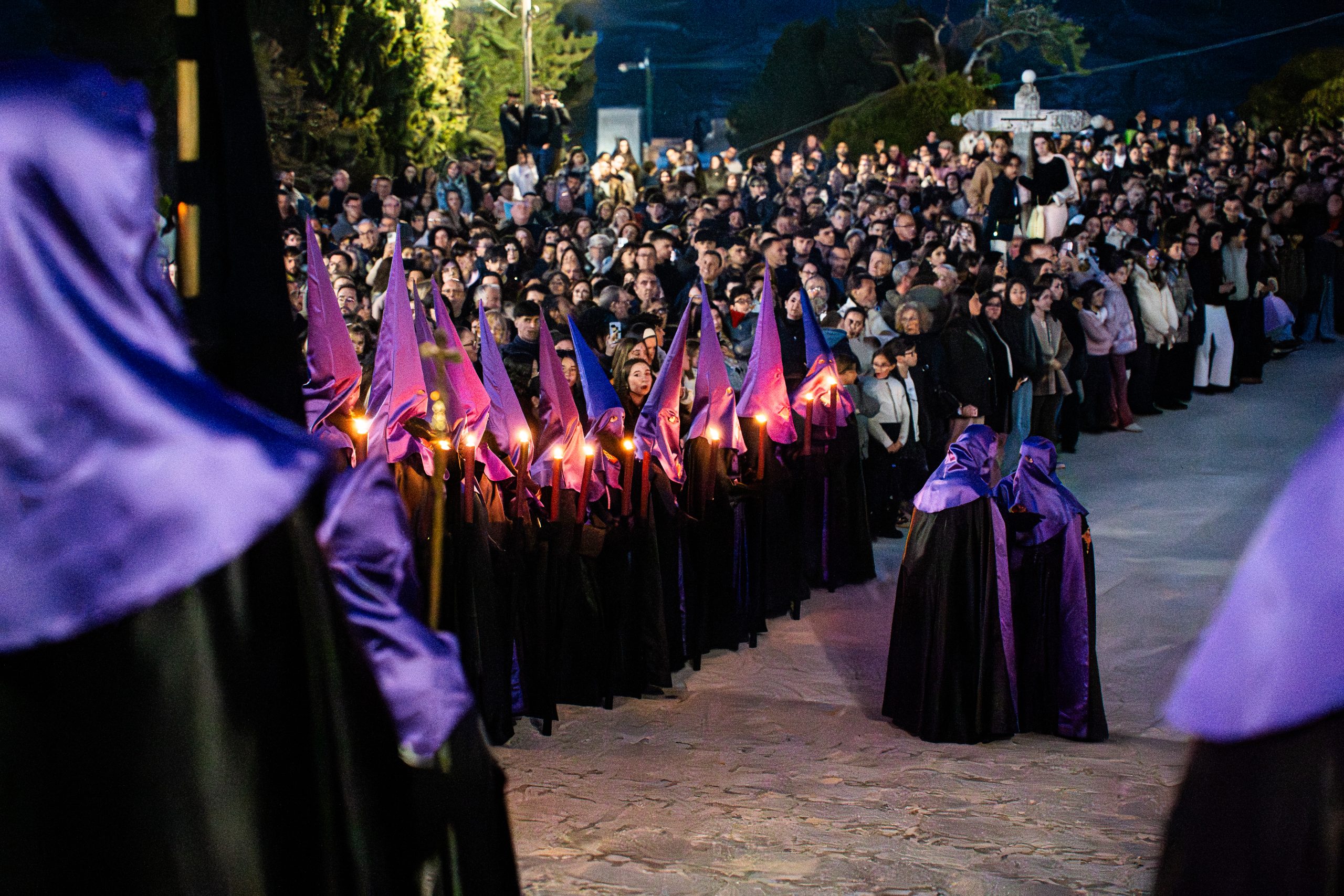
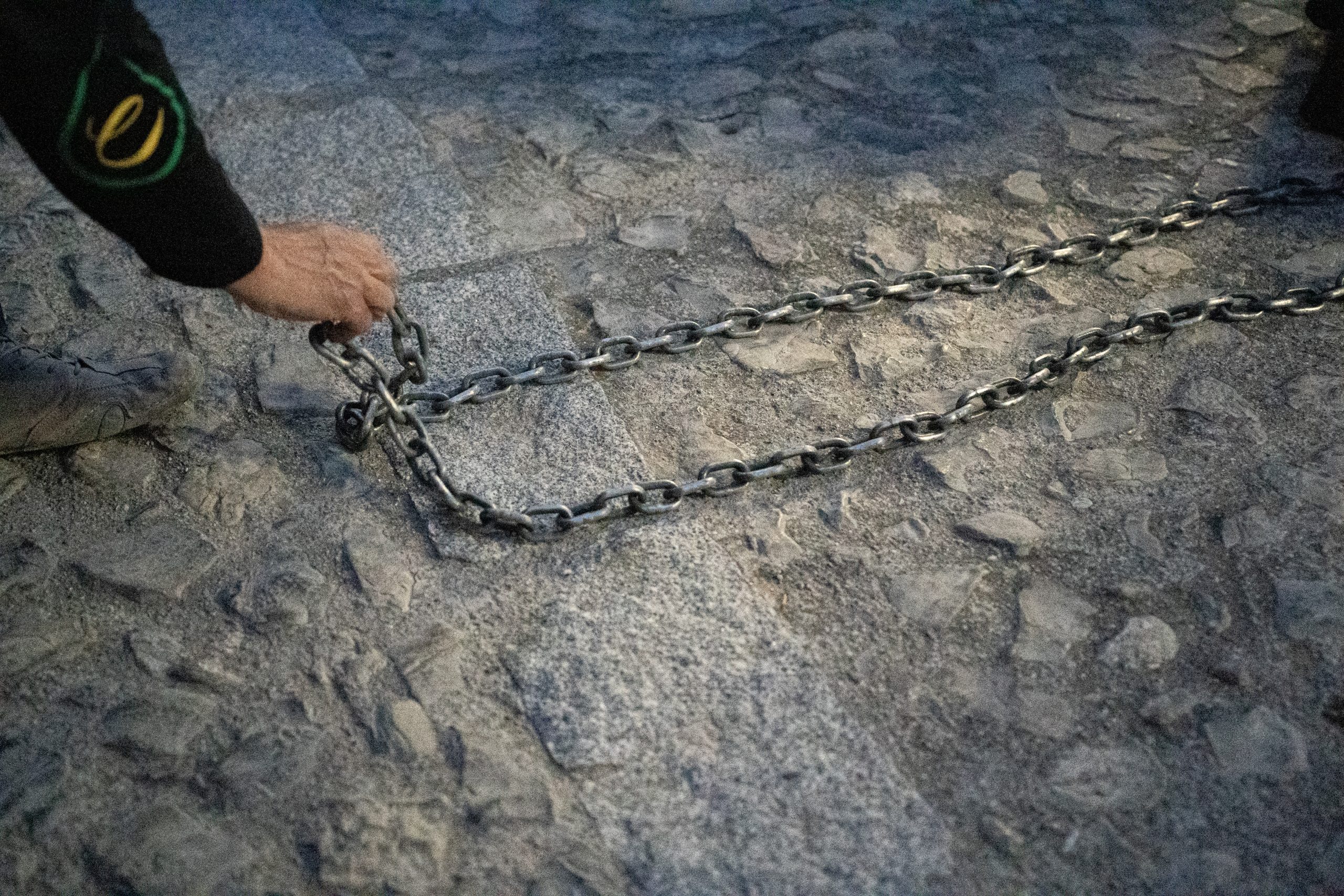
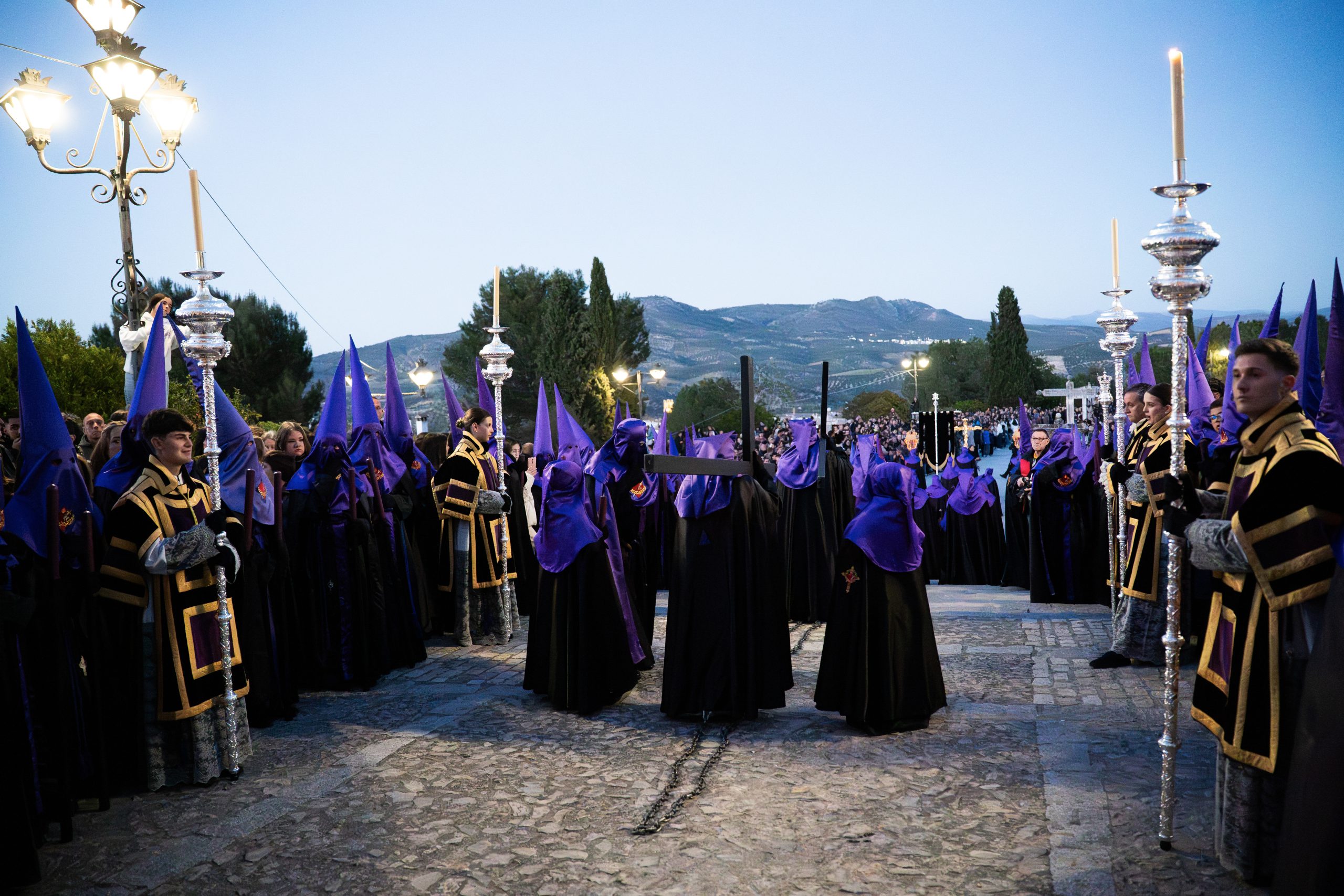
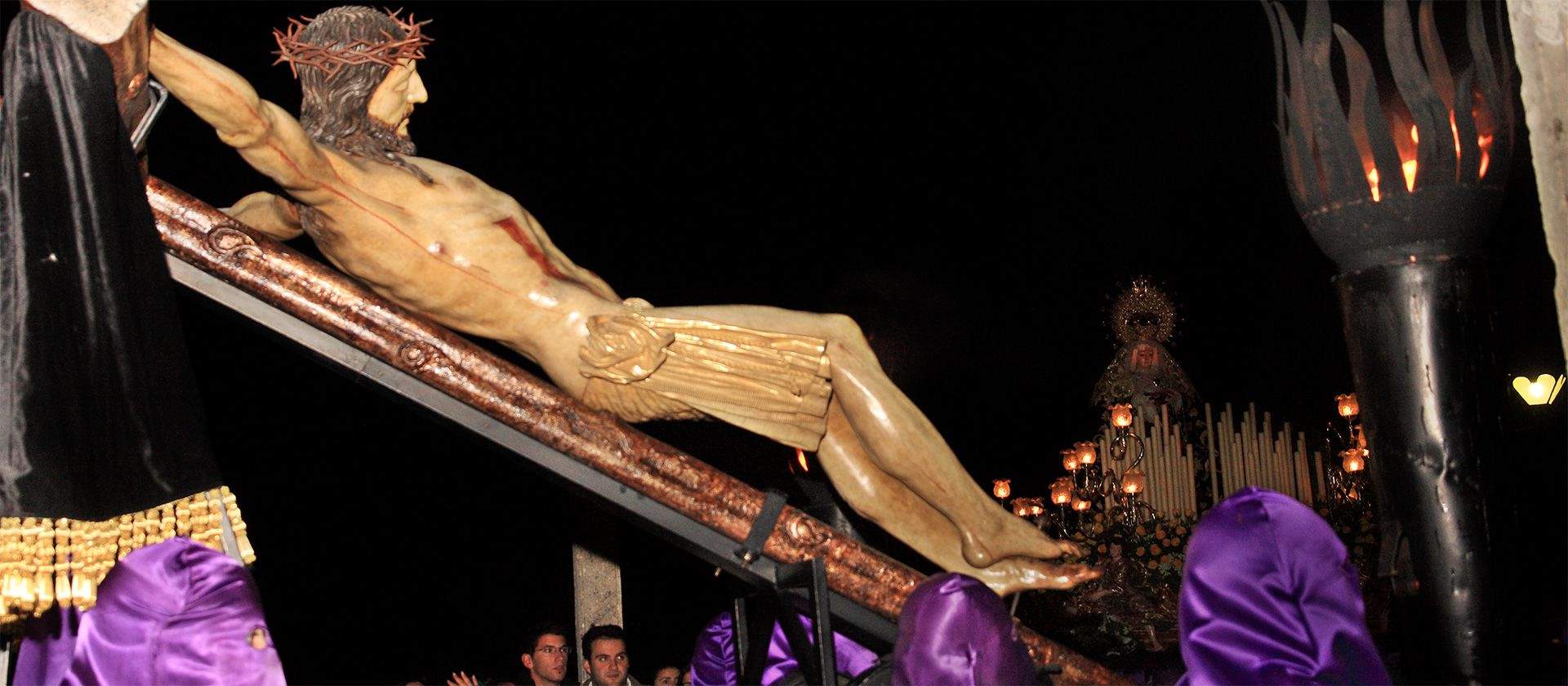
The first procession is thought to have taken place in 1930, but there is no documentary evidence: the figure of Christ of the Blessed Death was added in 1970. The procession, generally acclaimed as one of the best-organised and most spectacular of Holy Week in Priego, undertakes a double journey. On the Monday it leaves the heights of the shrine of Calvary and descends through the town to the parish church of La Asunción. The official march of the cofradía, known as the Silent Procession, climbs back up through through the streets in the early hours of Good Friday, returning each figure to its respective shrine.
The routes are — on Easter Monday: Calvary, Rute, Virgen de la Cabeza, Estación, Santo Cristo, Málaga, Ancha, Río, Ribera, Corazón de Jesús and Asunción.
In the early hours of Good Friday: Asunción, Corazón de Jesús, Ribera, Carrera de la Monjas, Lozano Sidro, Virgen de la Cabeza, Rute, the lanes leading to Calvary.
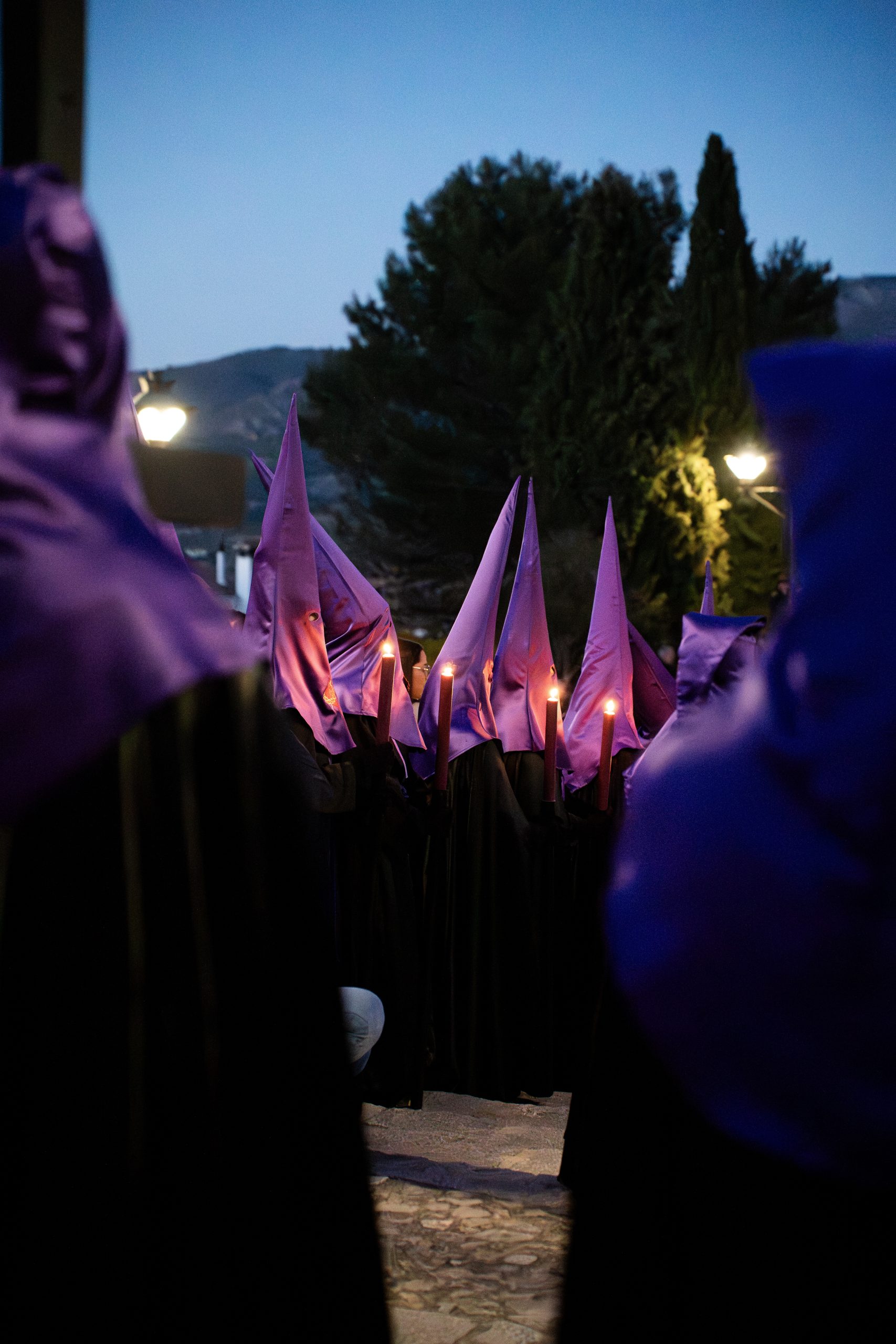
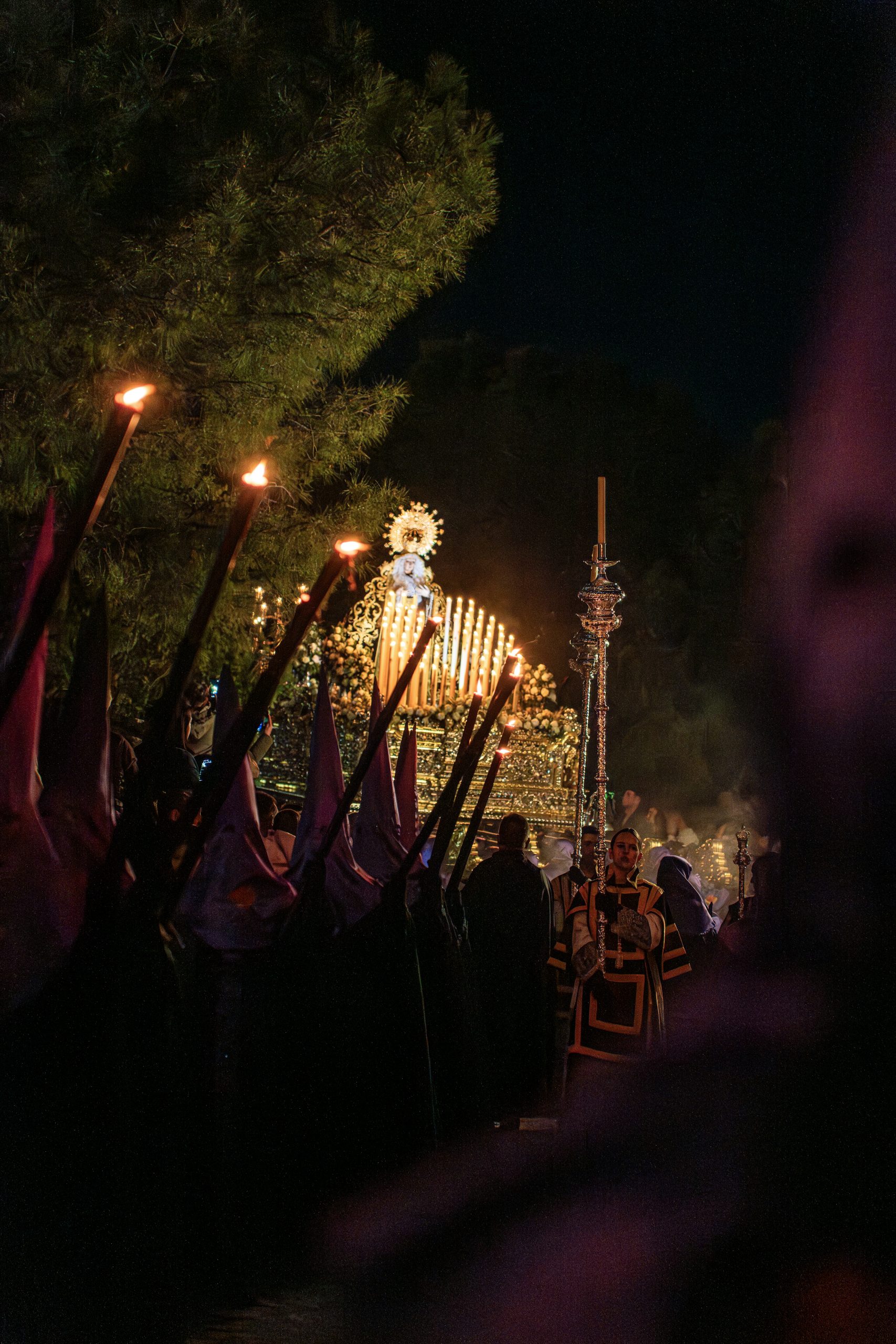
The Virgin is carried on the shoulders of 110 costaleros, or bearers, wearing black robes with purple hoods. They are substituted 55 times during the procession, so long is the route, and so great the weight of the icon and its throne. The costaleros are obliged to execute extremely difficult manoeuvres through tiny lanes, and their movements are guided by a procession director, giving commands to the ringing of a bell.
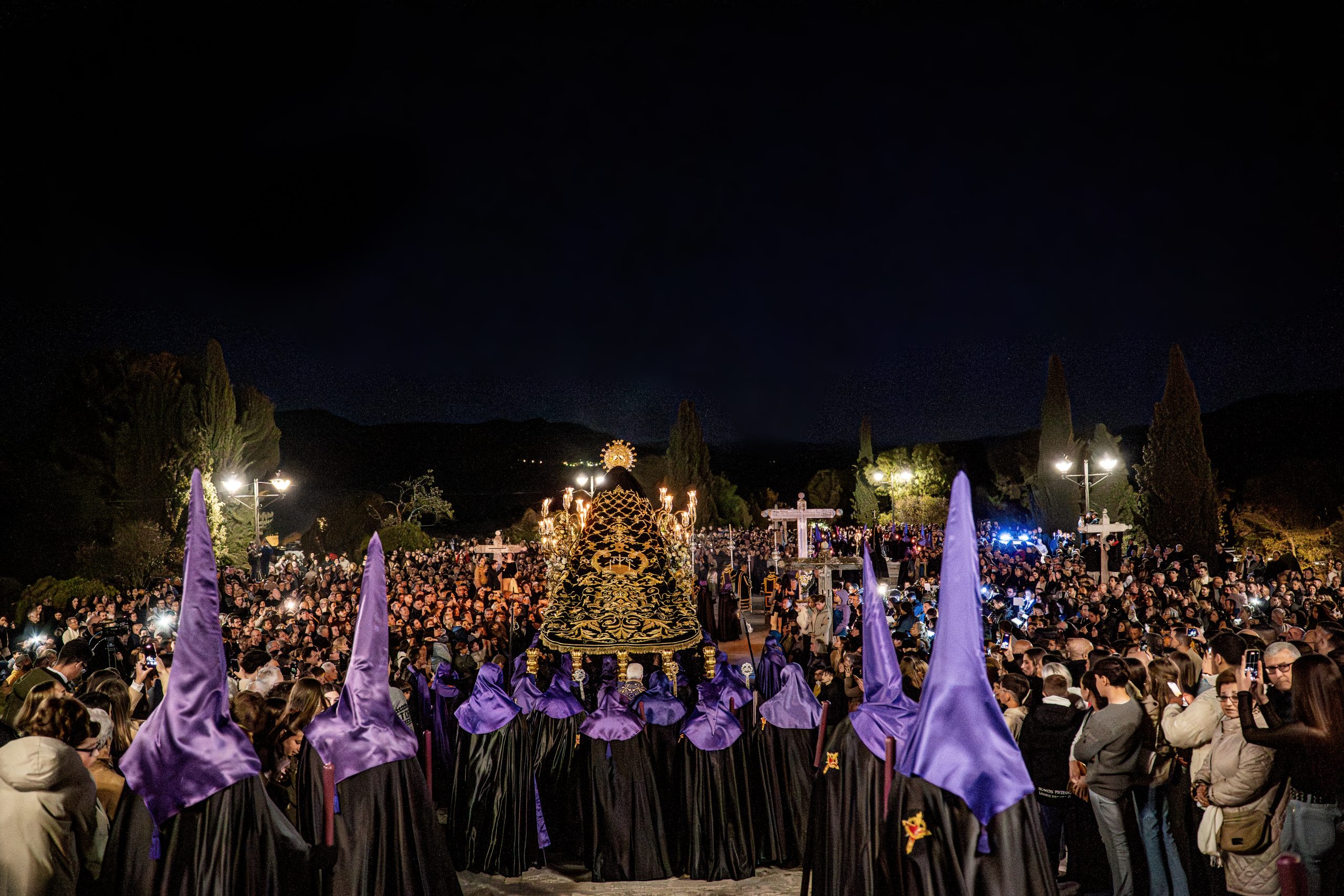
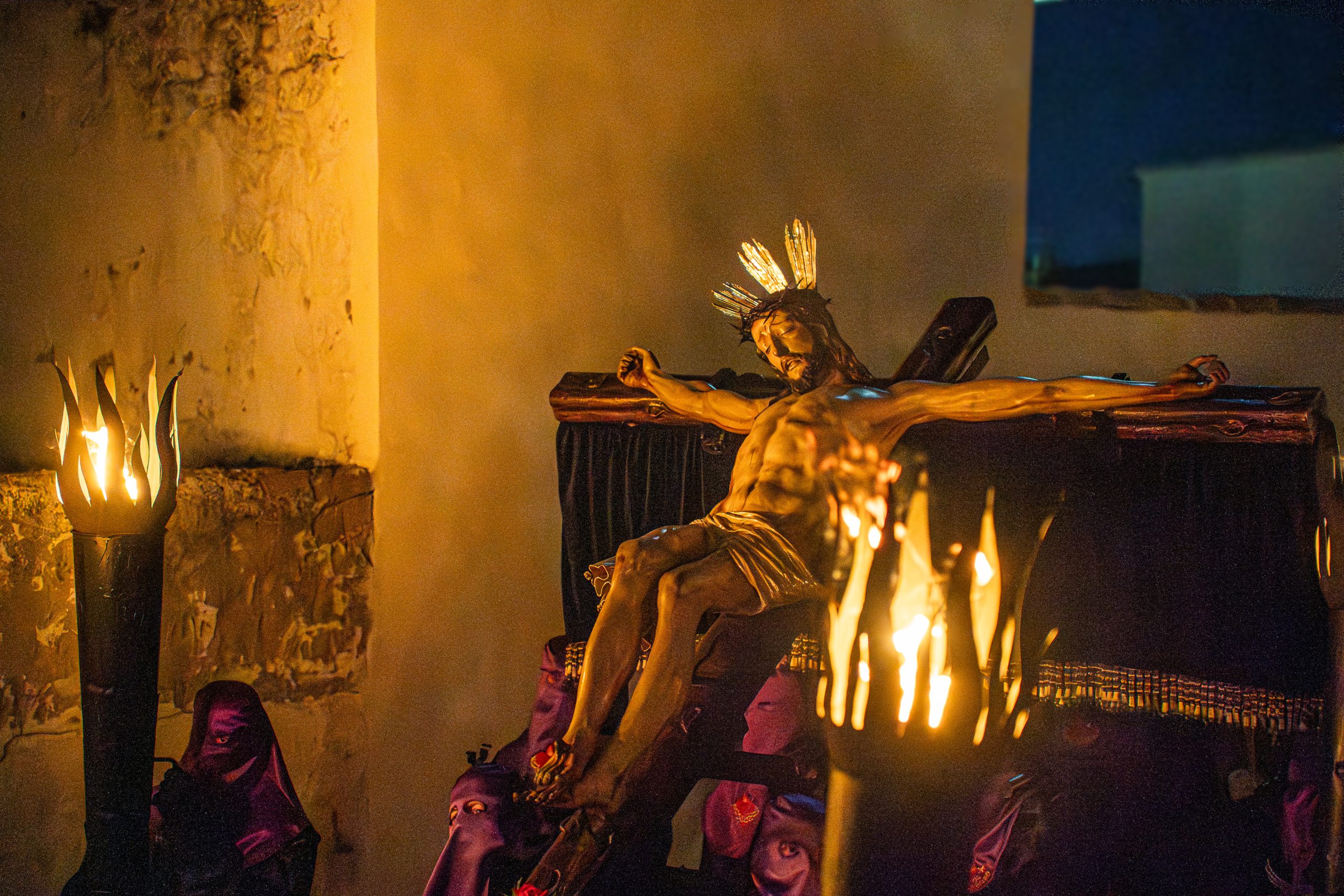
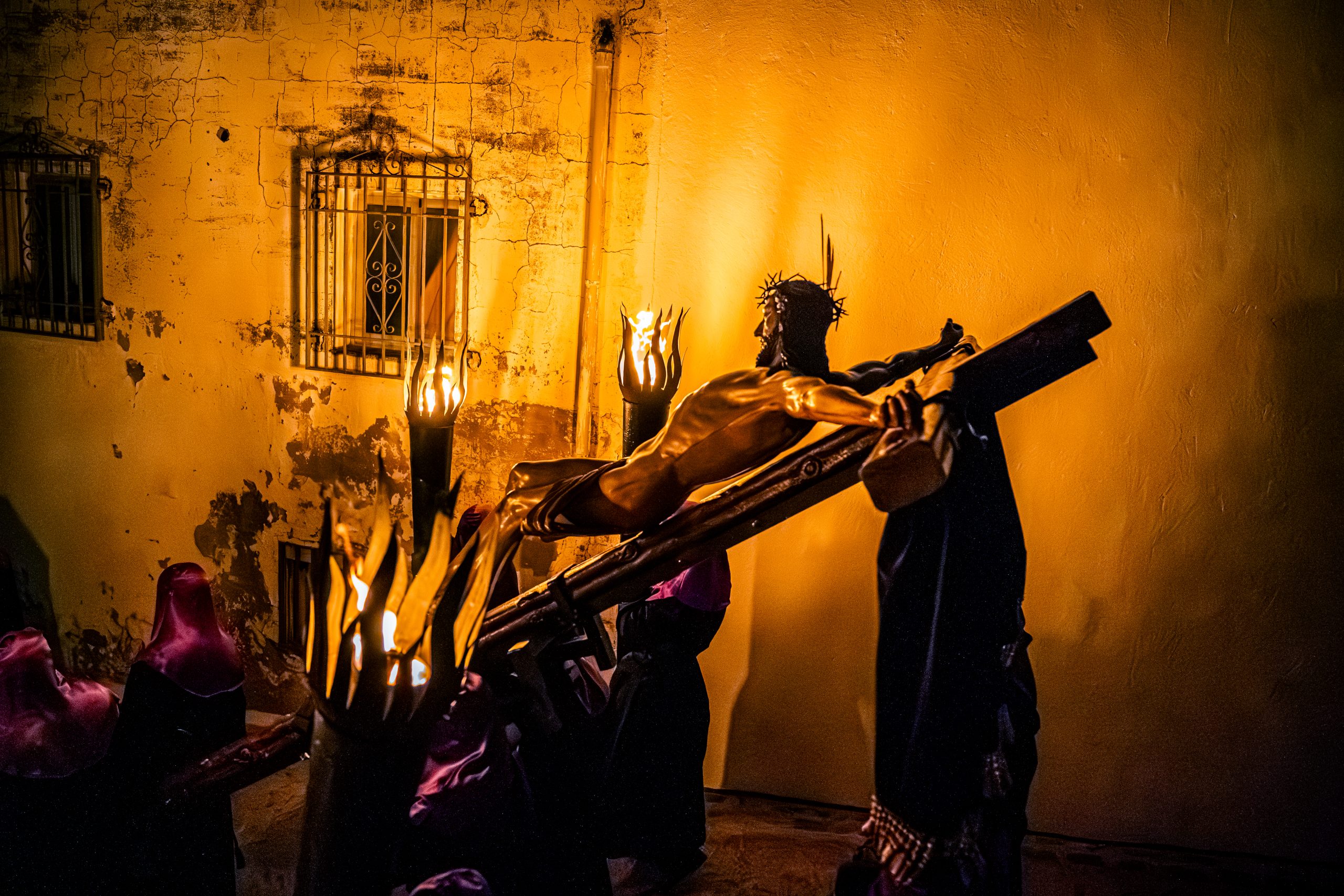
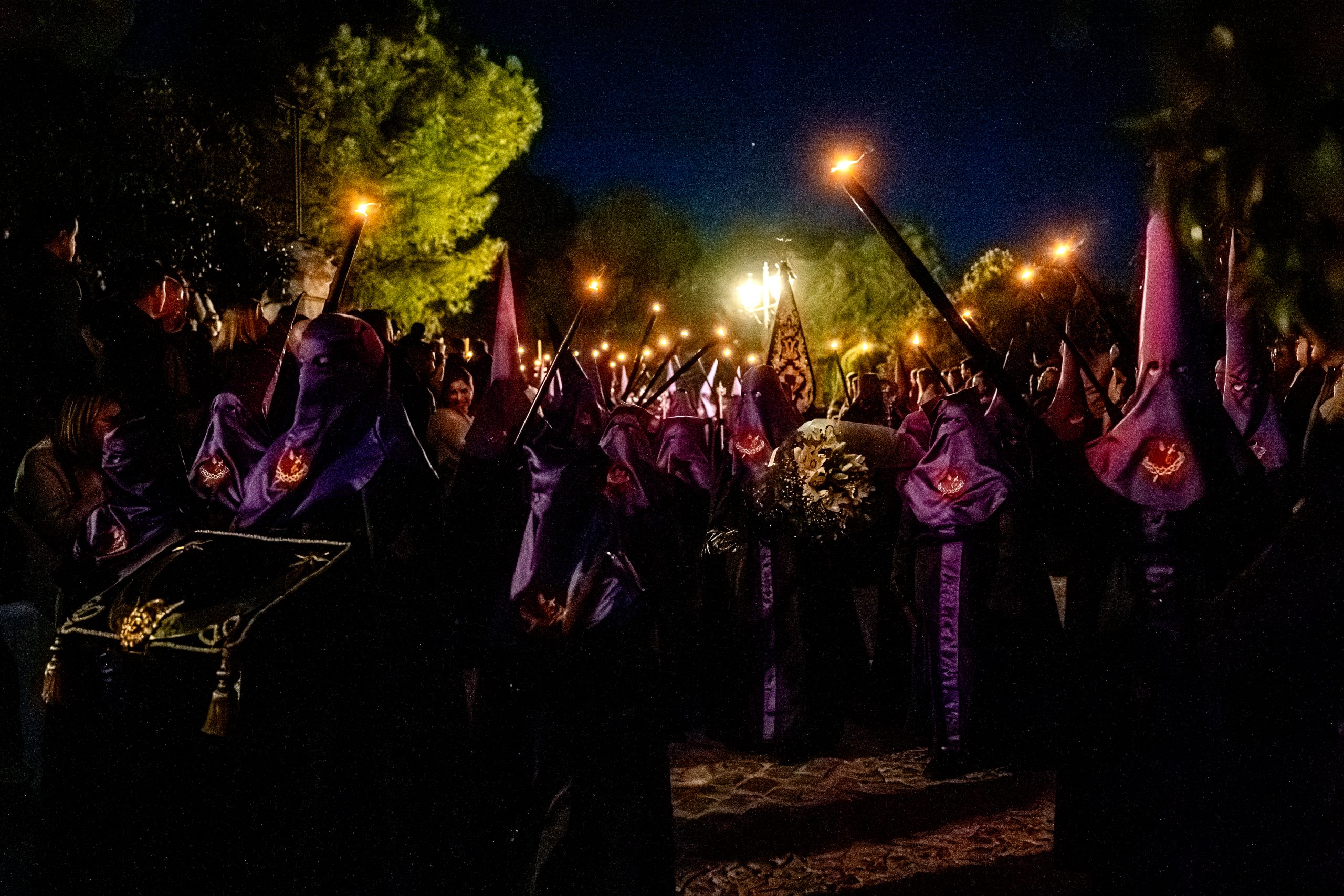
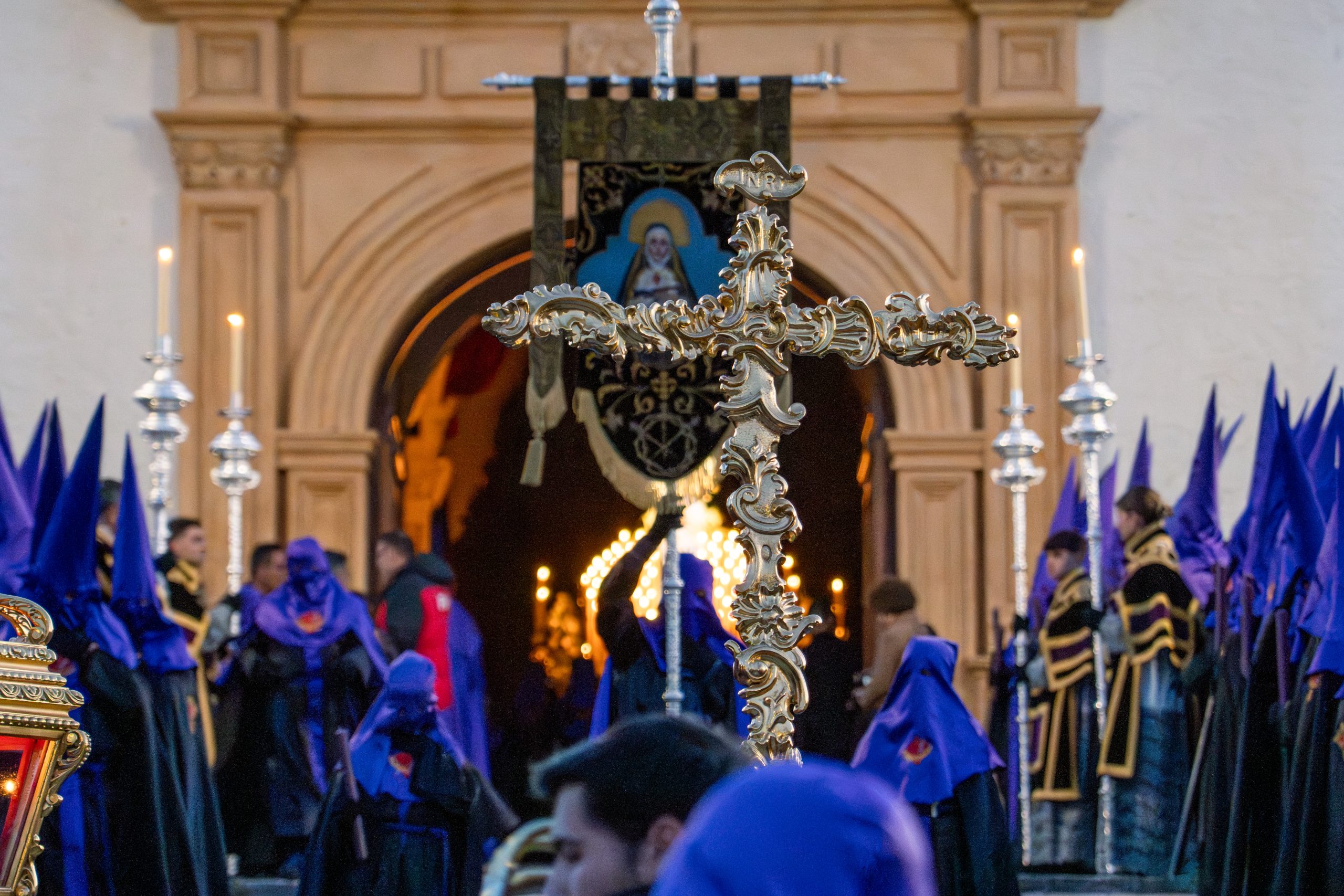
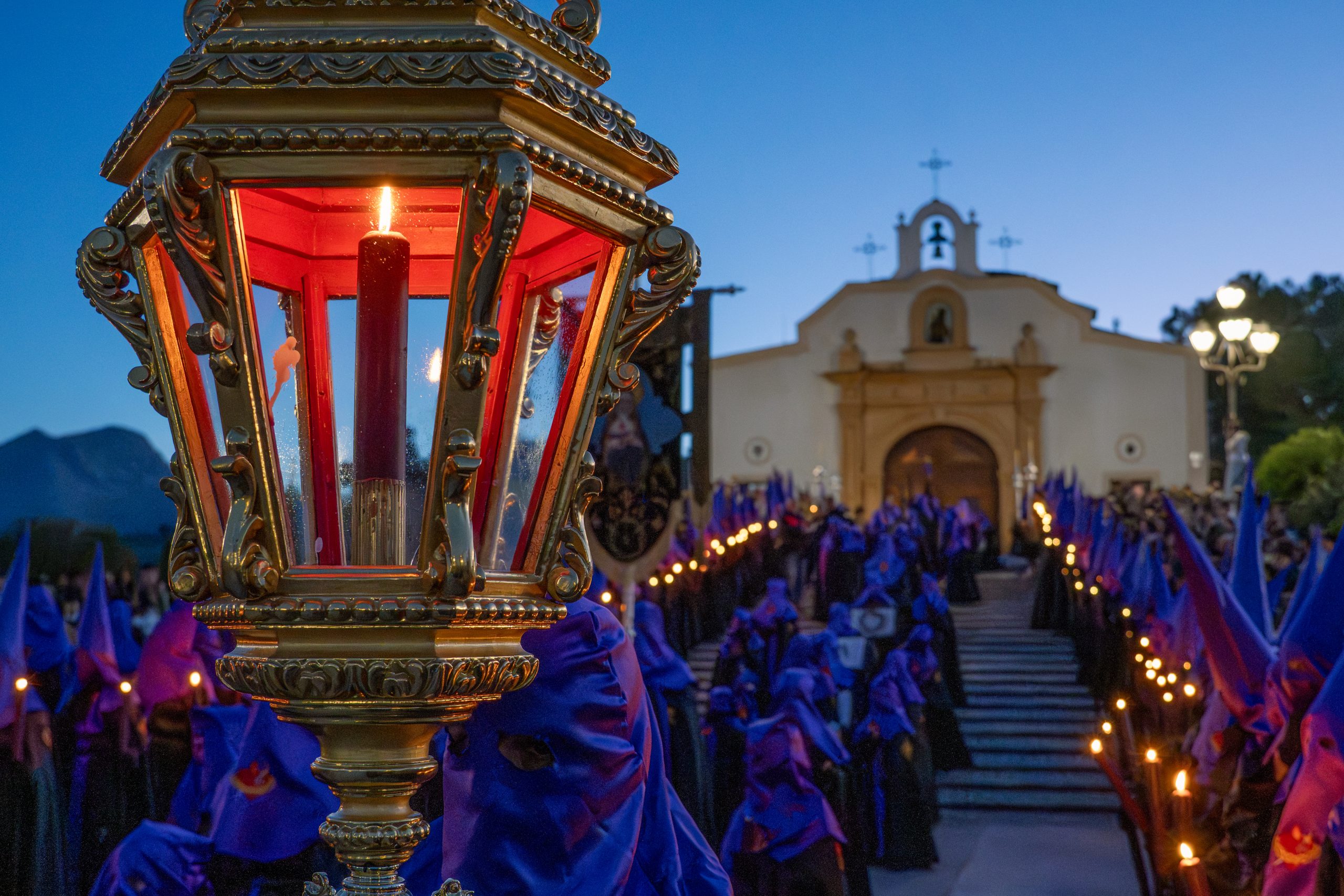
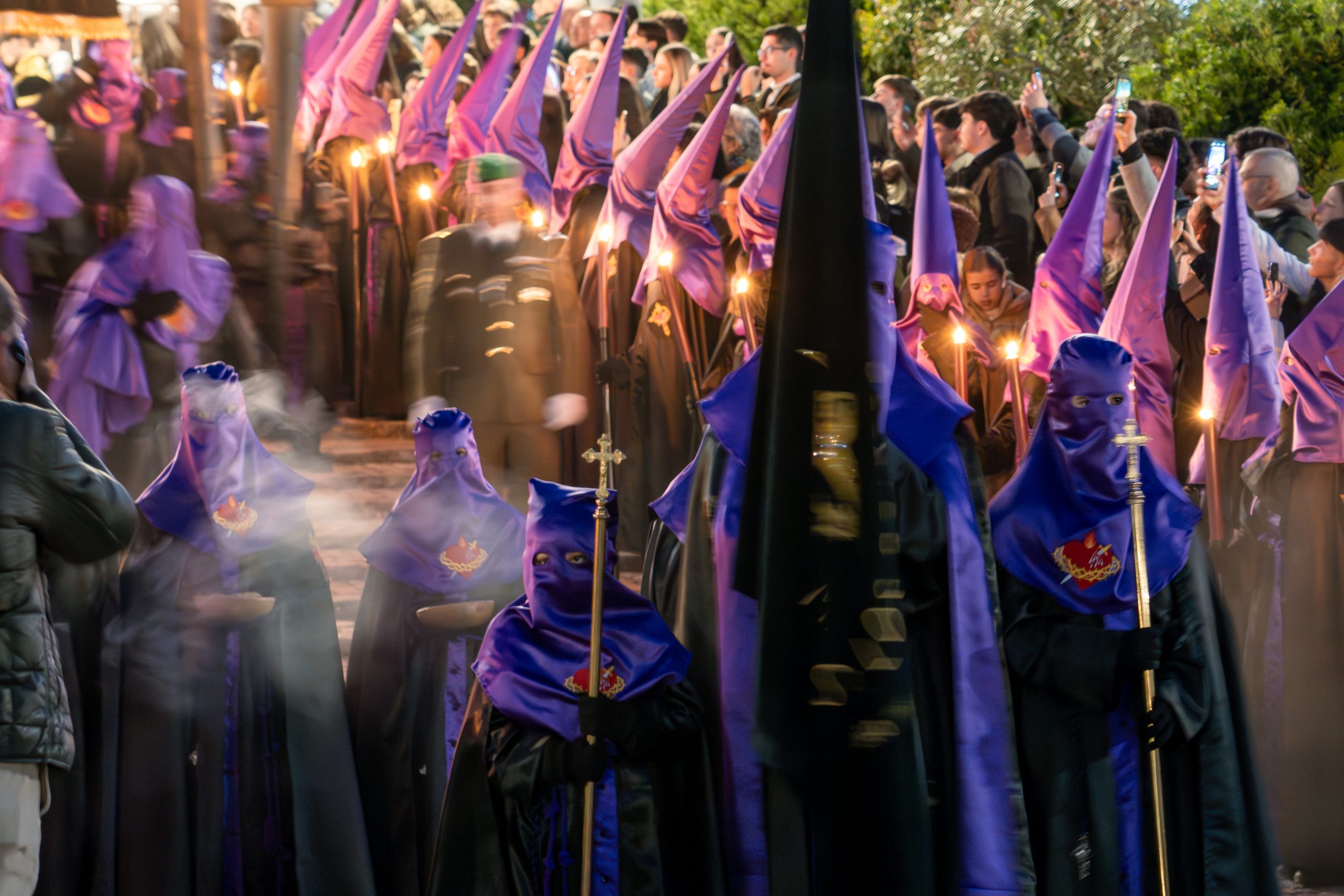
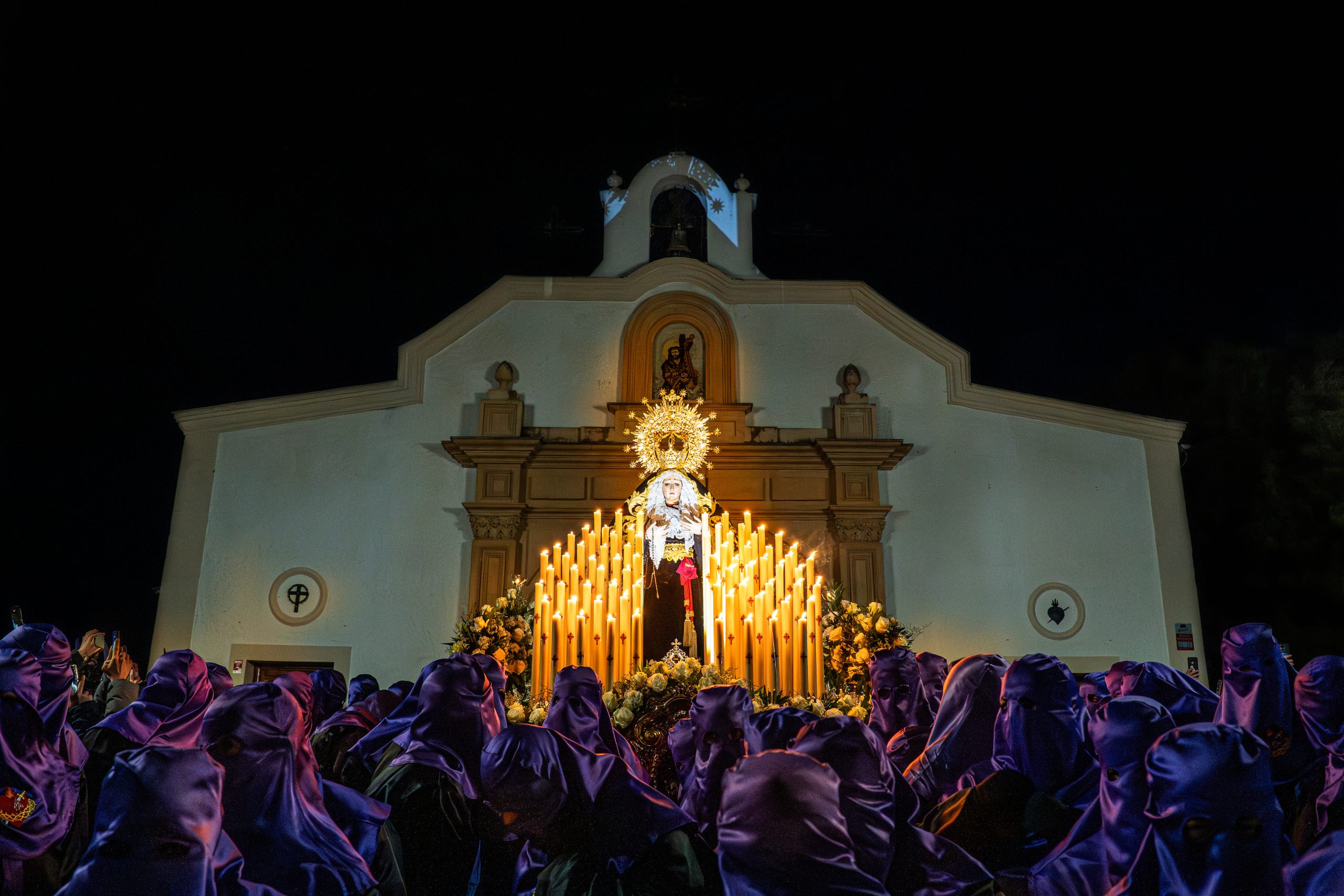
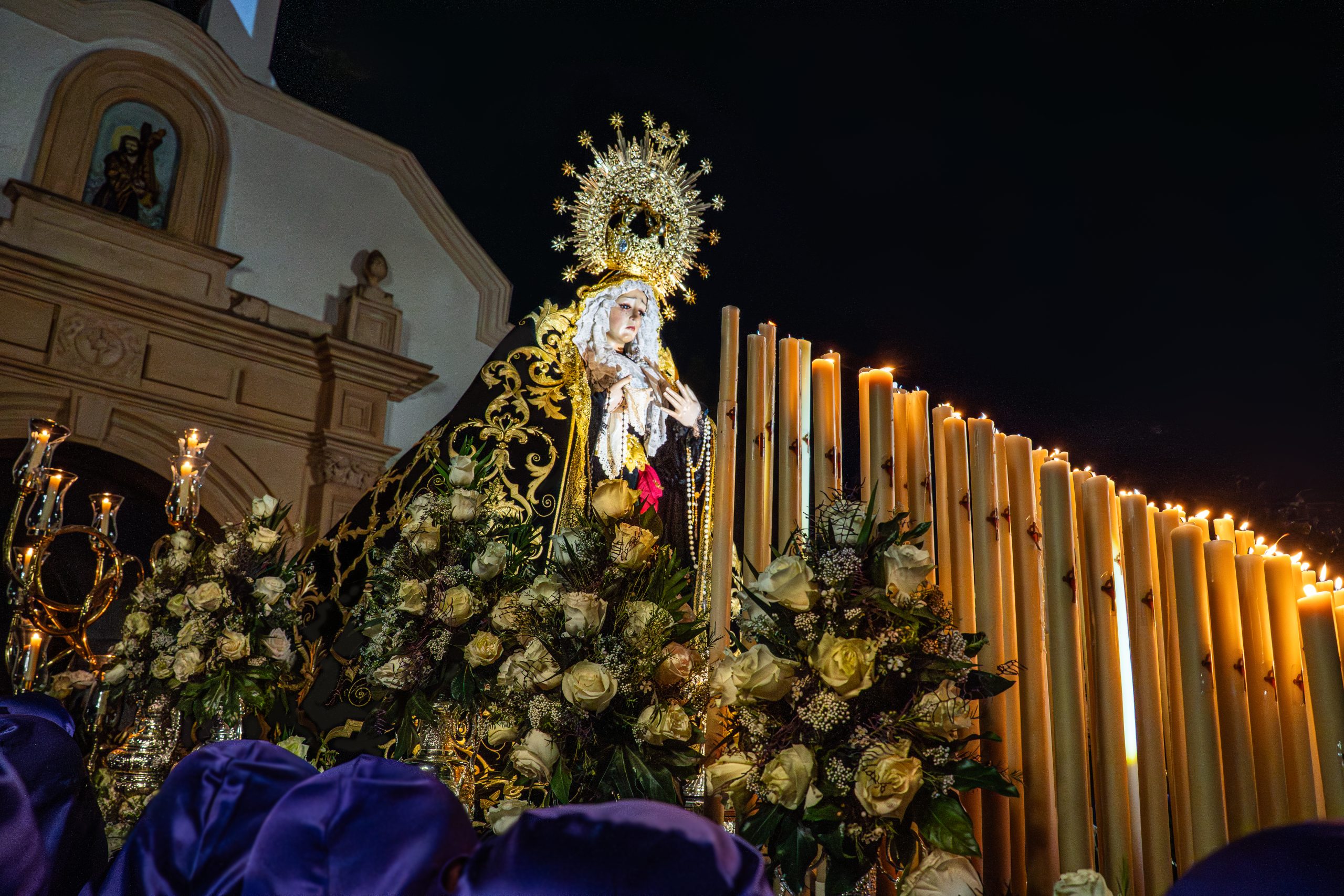
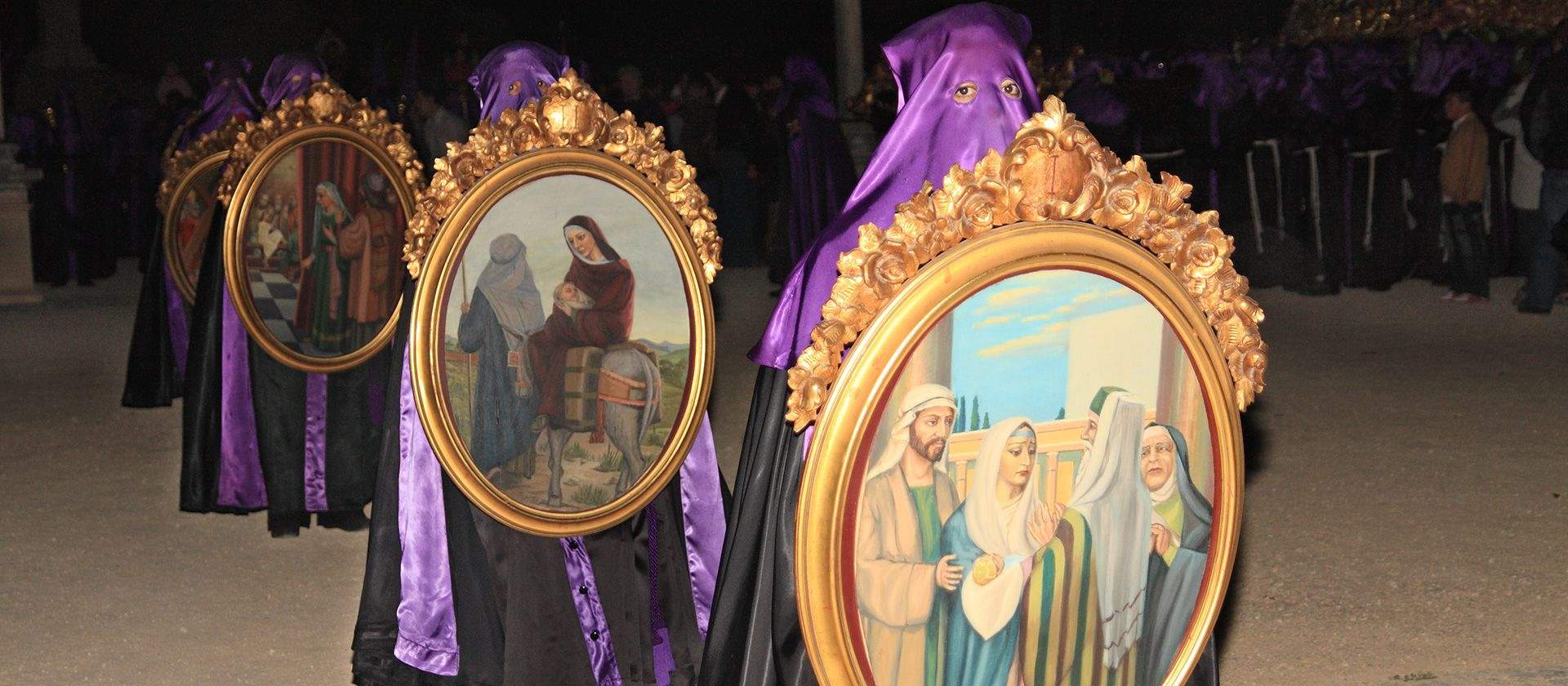
The so-called Ovals of the of the Suffering — seven oval-framed paintings by Manuel Rovira Casañer – were added to the procession in 1981: they are carried by penitents, and depict the seven sufferings of Our Lady.
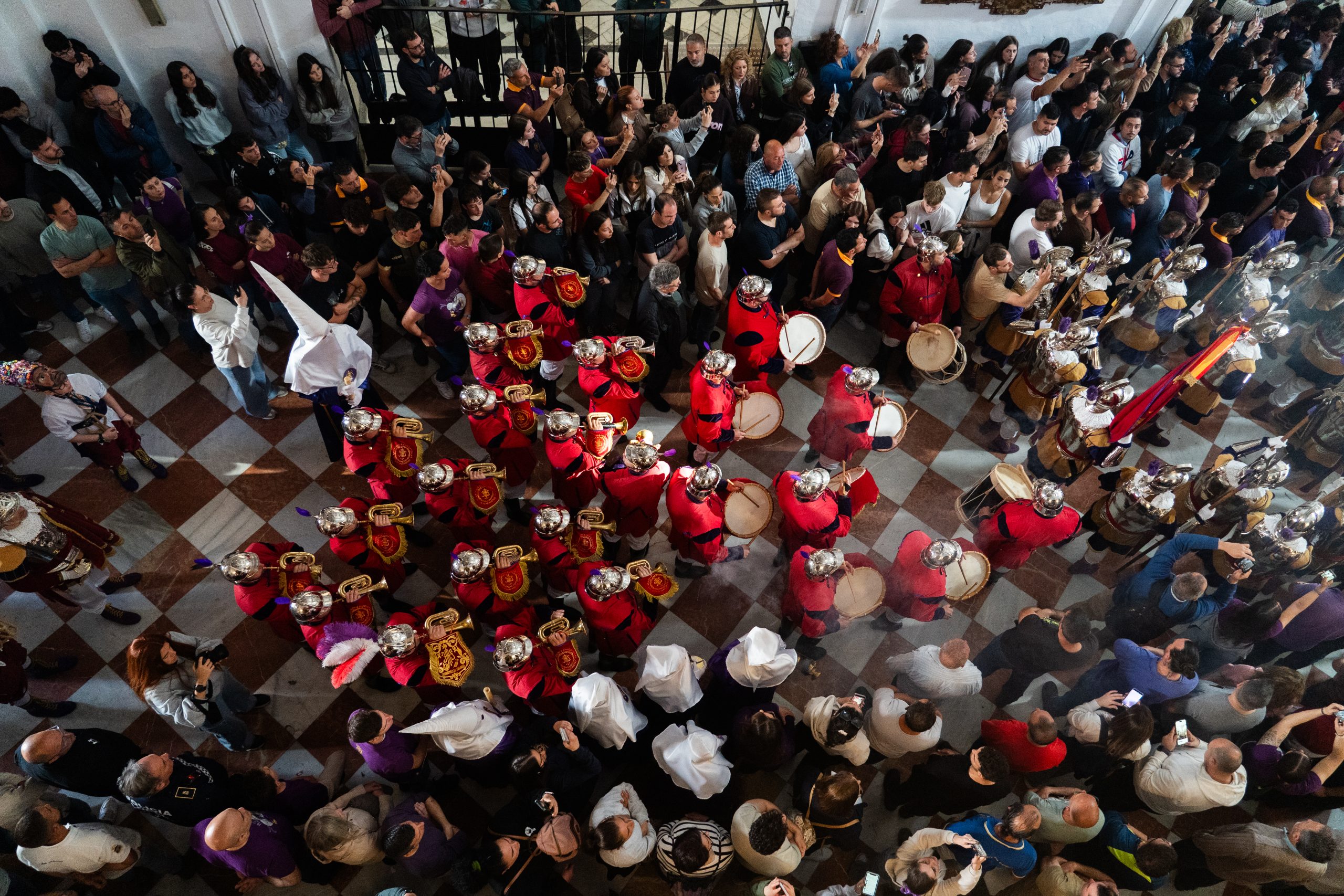
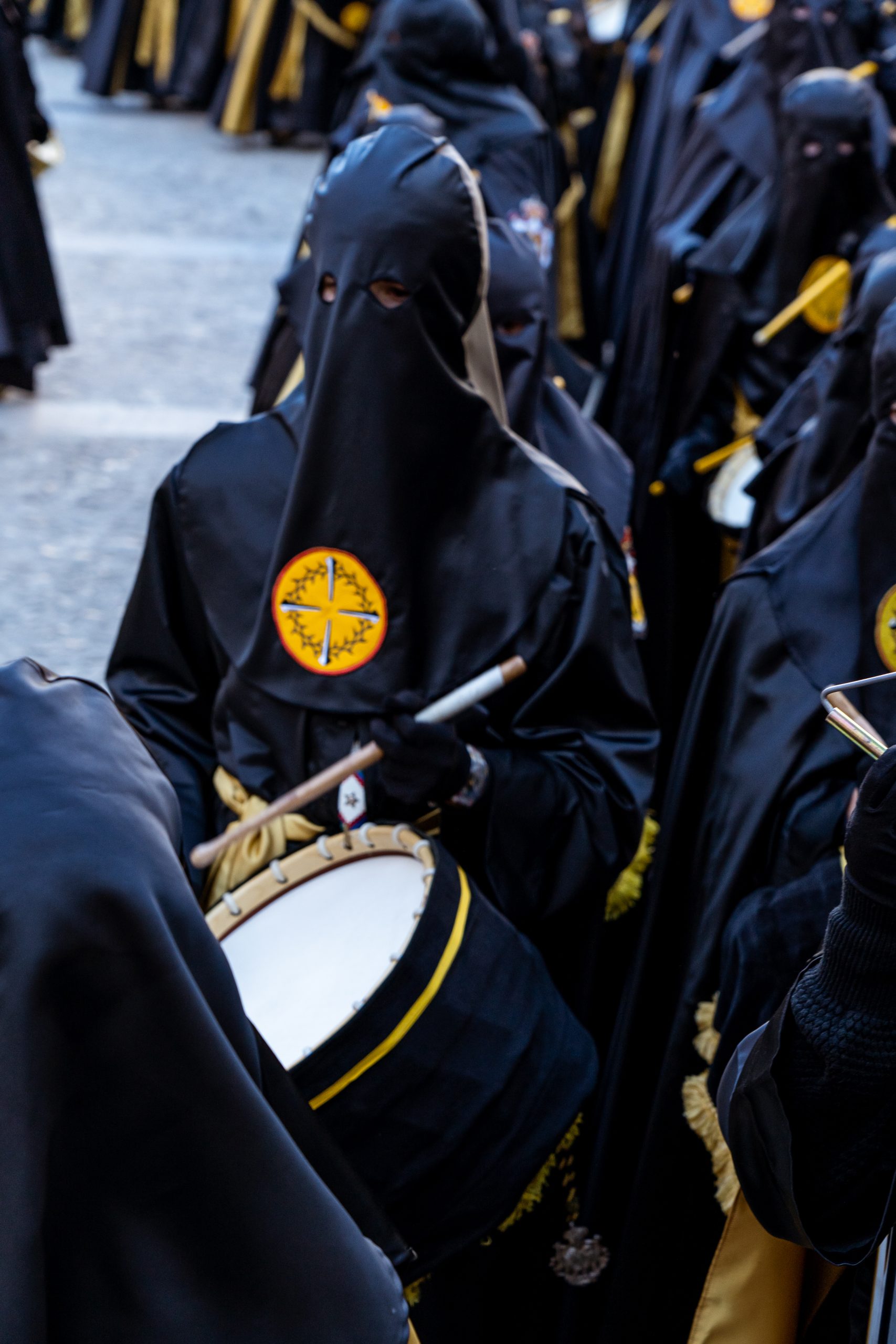
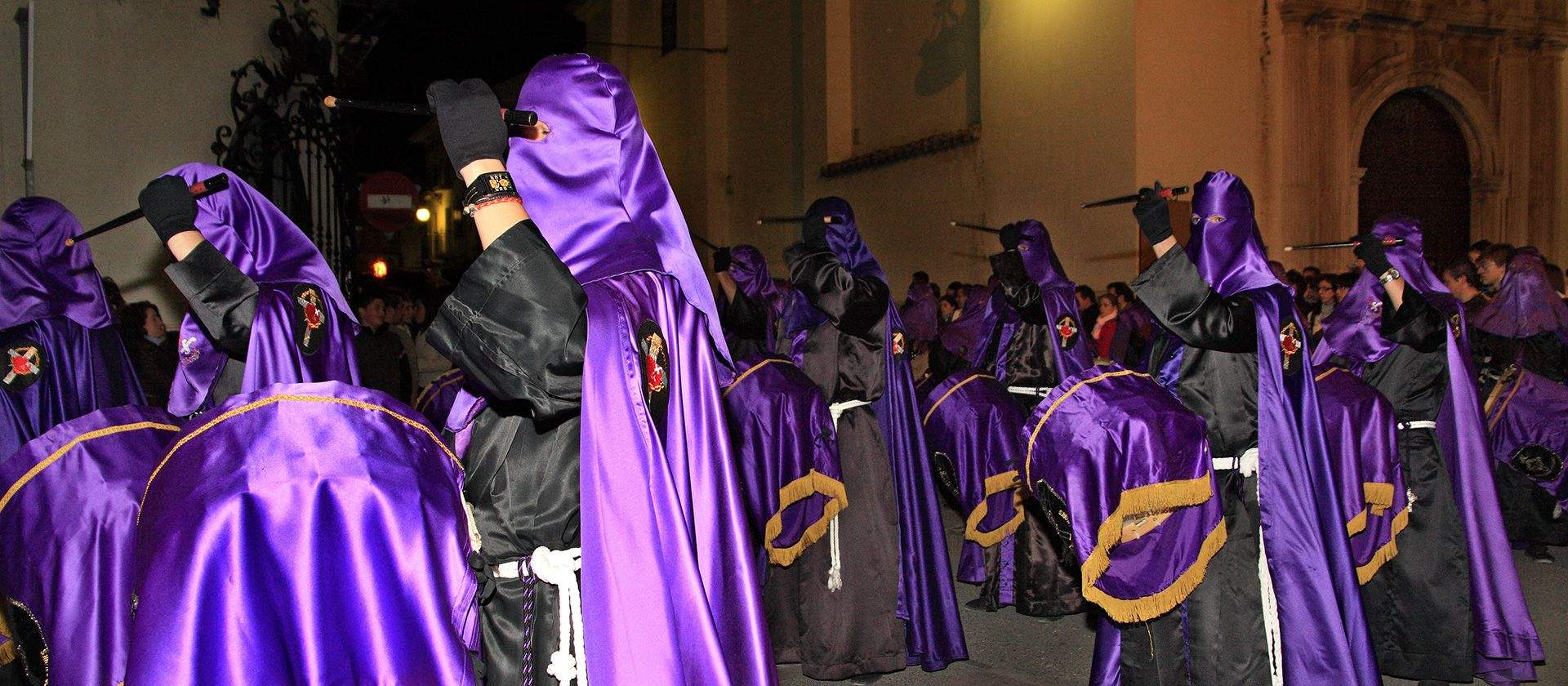
The procession has been accompanied by the drums of the guild since 1971: today, there are 38 drums, as well as the lead drum and 12 bass drums, which mark a rhythm composed by Alonso Cano and Antonio López. This band was the first to adopt the so-called raun to accompany the exit and entrance of the icons — fast and thunderous drumbeats which electrify the atmosphere. In 1991, six bugles were incorporated to play a fanfare, an event unprecedented in Holy Week. The band’s repertoire, including the March of Silence, has been adapted to its style by Antonio Ureña, and the composer Francisco José Serrano has written a Passion march specifically for the fraternity.
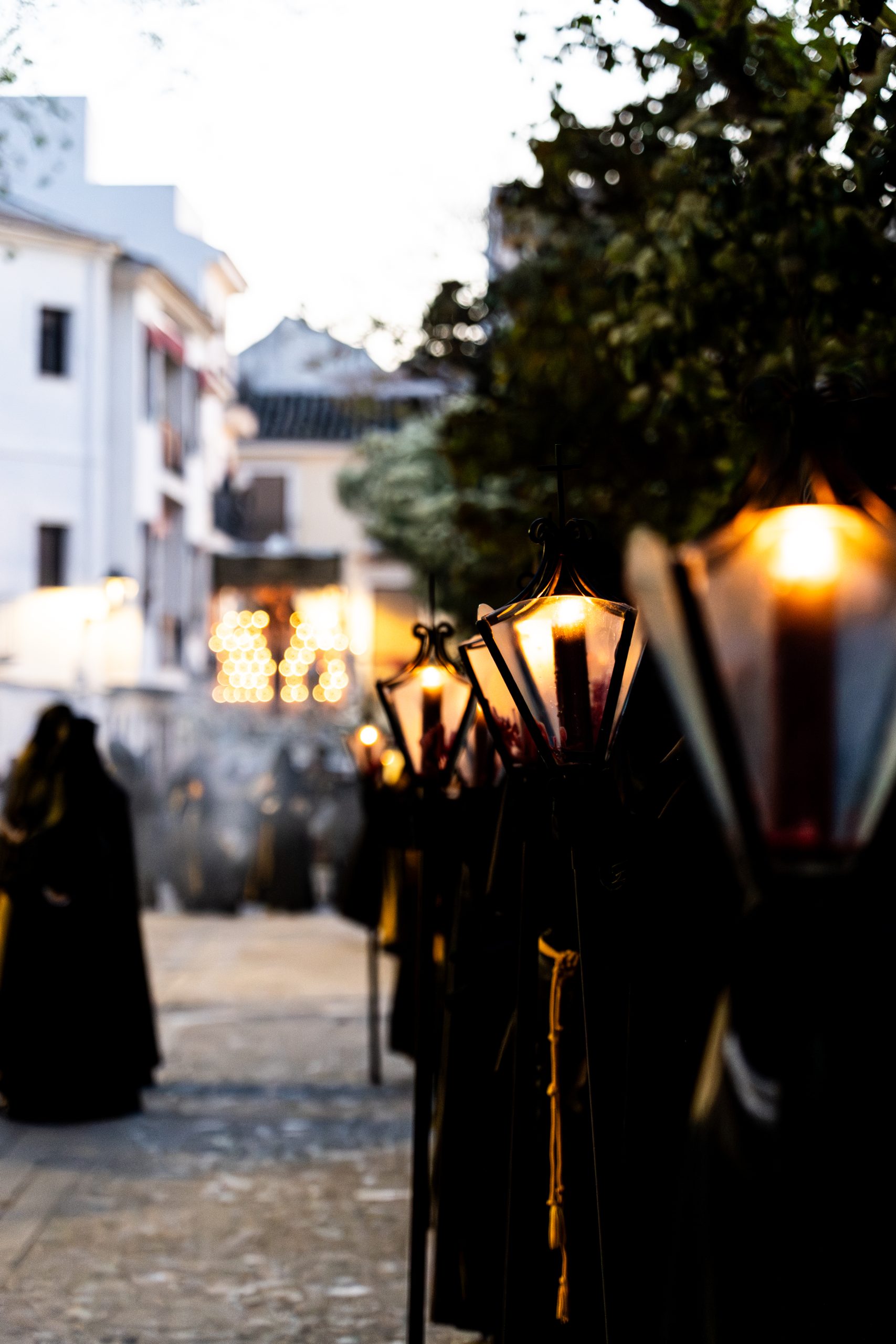
The Silent Procession climbs up towards Calvary in the early hours of Good Friday, with the Choir of the Vía Sacra, singing the sacred music Stabat Mater and Miserere, which has traditionally accompanied the Passion and the saying of the Rosary,
There are a number of ceremonies in the days leading up to Easter: every Friday in Lent until the Friday before Holy Week, there is an enactment of the Vía Crucis, The Way of the Cross, and afterwards, the fraternity and supporters gather to kiss Our Lady’s hand. There is a quinario – Mass on five consecutive days – during the preceding week.
- Pontificia y Real Cofradía y Hermandad de Nuestro Padre Jesús Nazareno, María Santísima de los Dolores y San Juan Evangelista
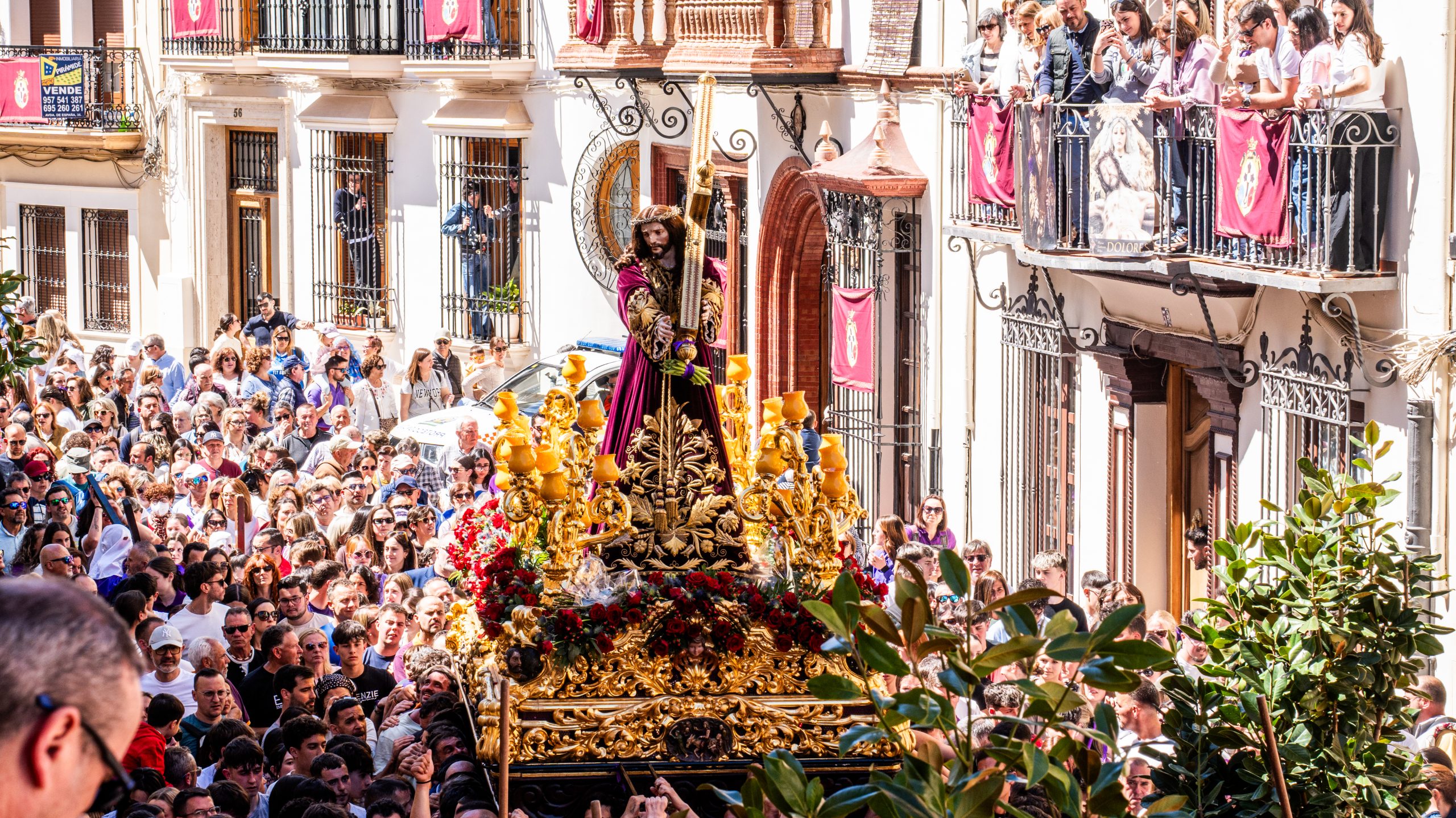
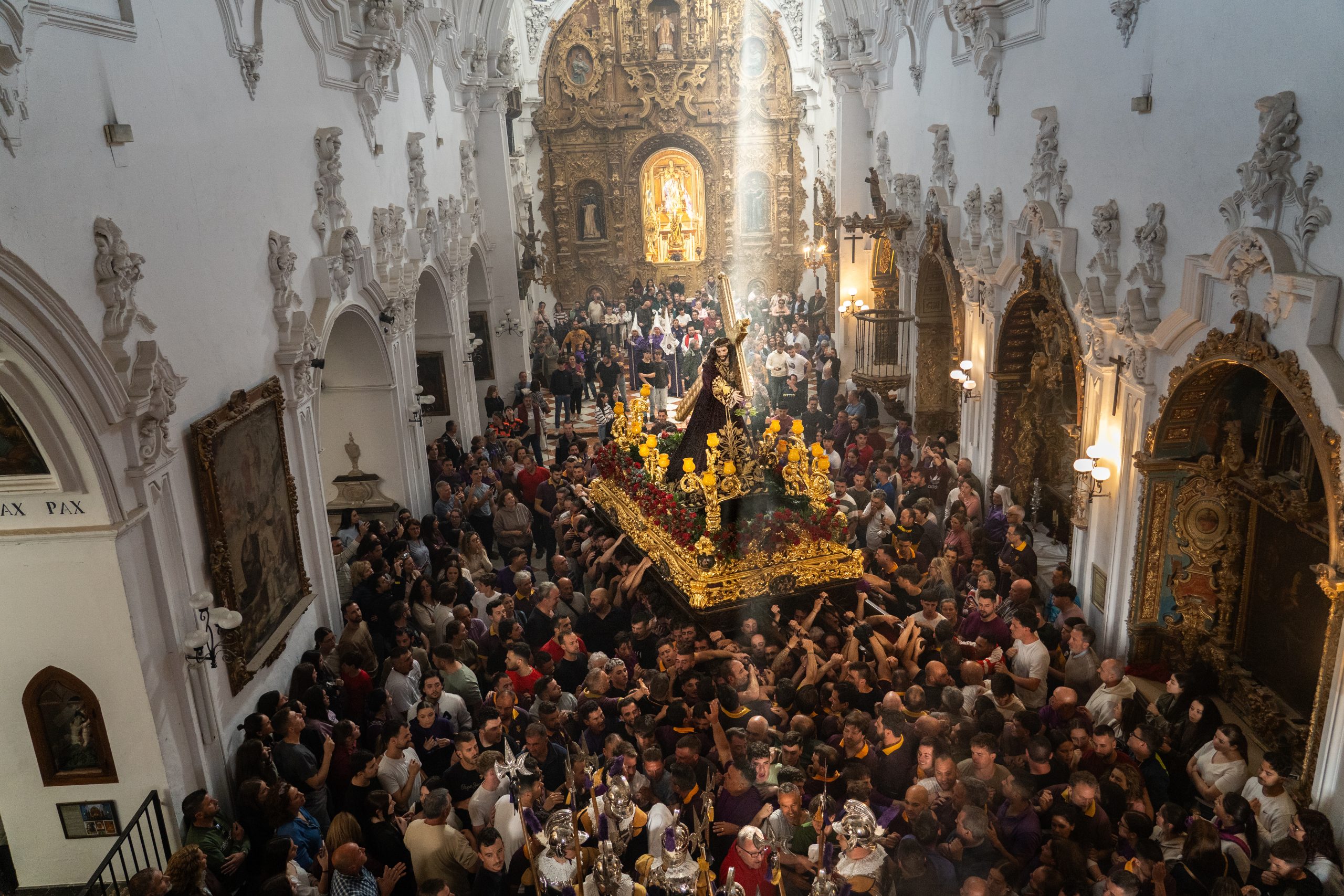
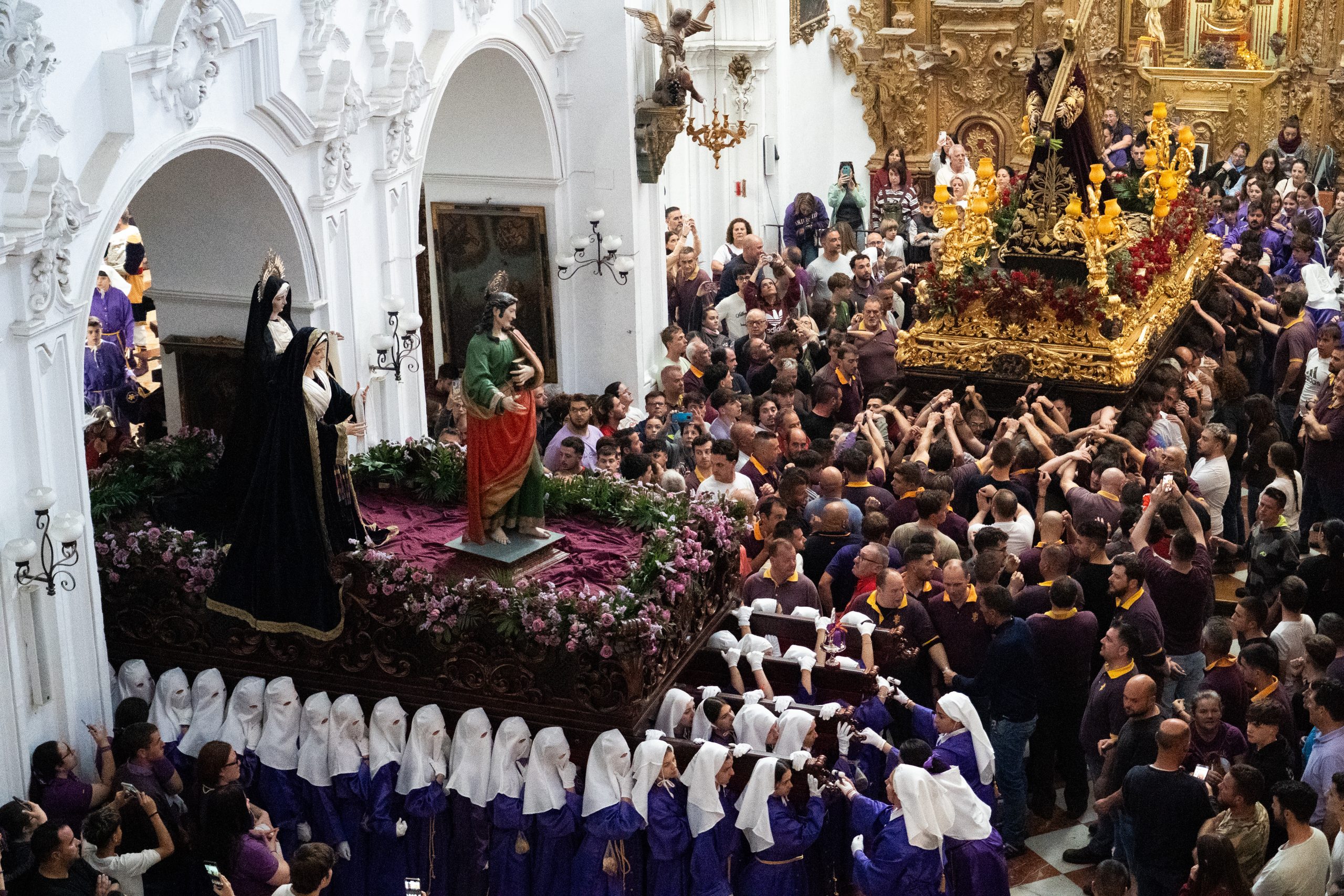
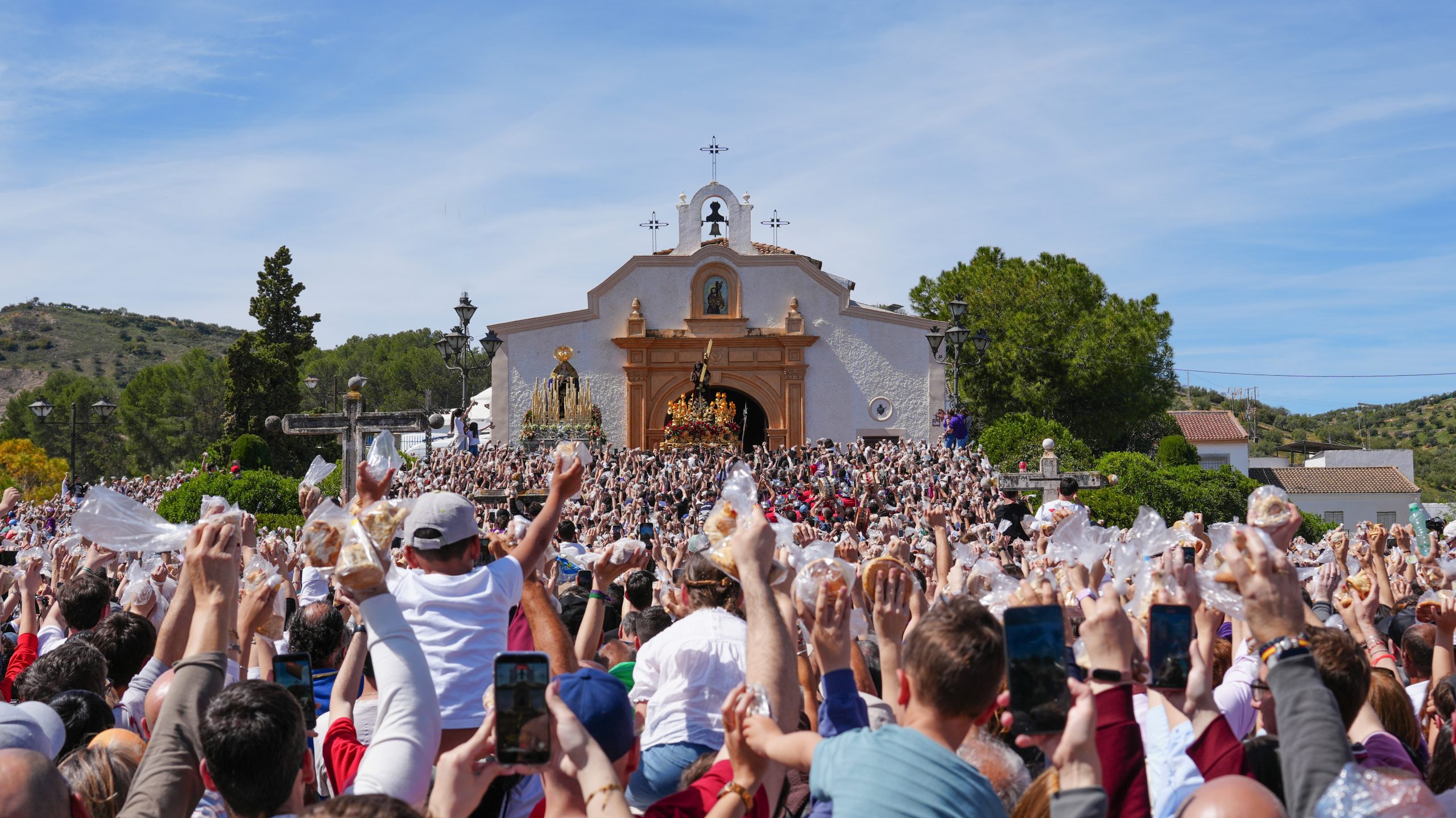
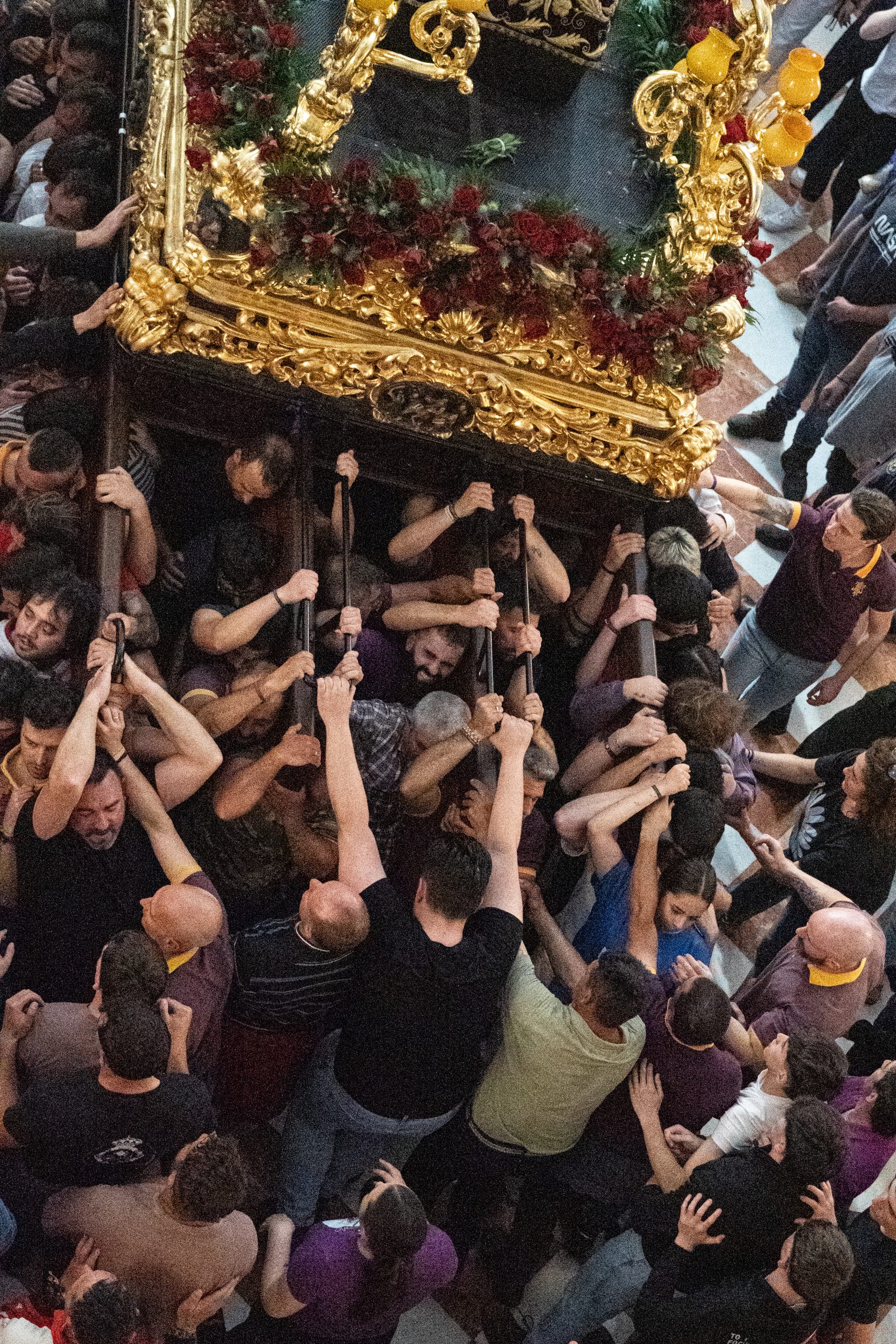
The procession of the Brotherhood of Jesus of Nazareth sets out from the church of San Francisco at 11 o’clock on Good Friday morning: the figure is swept along through the town and up to the hill of Calvary, by a huge number of people pushing and jostling for a place under the platform supporting the icon. This is the culmination of Priego’s Holy Week: on Calvary, overlooking the whole town, thousands of people hold aloft their hornazos, little Easter pies containing a hard-boiled egg, to be blessed by Jesus of Nazareth.
On April 4th, 1653, the Cofradía y Esclavitud de la Rogativa — the Brotherhood of Devotion to the Will of God — was instituted: its twenty-two founding statutes were approved by the Don Maximiliano de Austria, the Abbot of Alcalá la Real, and ratified by Pope Clement VIII.
The Brotherhood of Jesus of Nazareth was formally established in 1672, in thanks for deliverance from the terrible plague of 1650-1. The Abbot Antonio Alonso de San Martín was asked to approve the twenty-six founding statutes; approval was also given by the Abbot Pedro de Toledo y Osorio, and by Alexander VIII in a Papal Bull of August 18, 1672. Several years after the plague – perhaps in response to this dreadful ordeal – it was agreed that in May every year there would be “a novena of sung masses, with a sermon and procession on the last day”, the start of the tradition now known as The Sundays of May. In 1819, the cofradía presented a new set of nineteen statutes to the Abbot and the civil authorities, which are still followed: today, the Brotherhood is affiliated to the basilica of Saint Peter in Rome.
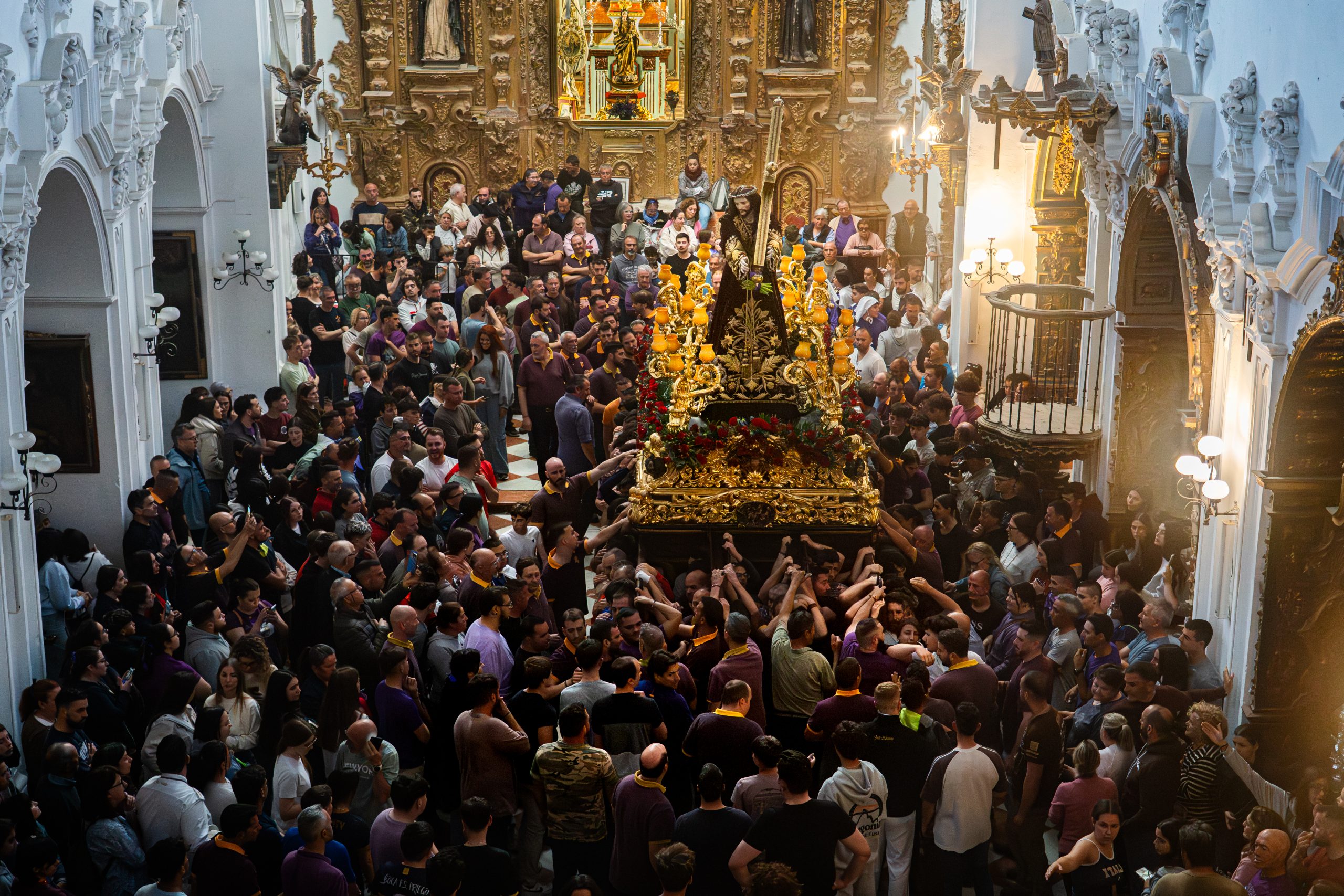
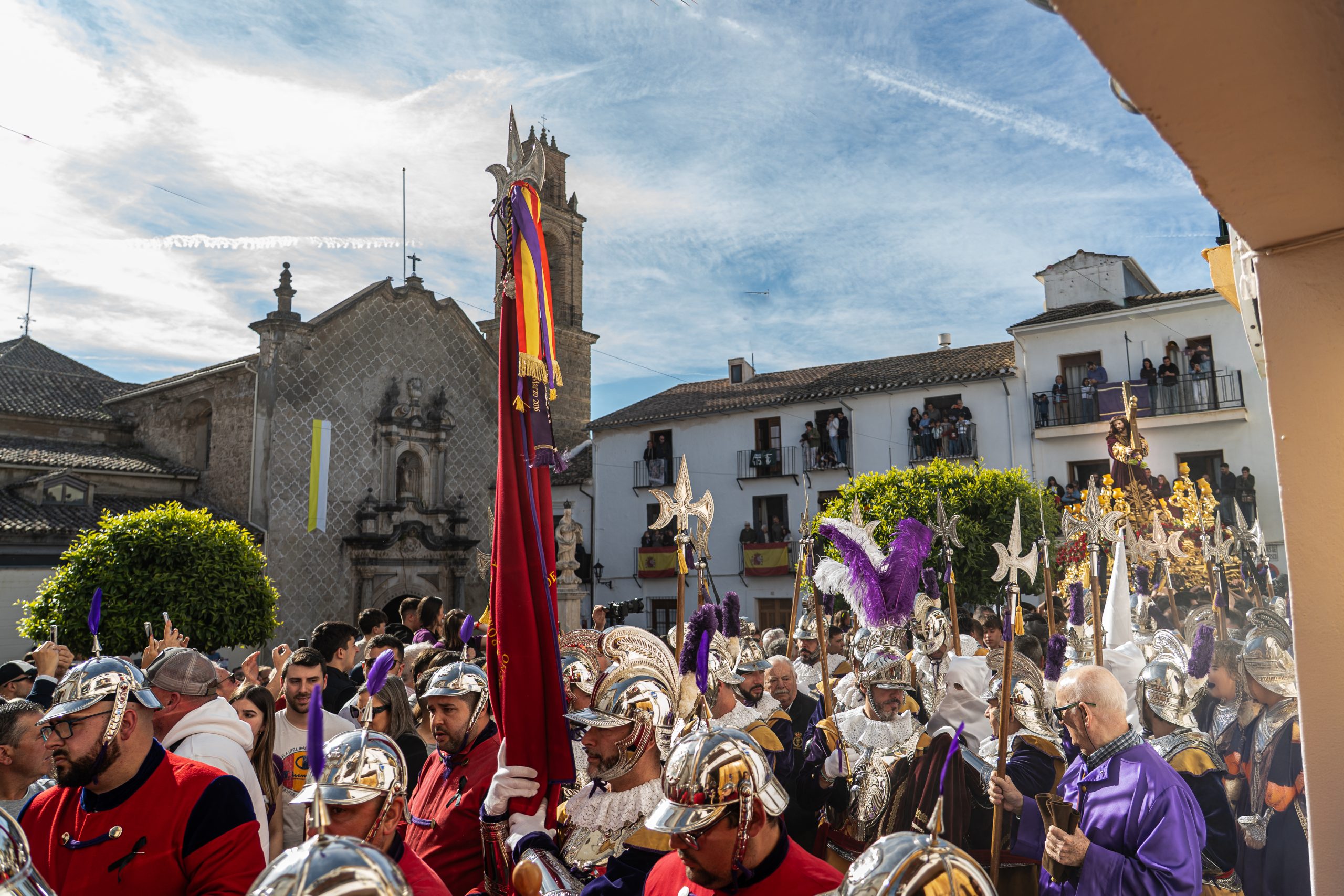
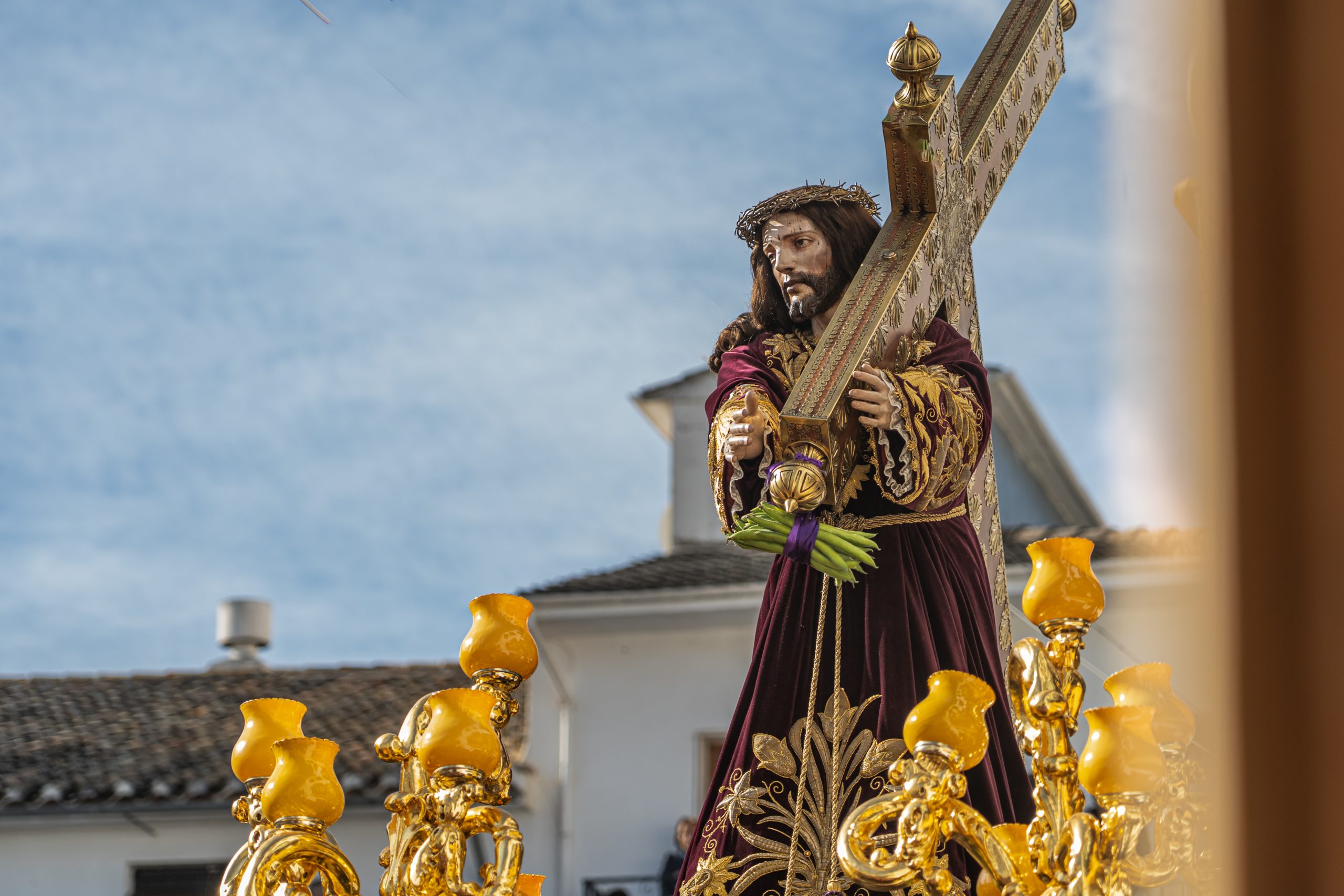
The carving of Jesus of Nazareth is an icon in the Mannerist style, attributed to Pablo de Rojas and still bears some of its original gilding and polychrome tinting, probably by Pedro de Raxis around 1592. The face is its most outstanding and surprising feature: instead of a picture of suffering and torment, it radiates peace, and a tranquil beauty which cannot fail to move the observer. The features are framed by a curly, evenly-trimmed beard, and hair parted in the middle, falling in ringlets behind the ears: unusually, the whole body is carved, with a robe fastened at the waist. The carving is finely detailed, with Jesus in a tortuous posture — knees bent, feet at opposing angles, and the torso twisted in a different direction to the head. In the baroque period, the carving was almost completely clothed by a velvet robe, with a wig of natural hair to enhance the theatricality and realism of the icon. In 1602, it is believed that one of the arms was modified to make it moveable, and this led to extensive damage. To avoid further deterioration, it underwent further modification some years ago, and now has an electronic remote control mechanism.
The beautifully carved icons of Saint John the Baptist, Saint Mary Magdalene and Saint Veronica also play a vital role in the Good Friday procession. At times they have been carried together as a group, and on other occasions on individual tronos, the platforms on which the figures are carried.
The figure of Saint John dates from the same time as that of Jesus of Nazareth, and Our Lady of Suffering is mentioned in the cofradía’s oldest documents. This is a traditional style of candle-decked image, depicting Mary’s anguish, and is typical of the figures which customarily accompany Jesus on his road to Calvary.
On Good Friday morning there is a particular atmosphere in Priego: they say that on this day, everyone becomes part of Jesus of Nazareth.
From early in the morning, crowds press together in front of the church of San Francisco, eager to see the image appear: at eleven o’clock precisely, it is borne out of the church to enthusiastic applause, on the trono made by Francisco Tejero Steger in 1942.
It could be said that the journey of Jesus of Nazareth on Good Friday is not a formal procession: although there is some sort of order, the trono is always swamped by a mass of would-be bearers, or townspeople who just want to get near to the image and follow its progress.
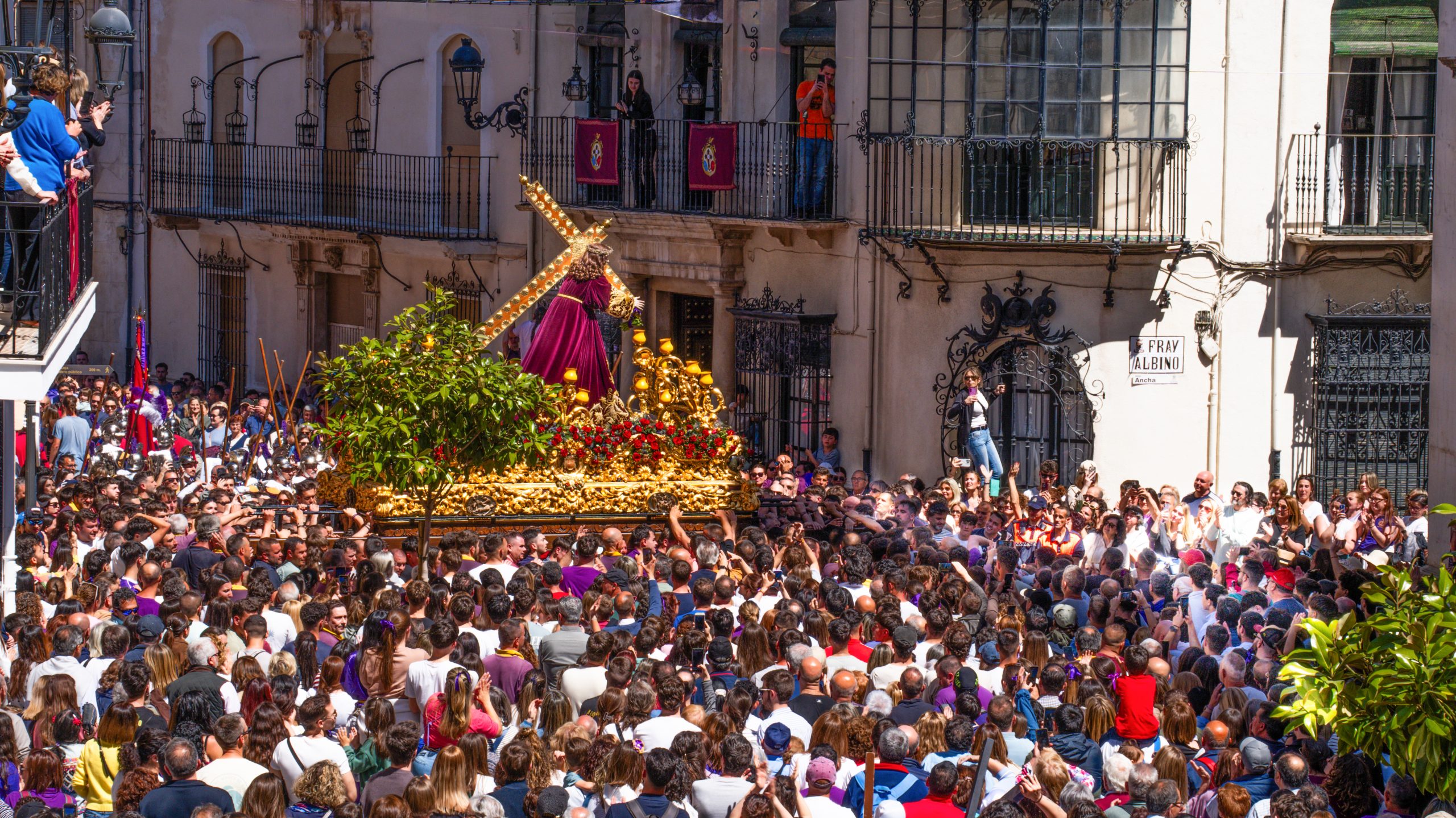
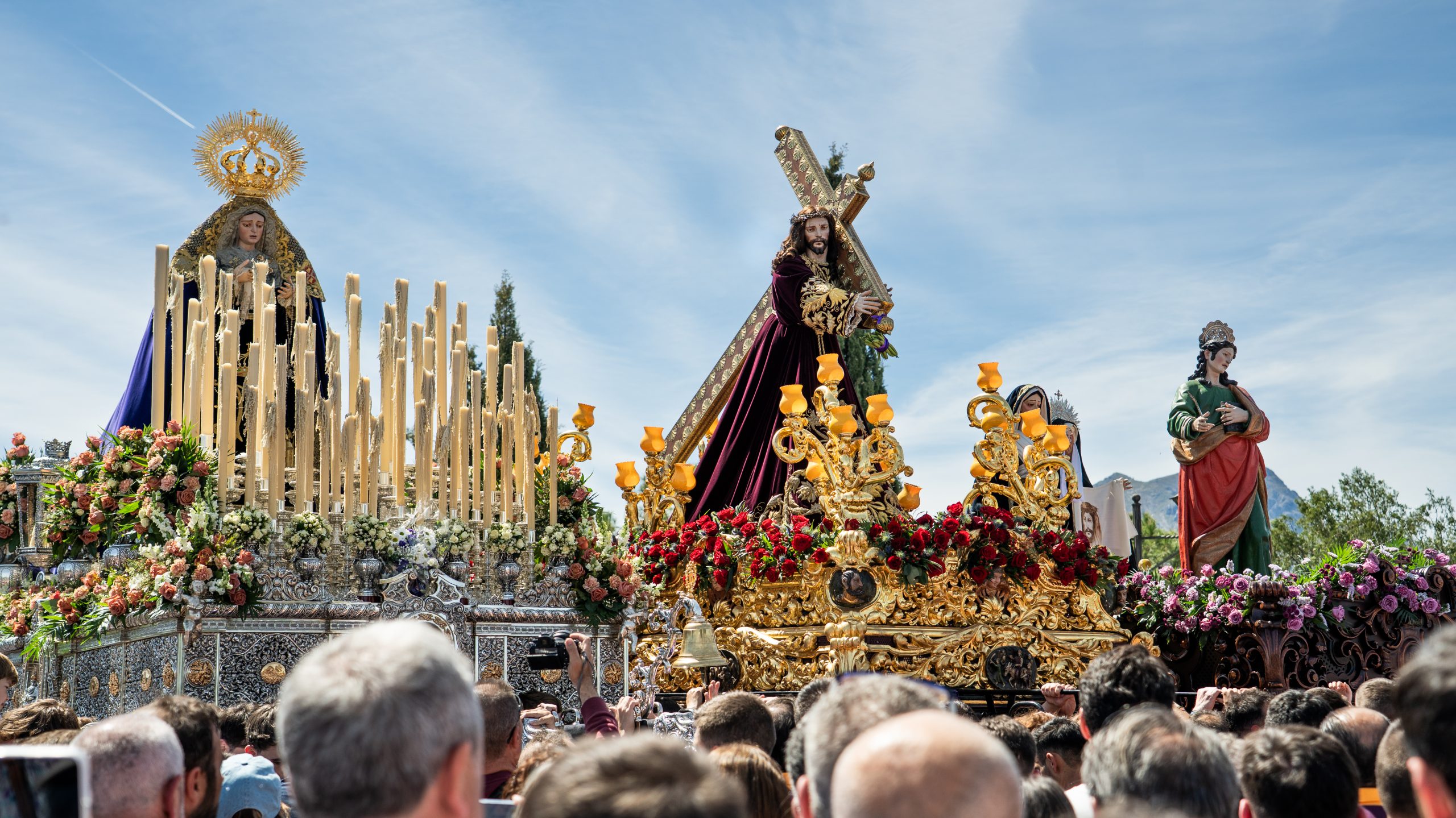
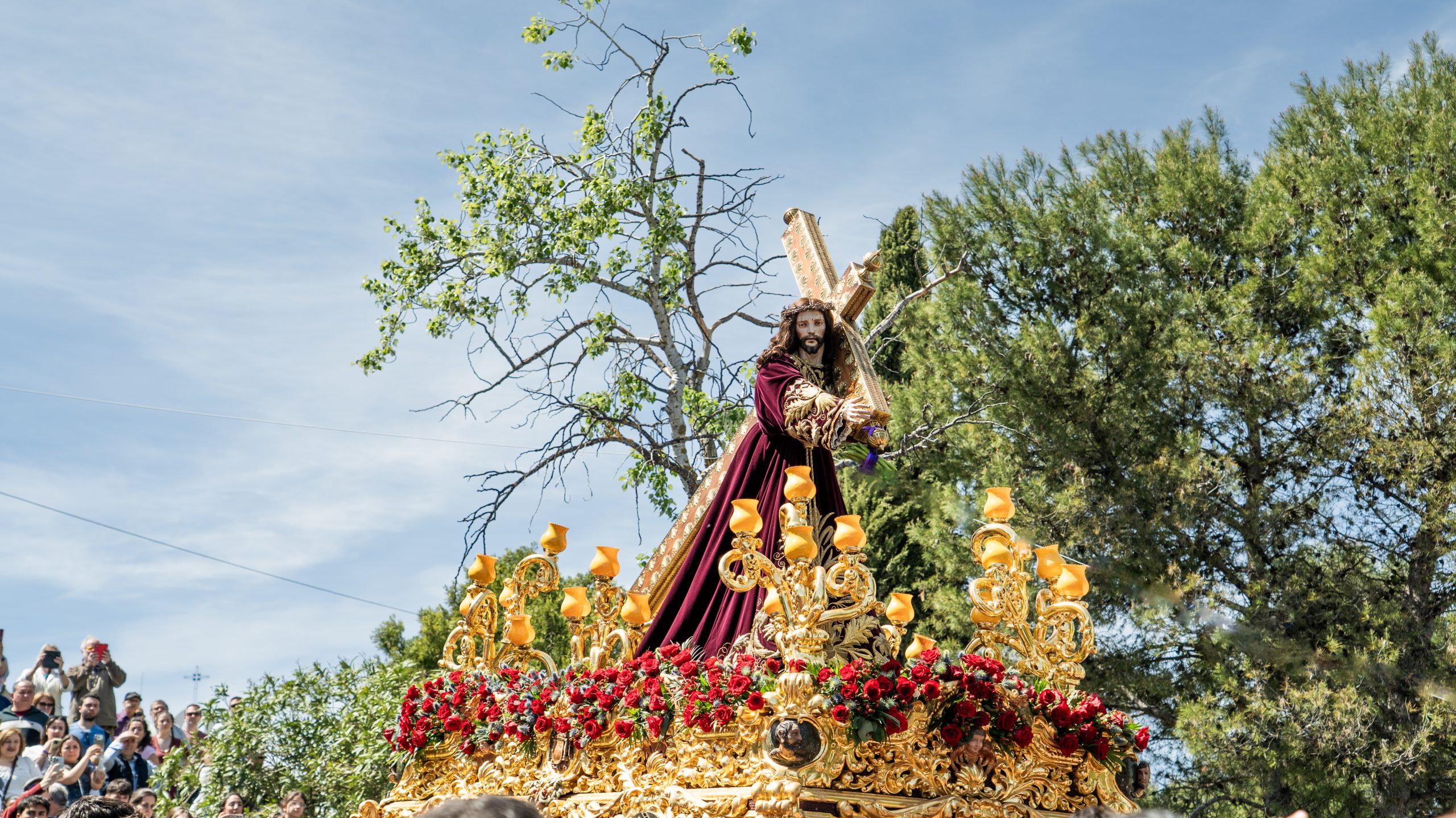
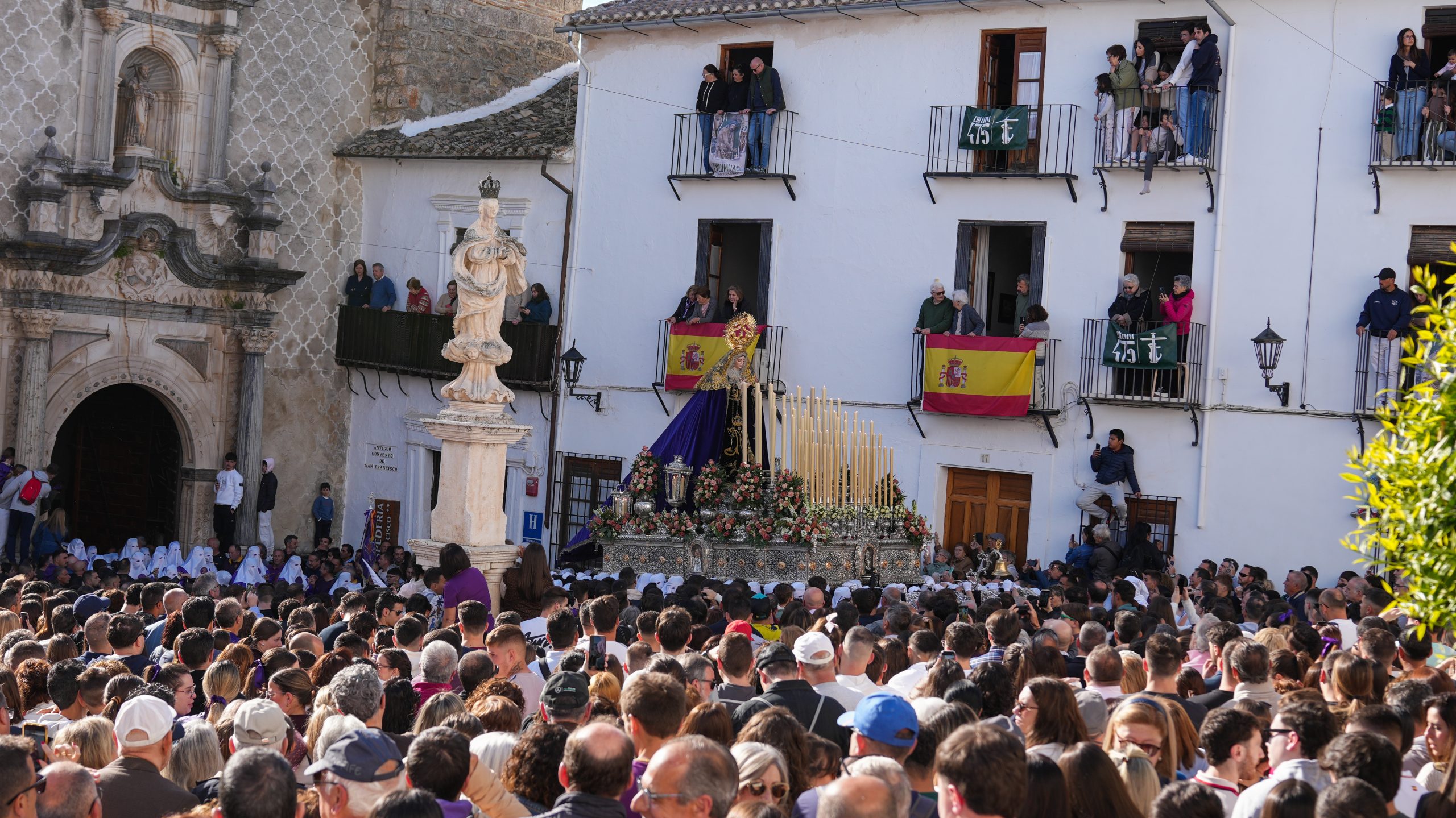
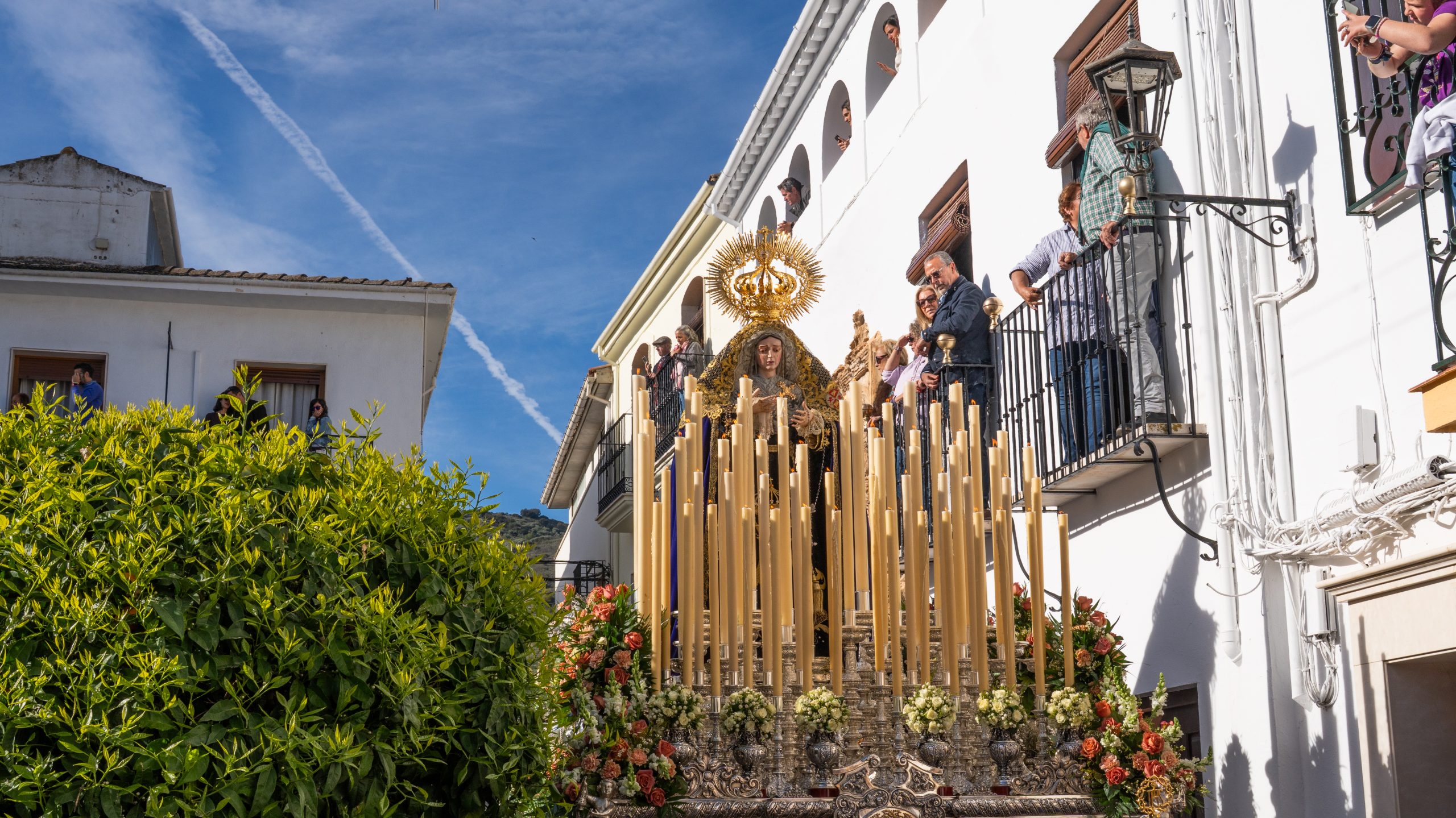
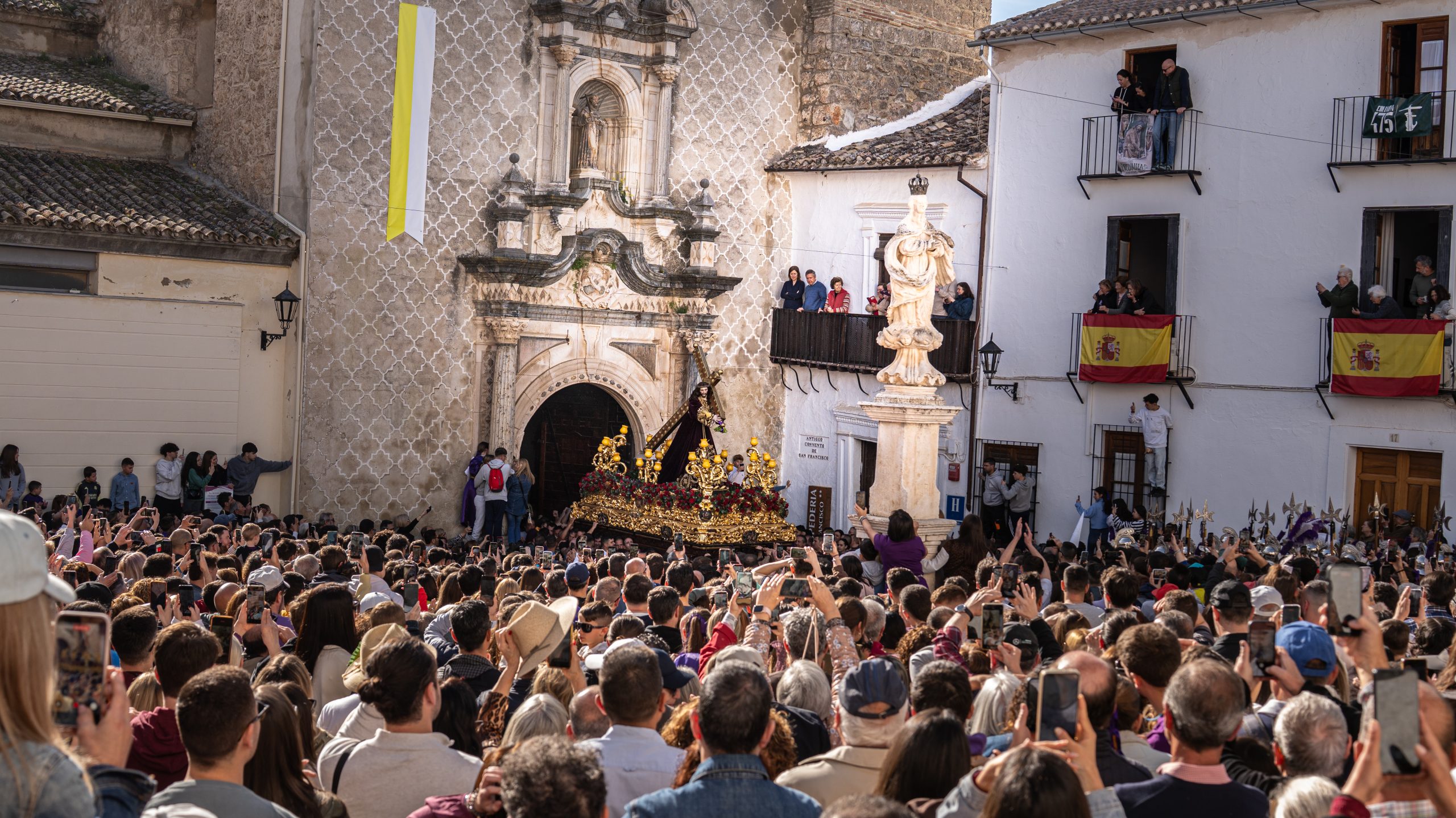
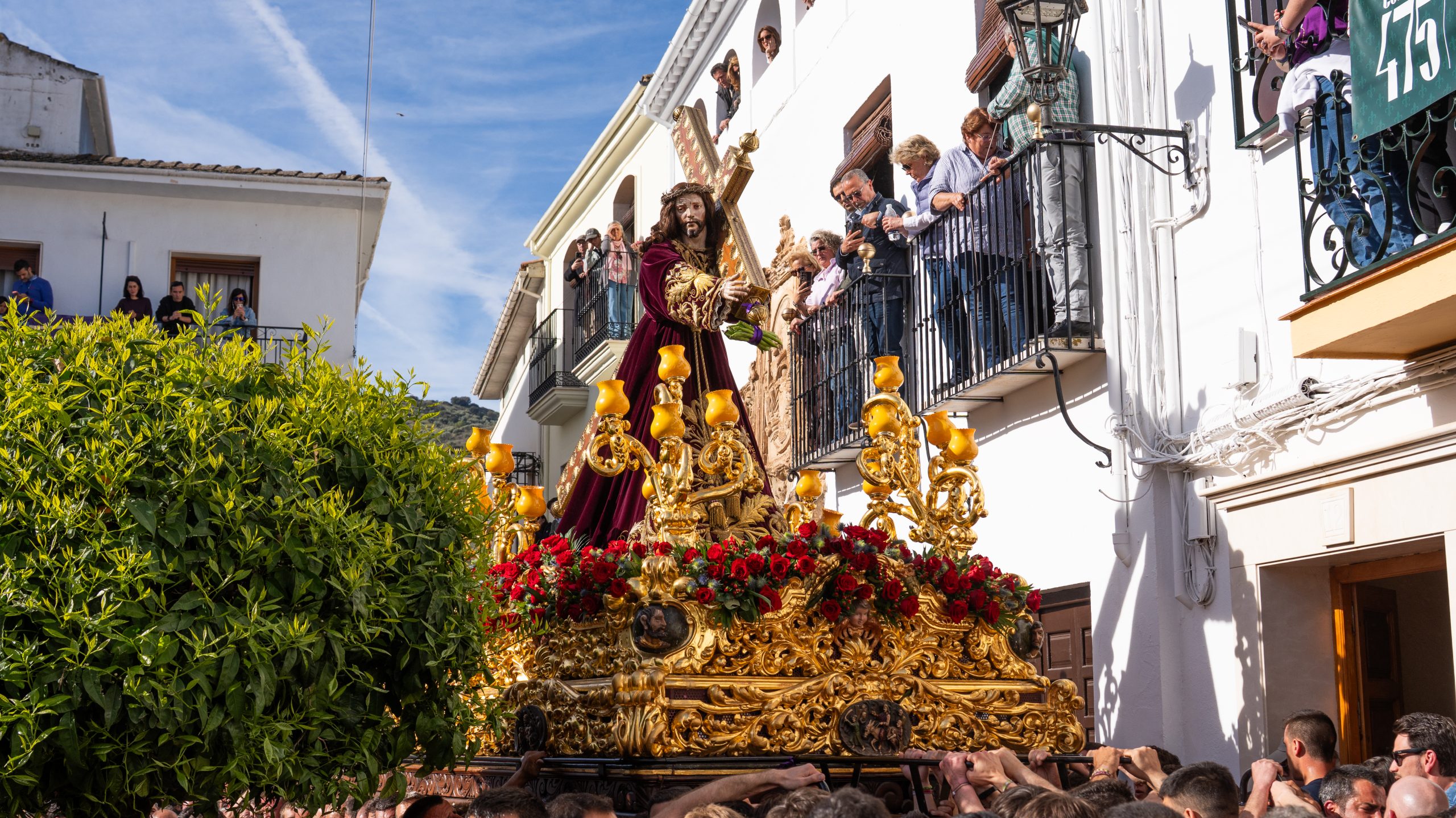
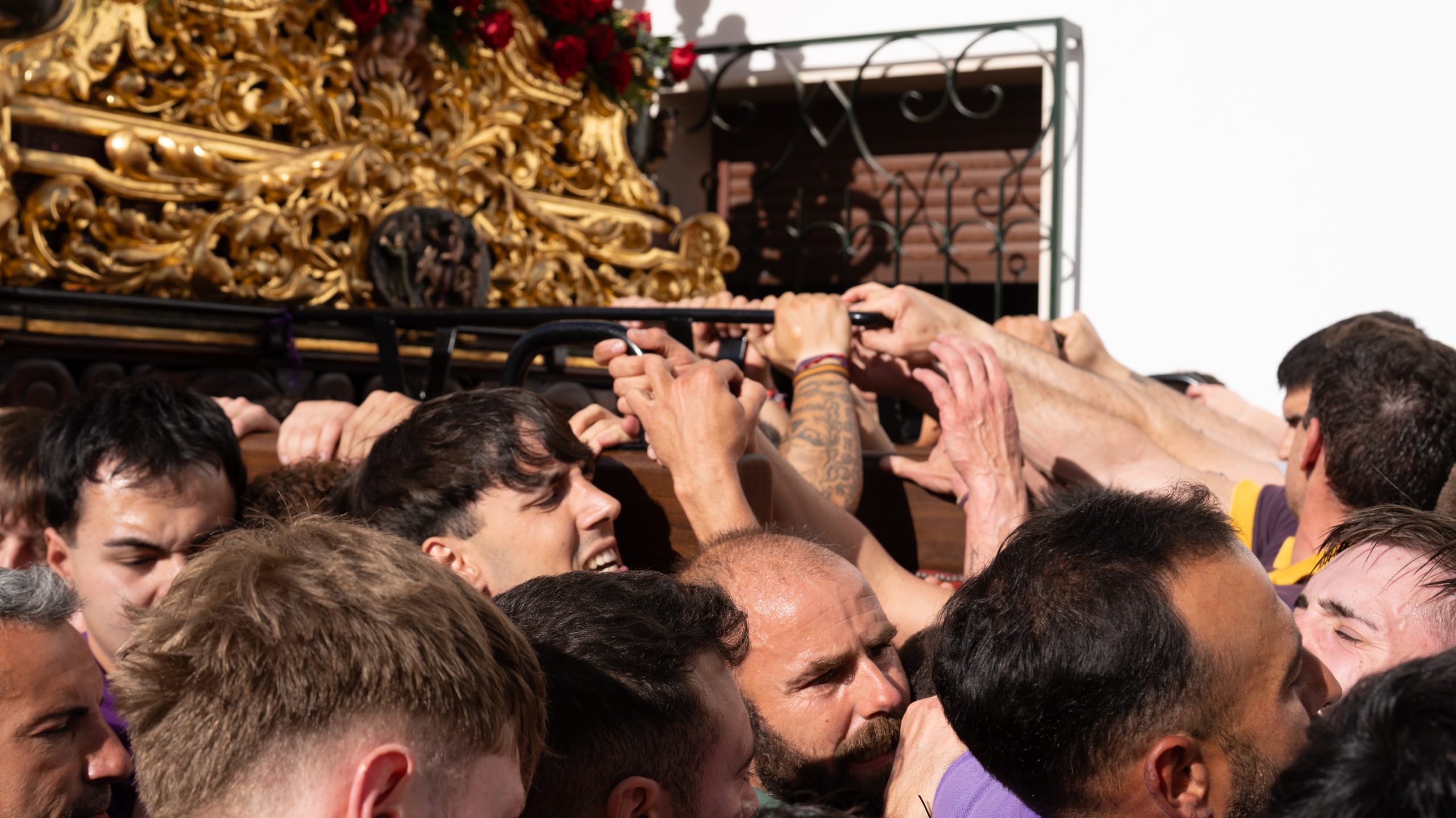
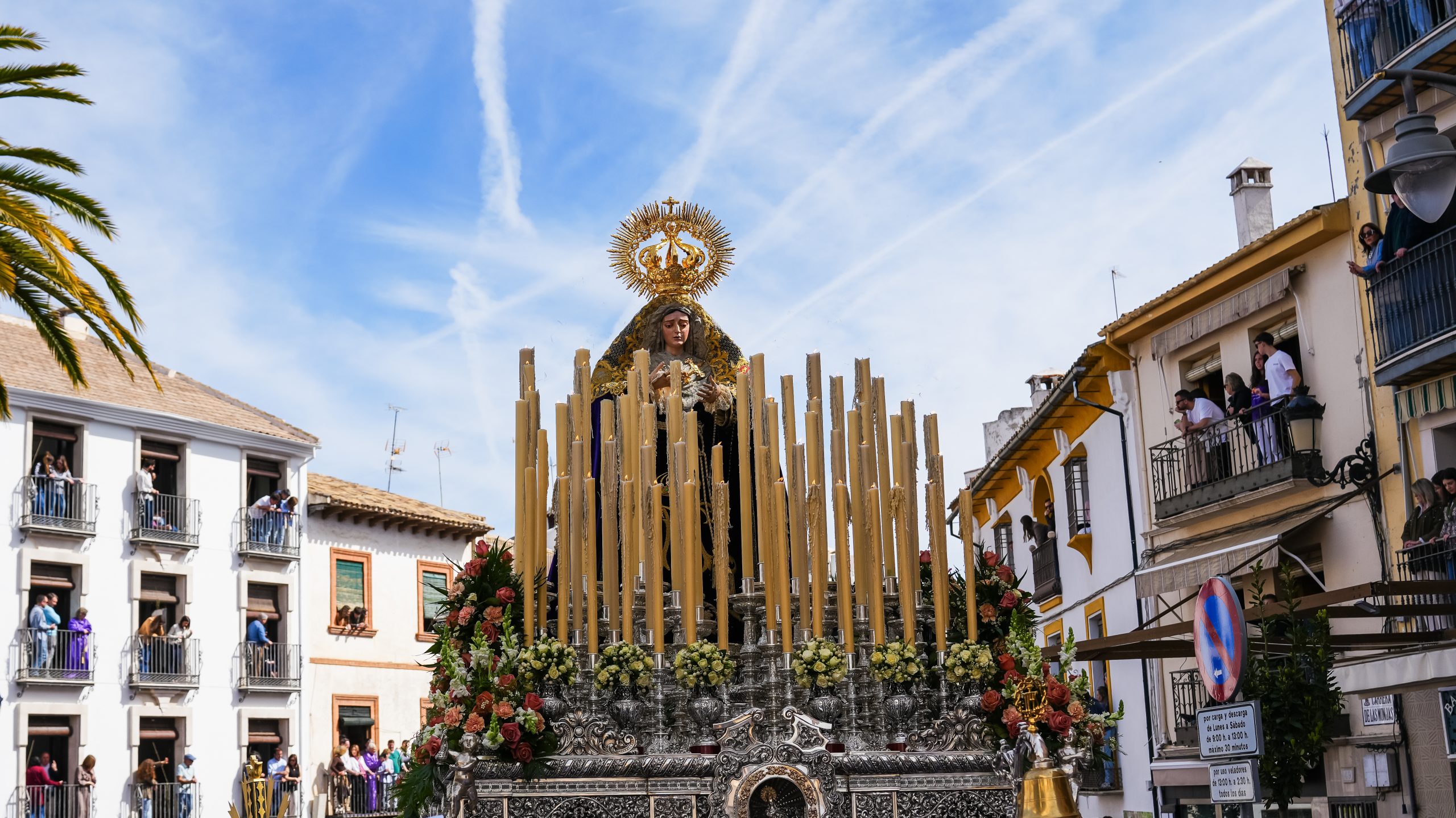
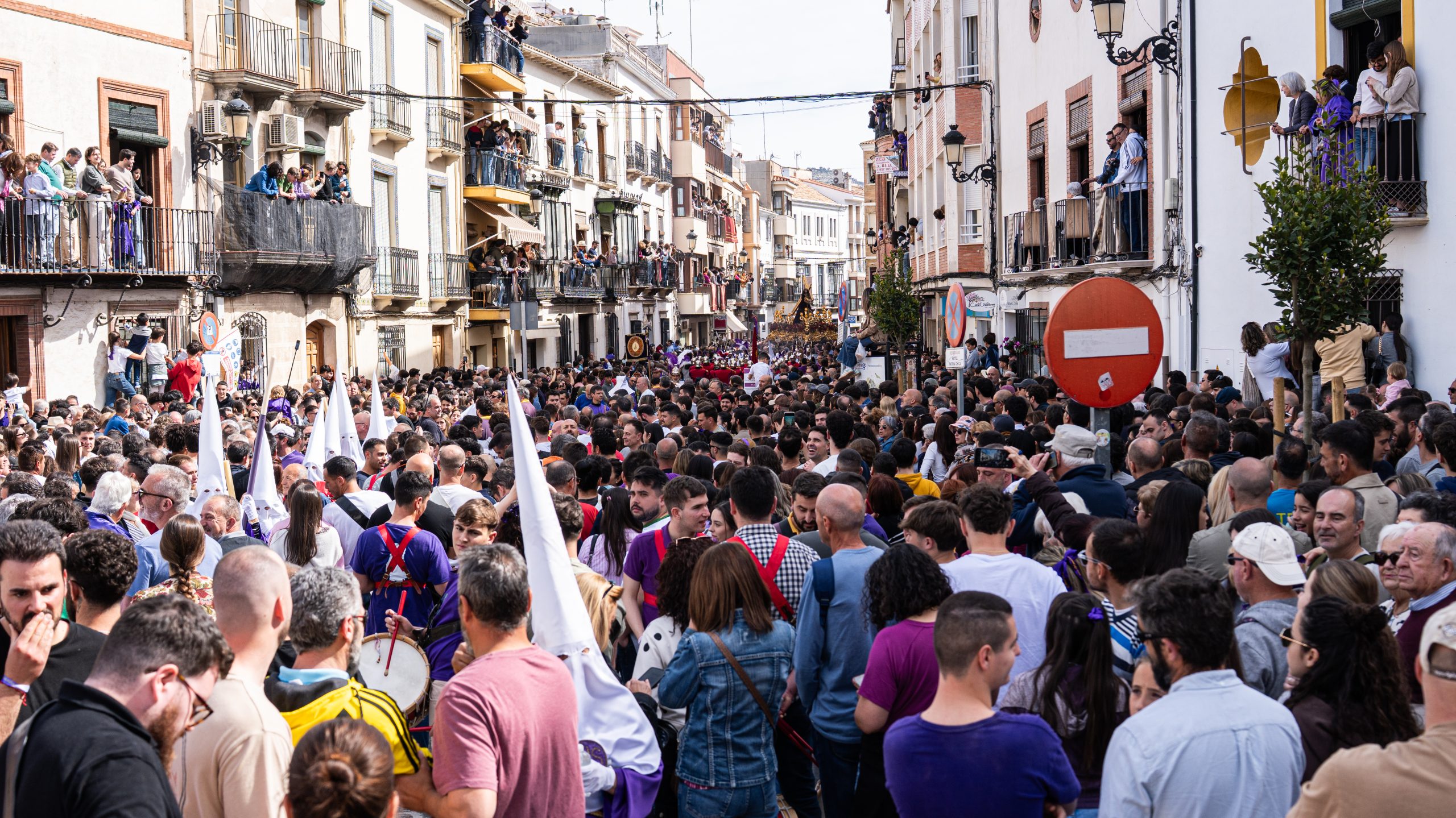
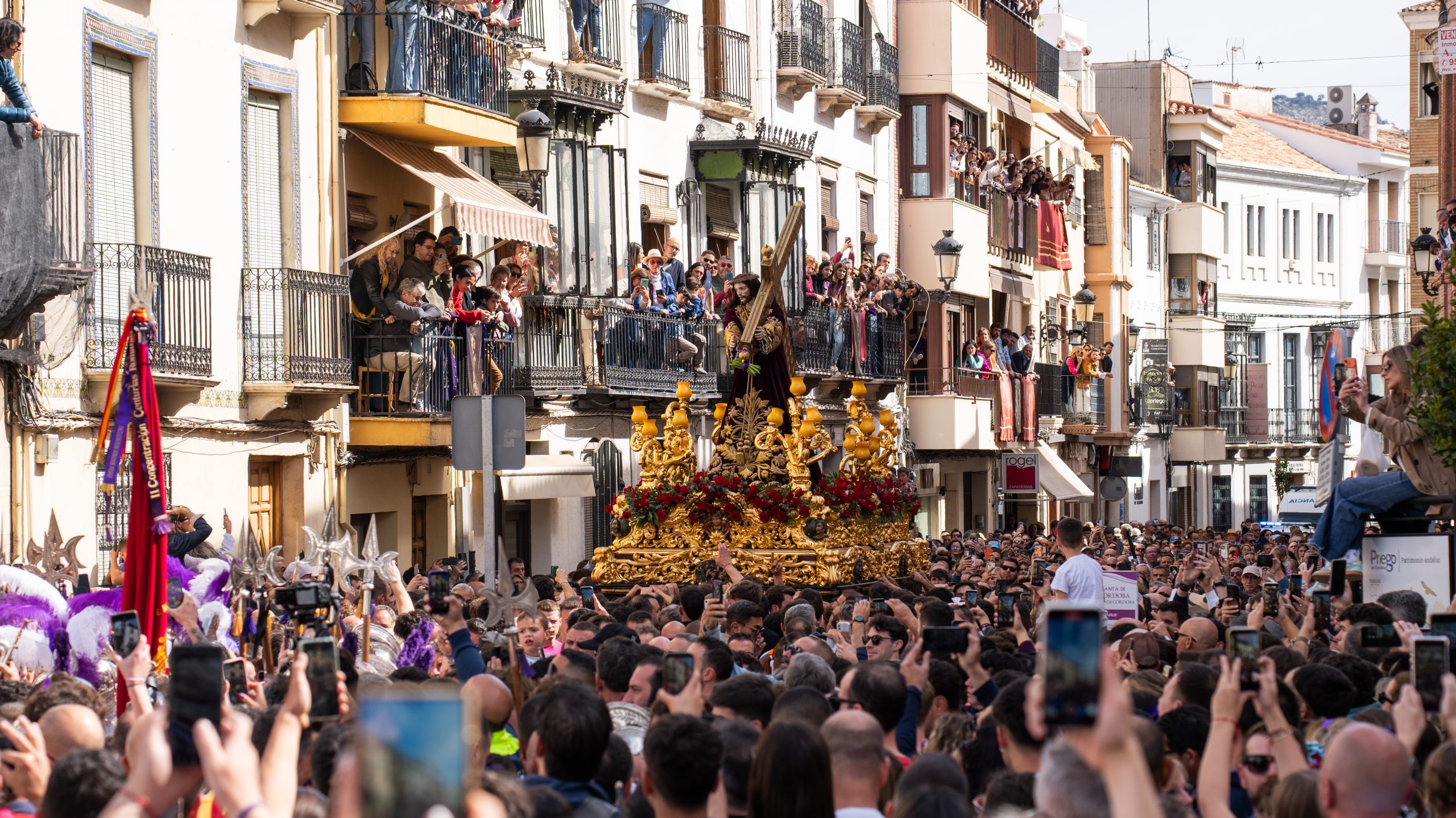
It is impossible to count the number of would-be bearers; throughout the procession they fight for a place under the framework of the trono, sometimes even threatening the stability of the image, but they are simply carrying on a tradition whose origins are lost in time. Progress is very slow: a few steps forward, a few steps back, now sideways — “look out!” comes the cry “it’s falling!”
The concentration of followers continues like this until it arrives at Palenque, where the procession suddenly takes off to the cry of “at the double!”, and with rapid strides, charges up towards the hill of Calvary. The pace is set by drums and cornets, with a sharp, repetitive rhythm, a penetrating sound which remains forever with all those who hear it. Once the crowds have arrived at Calvary, they wait expectantly for the blessing of Jesus of Nazareth – this is the climax of Holy Week in Priego.
The procession regroups later in Calle Río, where the Virgin and images of St. John, St. Mary Magdalen and St.Veronica await the arrival of Jesus, who, still almosr overwhelmed by enthusiastic followers, continues the journey back to the chapel at San Francisco, as he has for centuries, and will again next year.
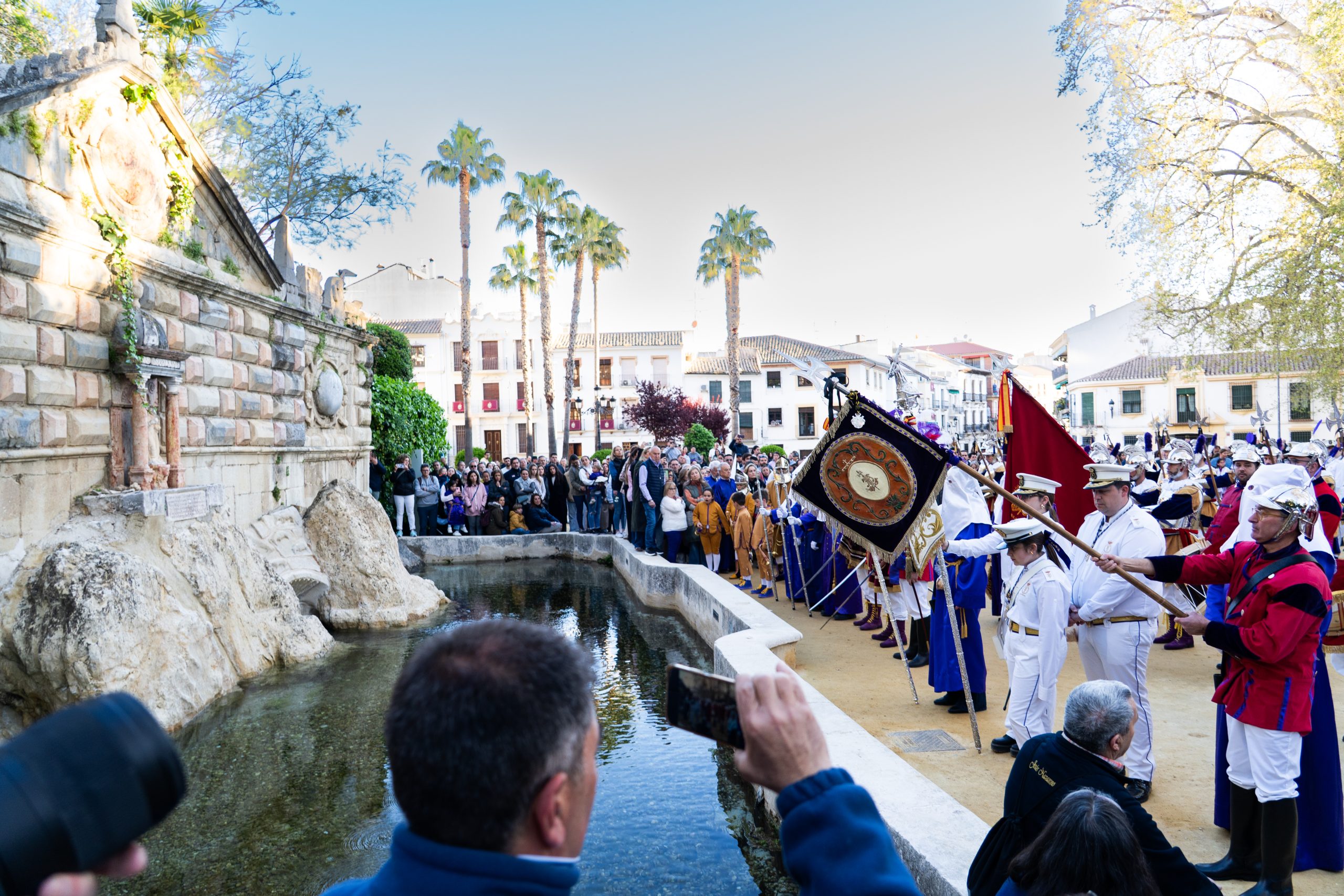
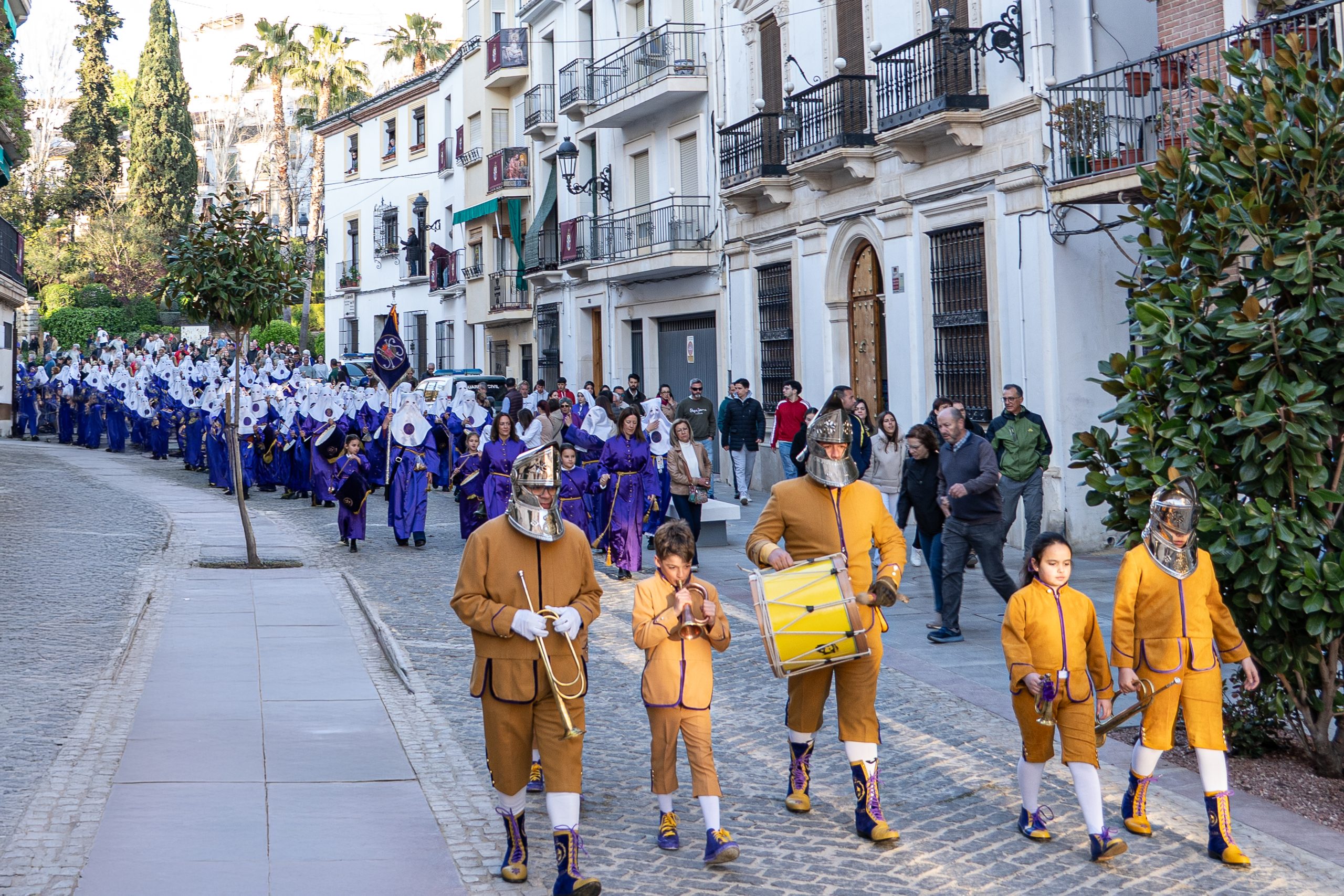
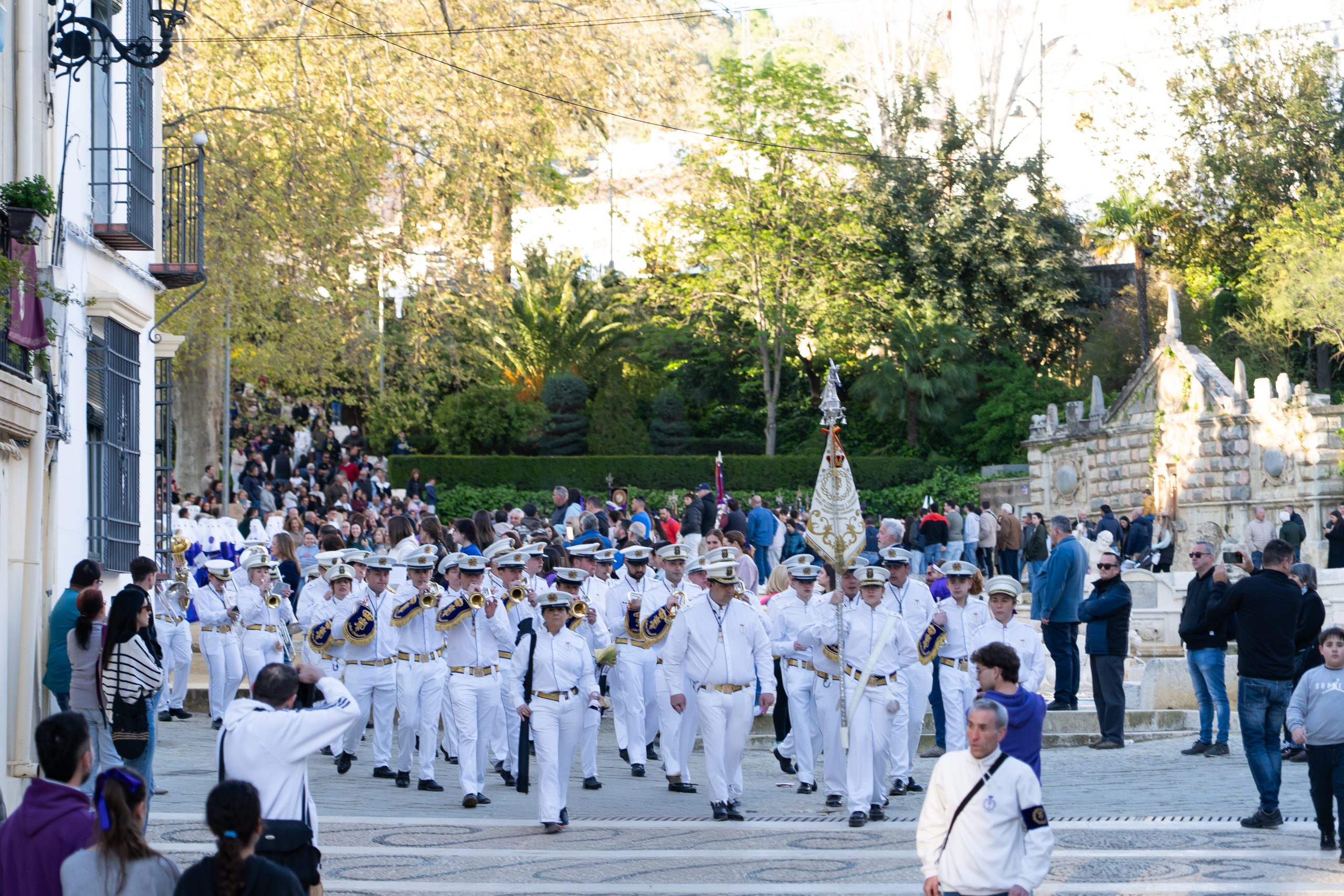
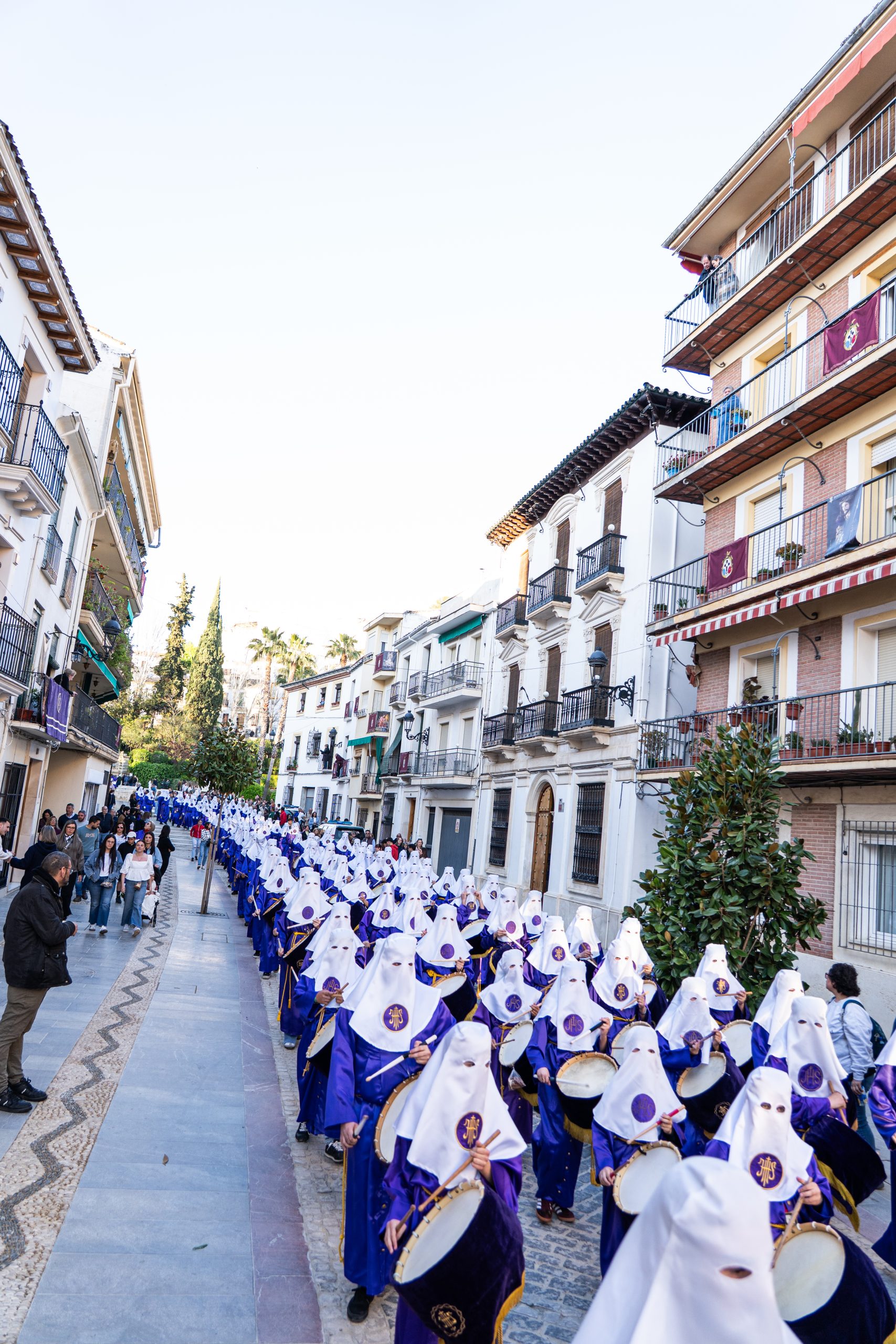
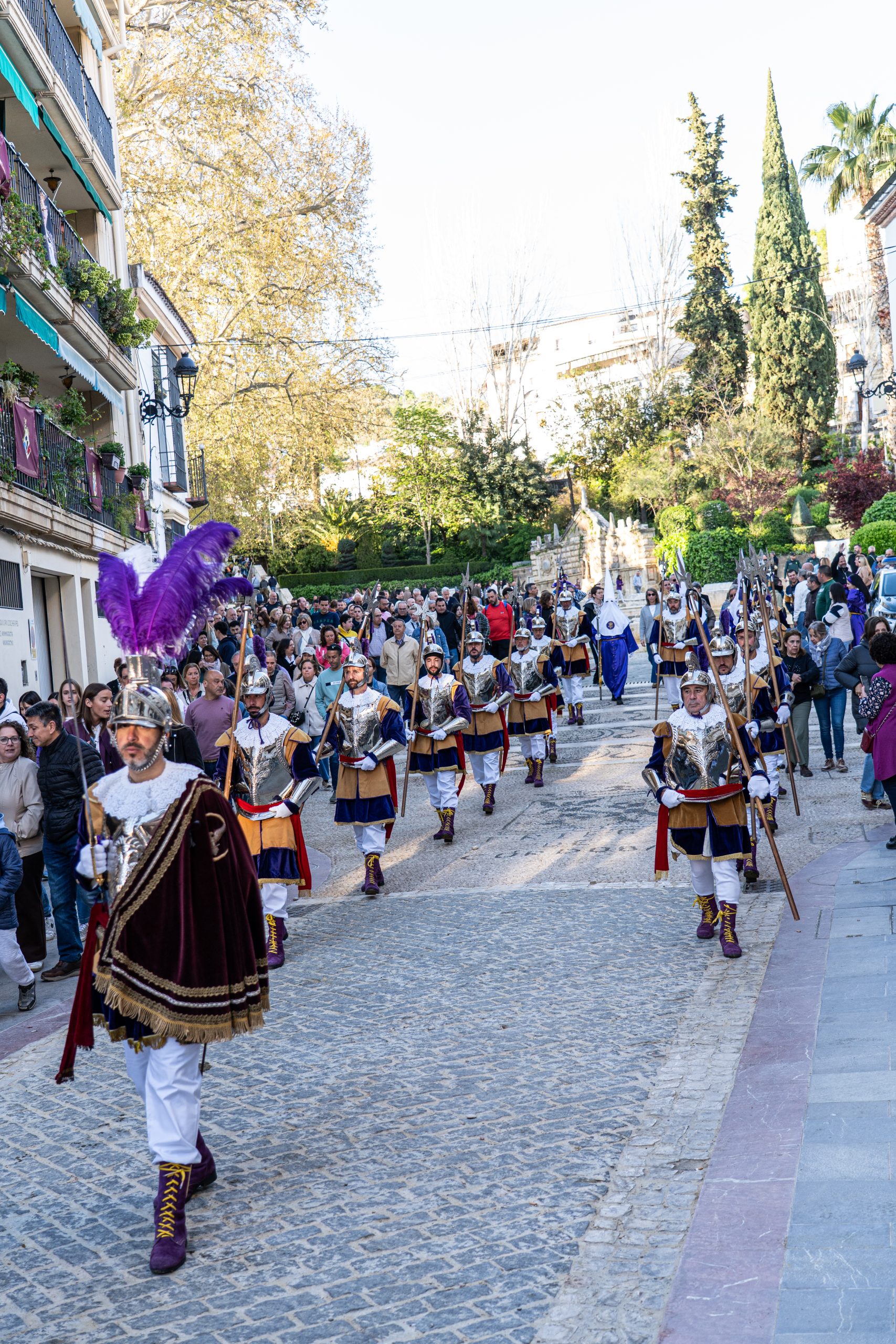
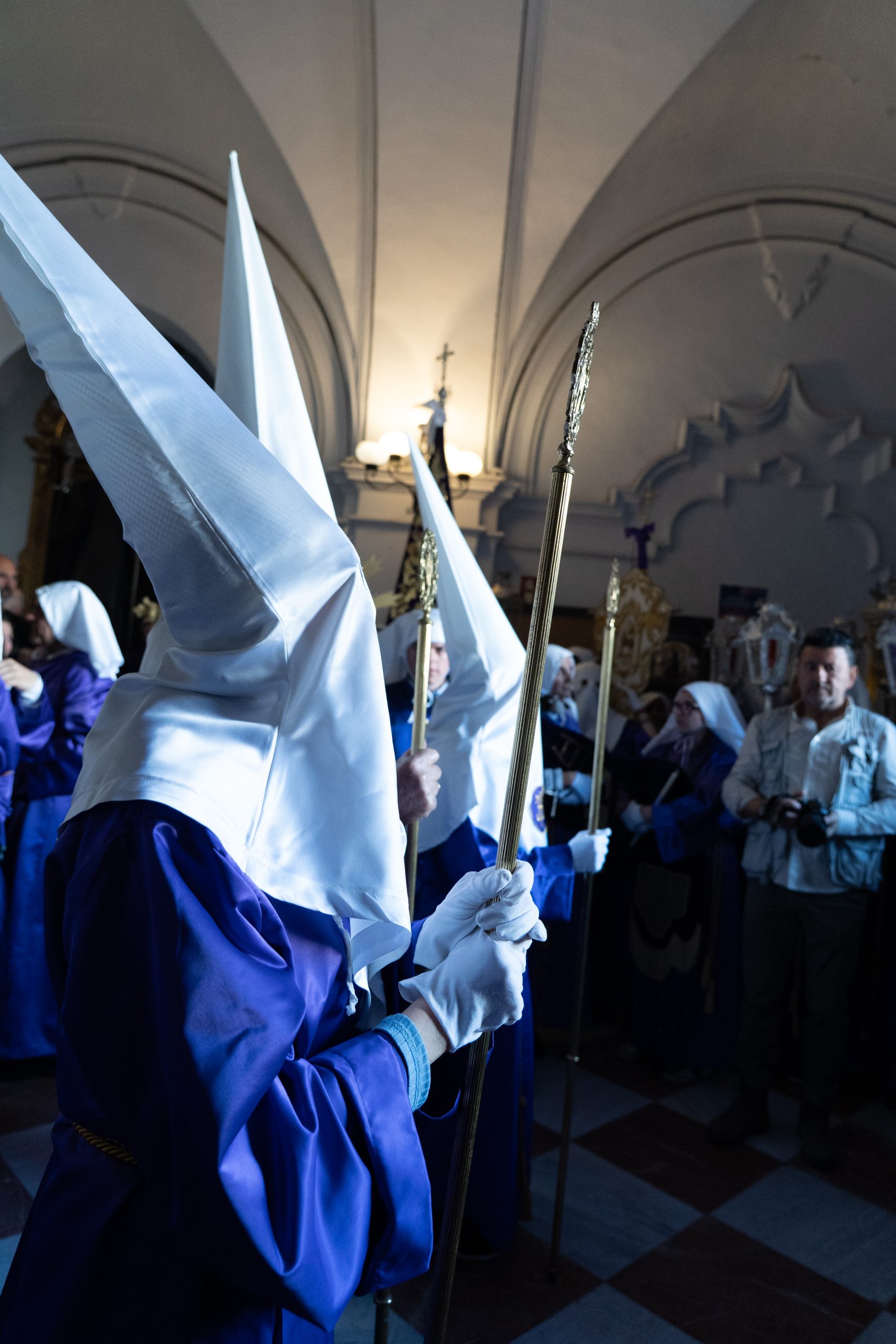
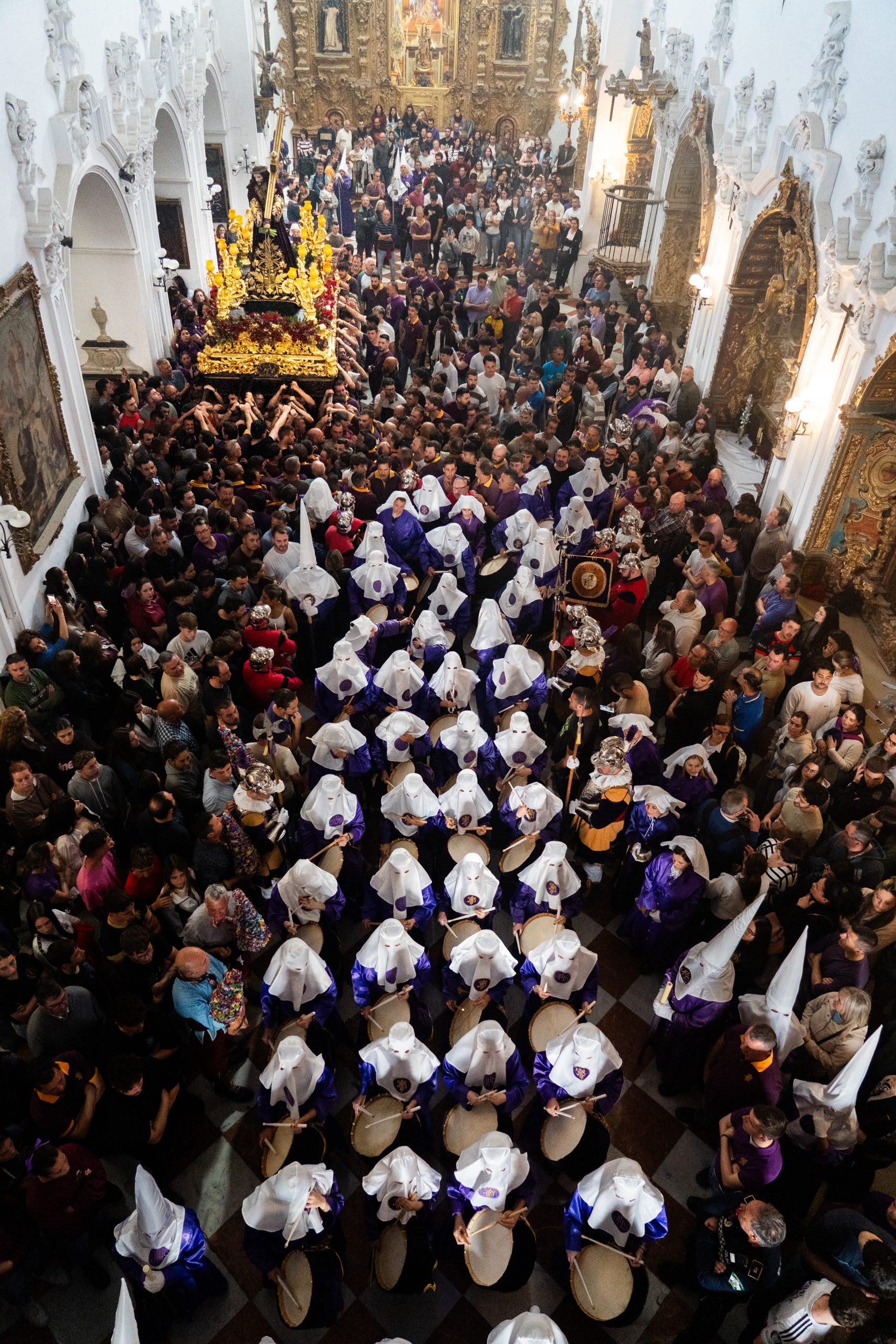
The 300 supporters accompanying the procession wear a purple tunic, a yellow belt and white hood. In the past, the Brotherhood of Jesus of Nazareth shared a band with another cofradía, La Columna, but they formed their own in 1976. In all, 70 musicians – cornets, drums, and bass drums — and a detachment inherited from the Marista brotherhood beat out the ancient rhythms of this holy day. In 1980, a second band, with 40 drums, was formed to accompany the paso of Our Lady of Suffering.
The Nazarenos organise various ceremonies in the days leading up to Easter, including quinarios – Mass on five consecutive days — to honour Jesus of Nazareth and Holiest Mary of Suffering.
- Real Archicofradía de la Preciosísima Sangre de Nuestro Señor Jesucristo y Nuestra Señora de las Angustias y Nuestro Padre Jesús en su Descendimiento
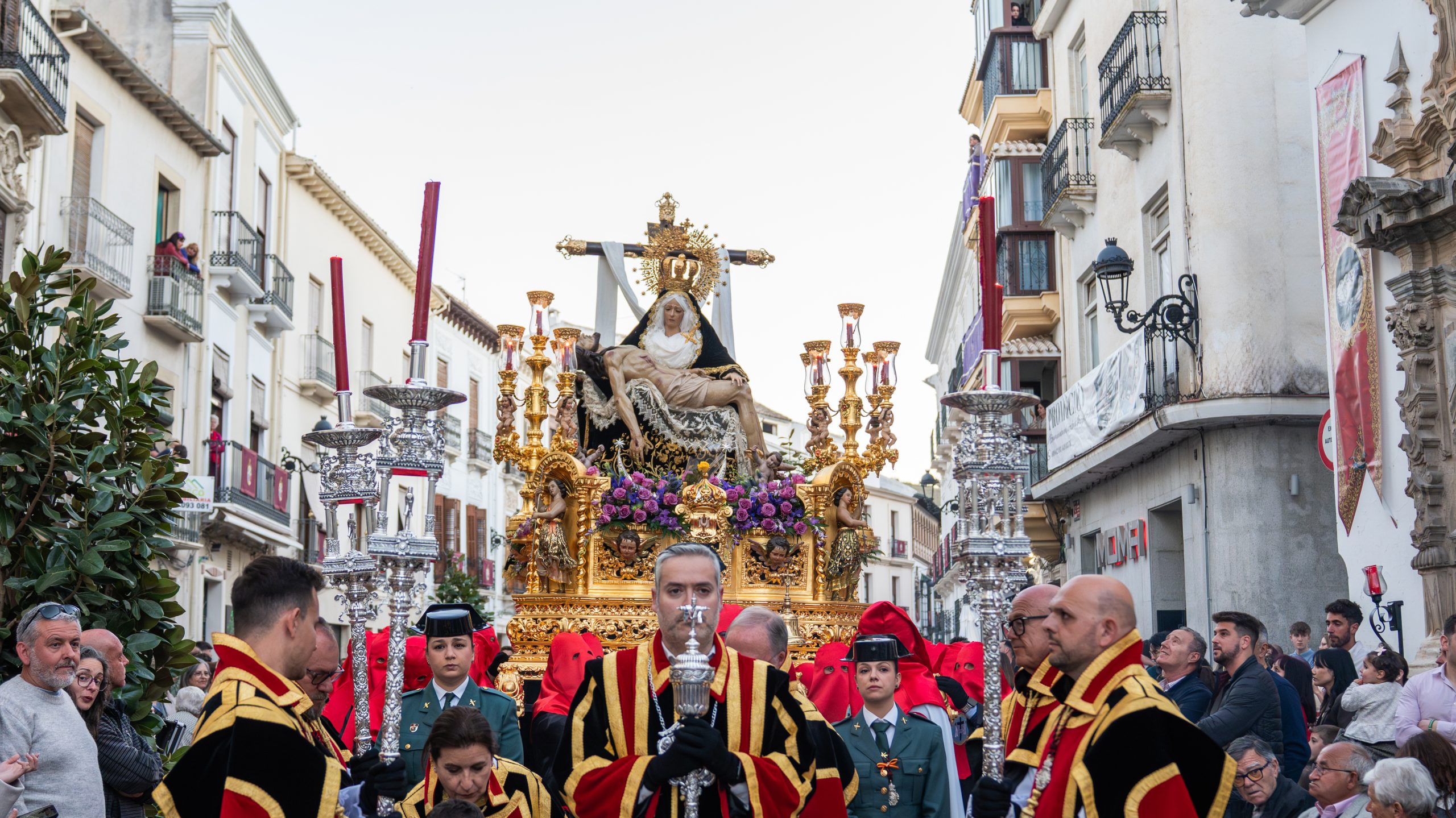
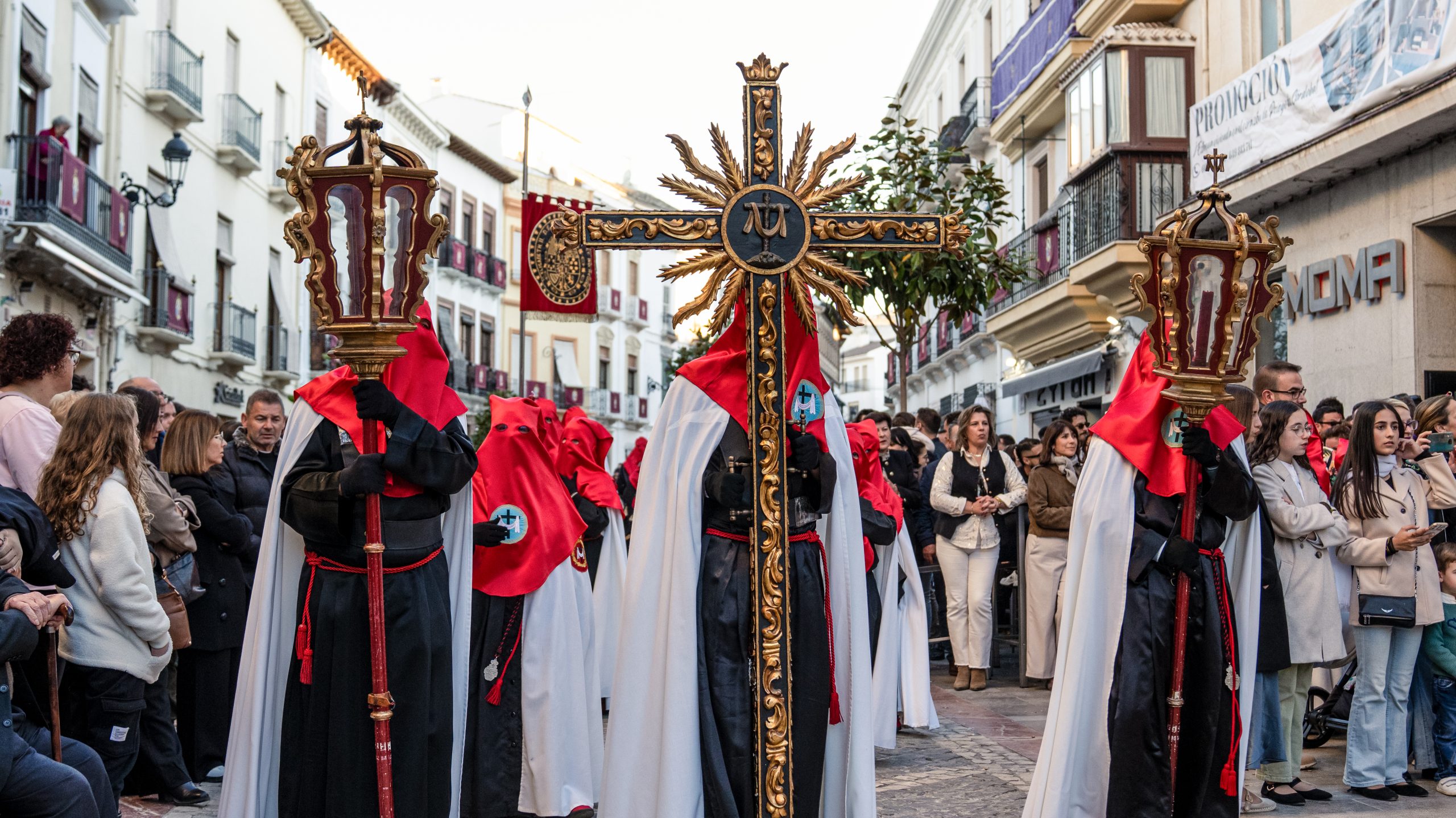
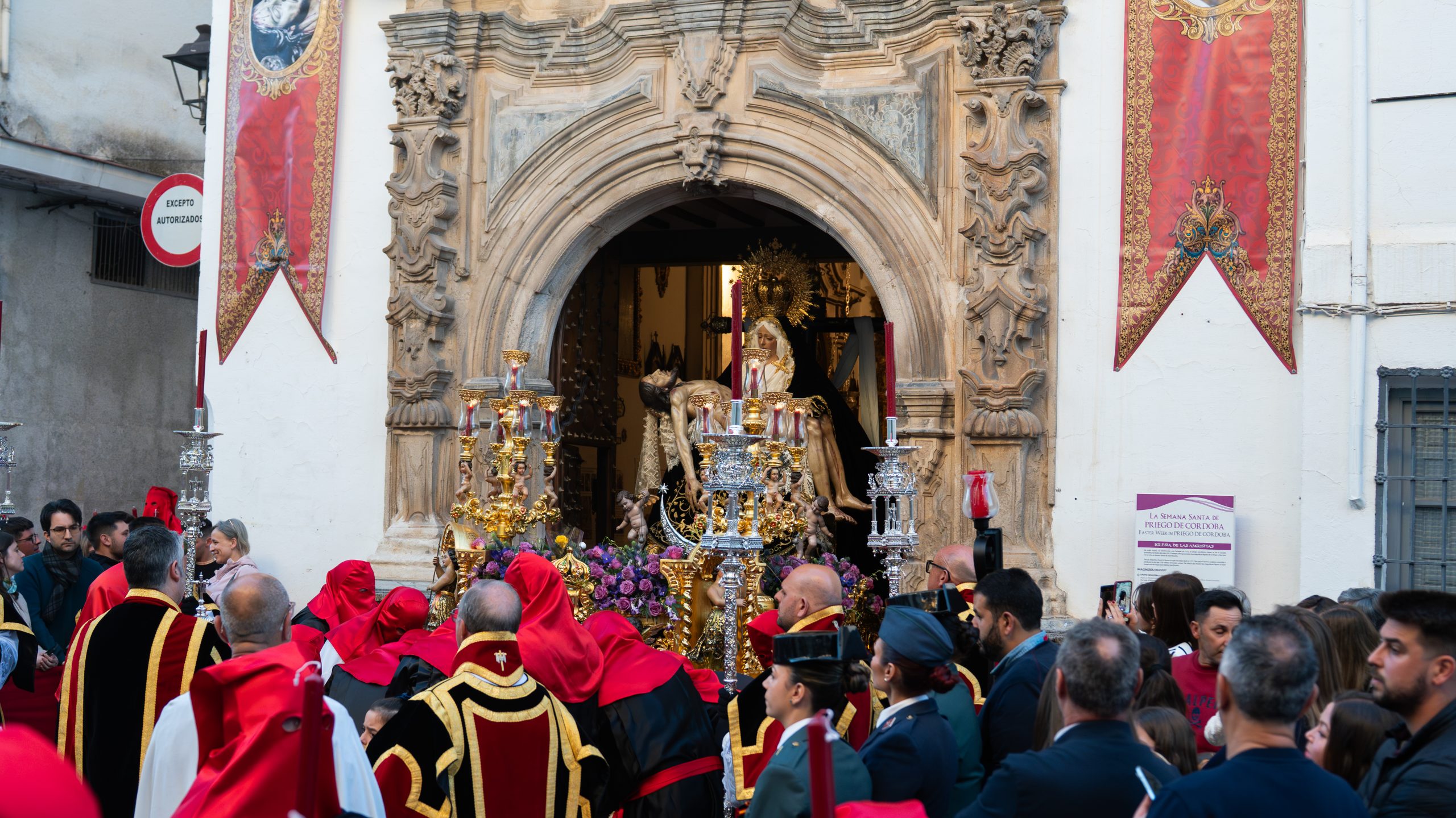
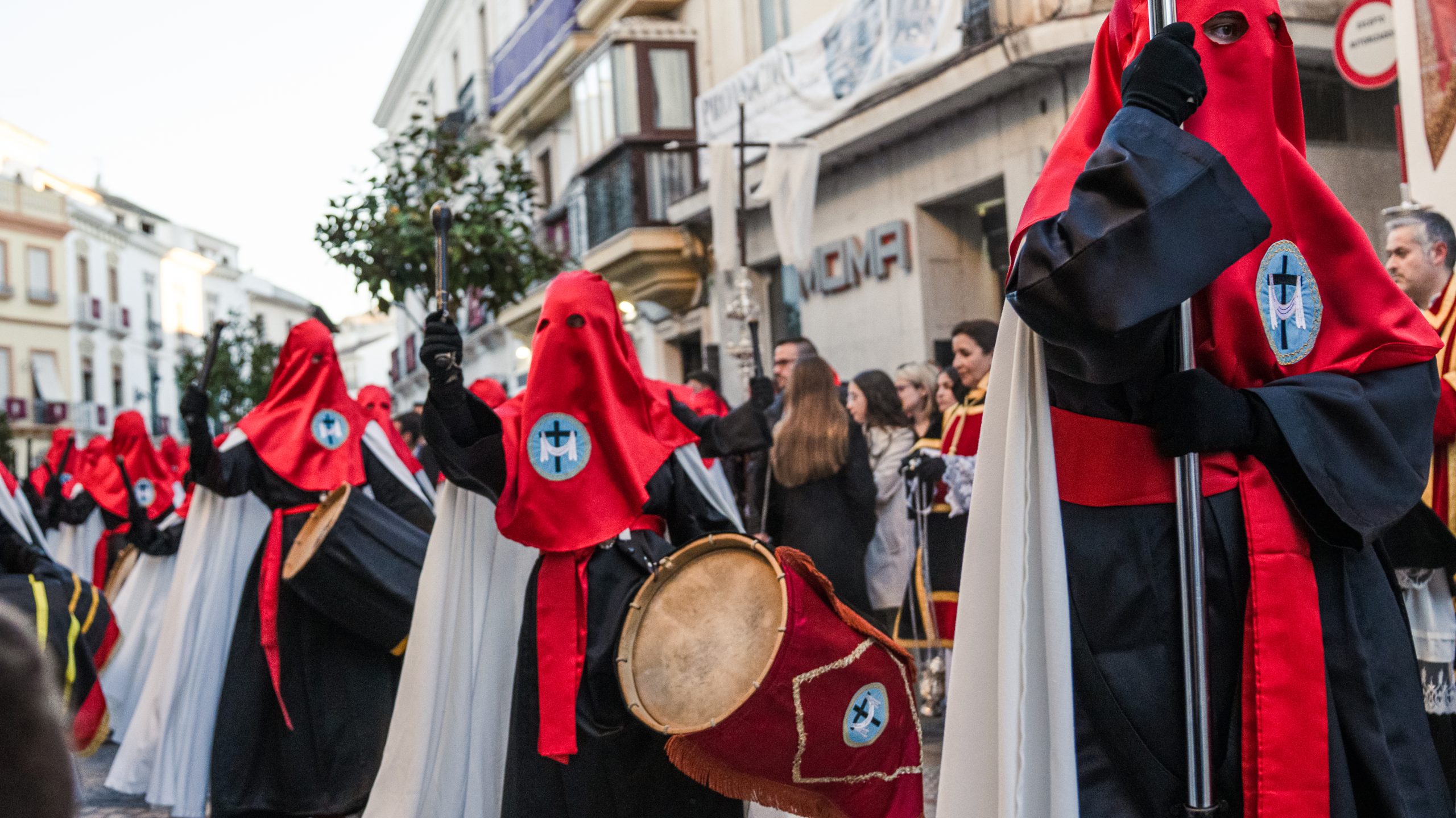
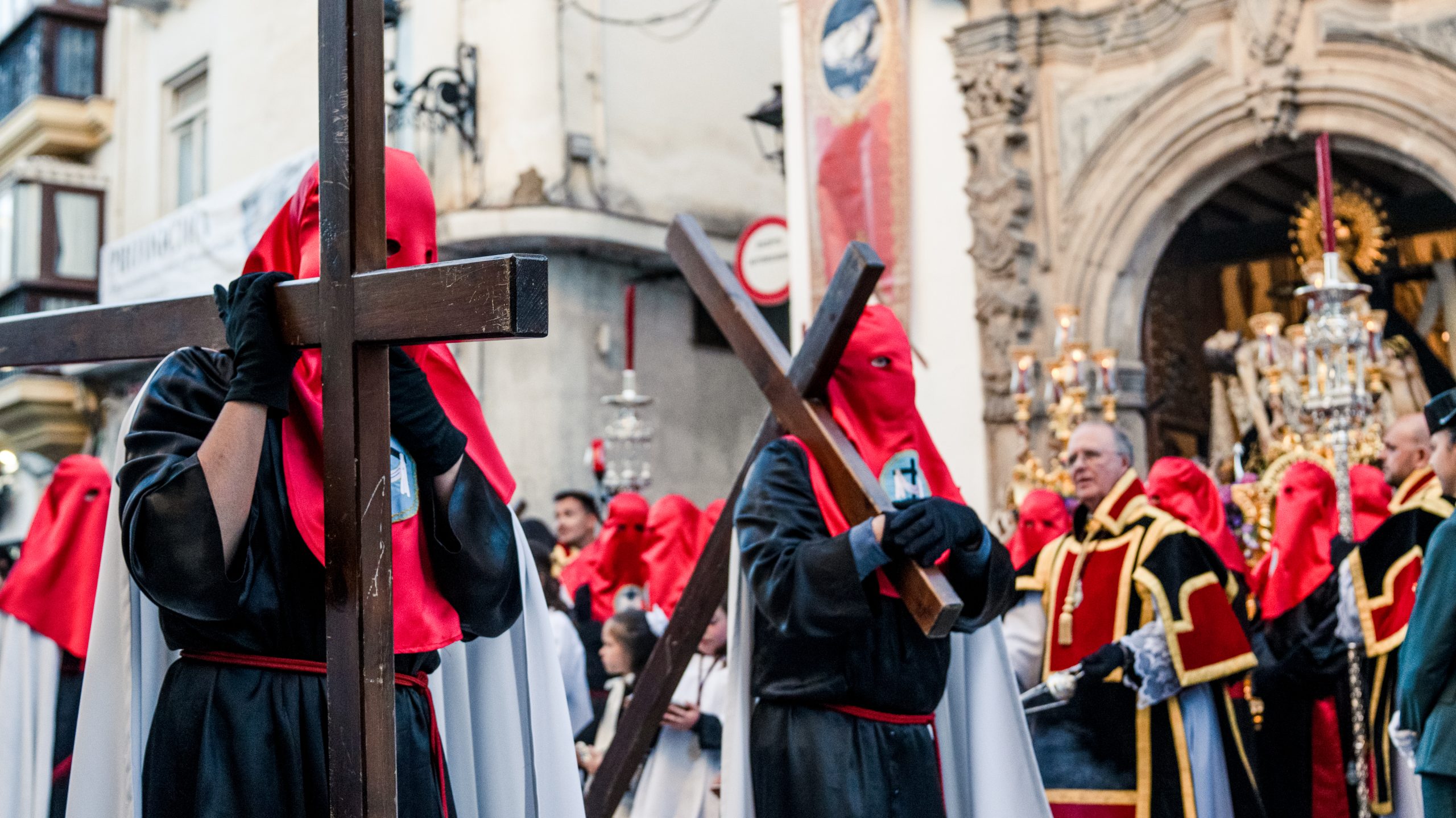
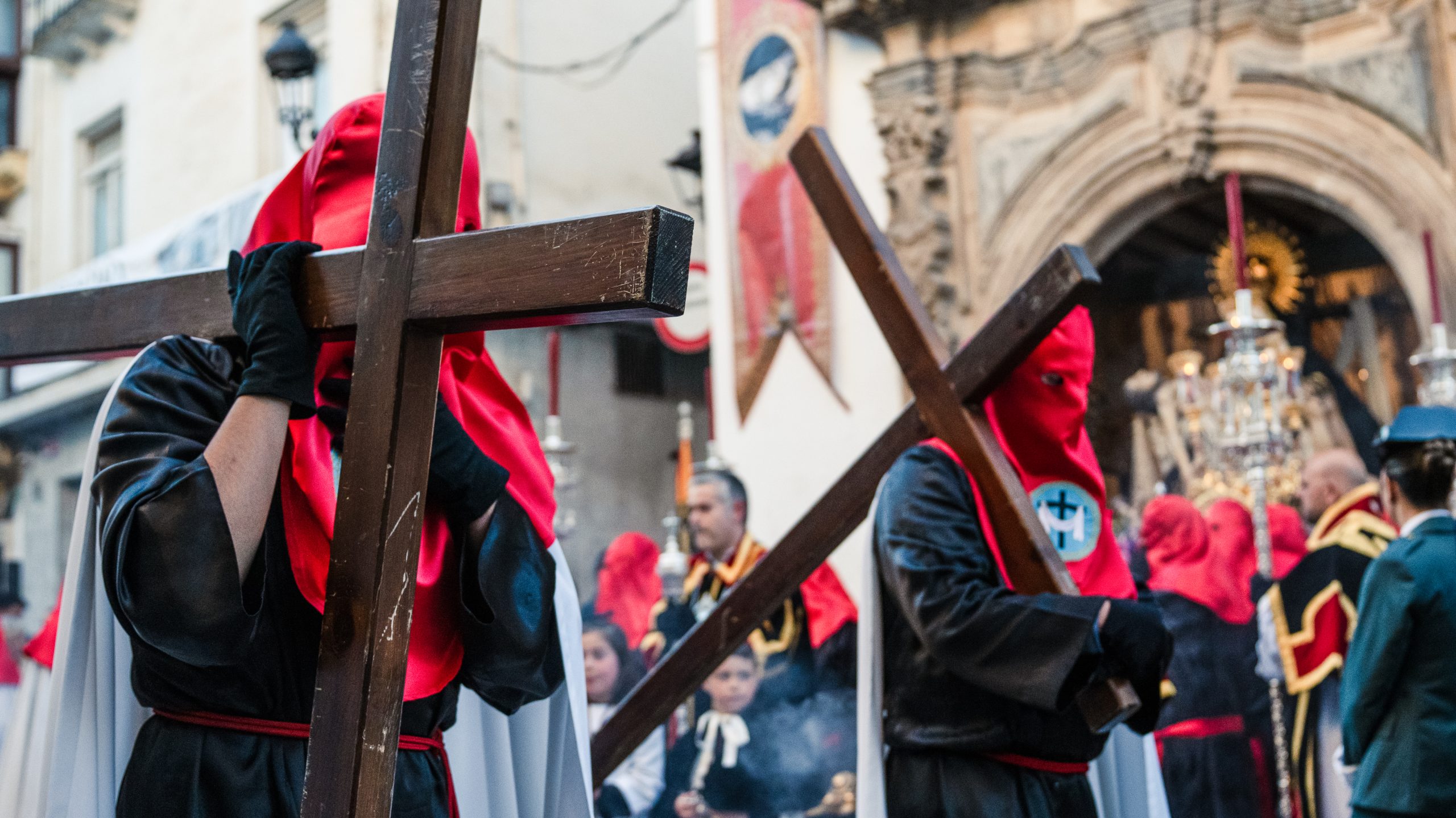
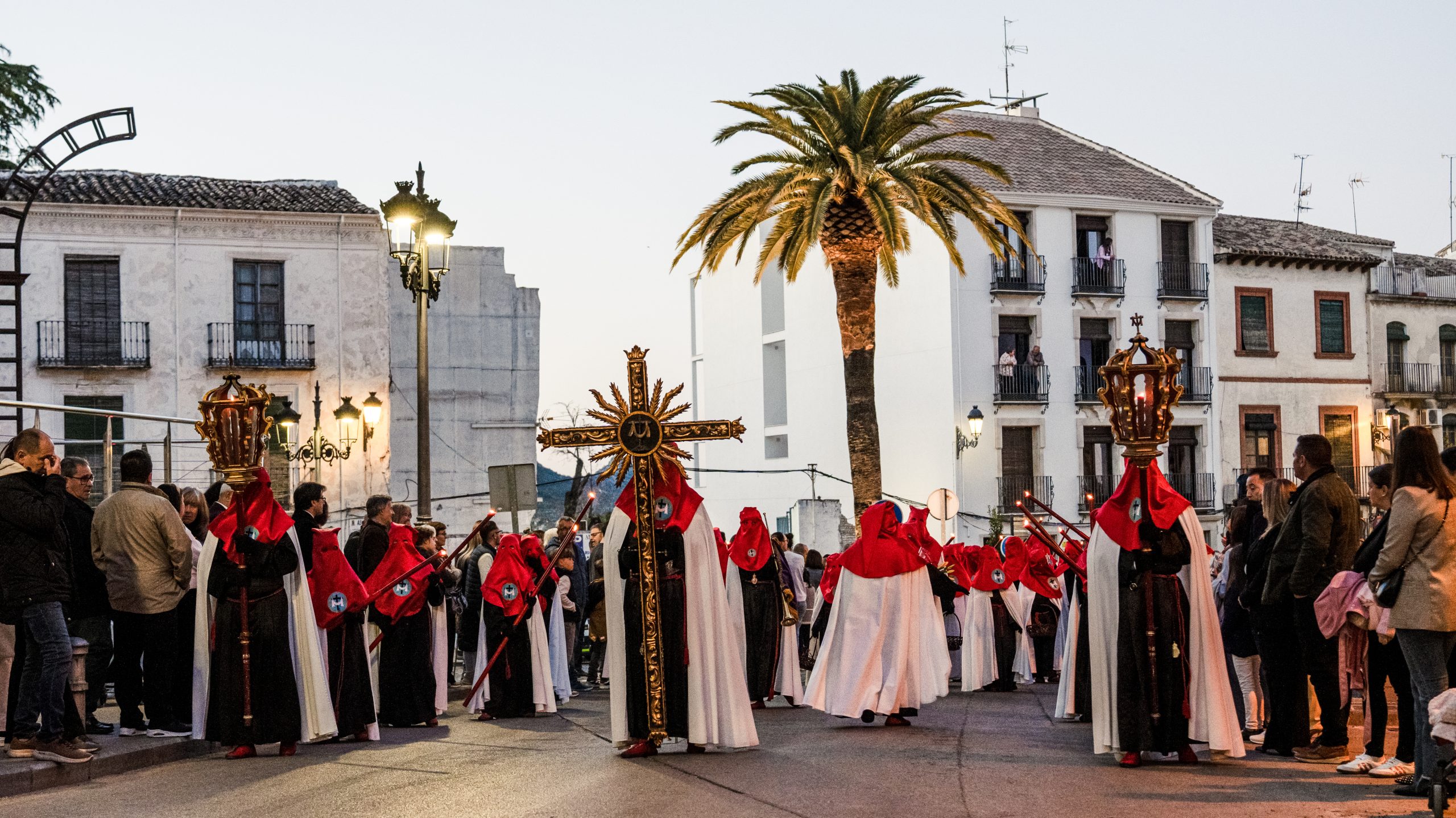
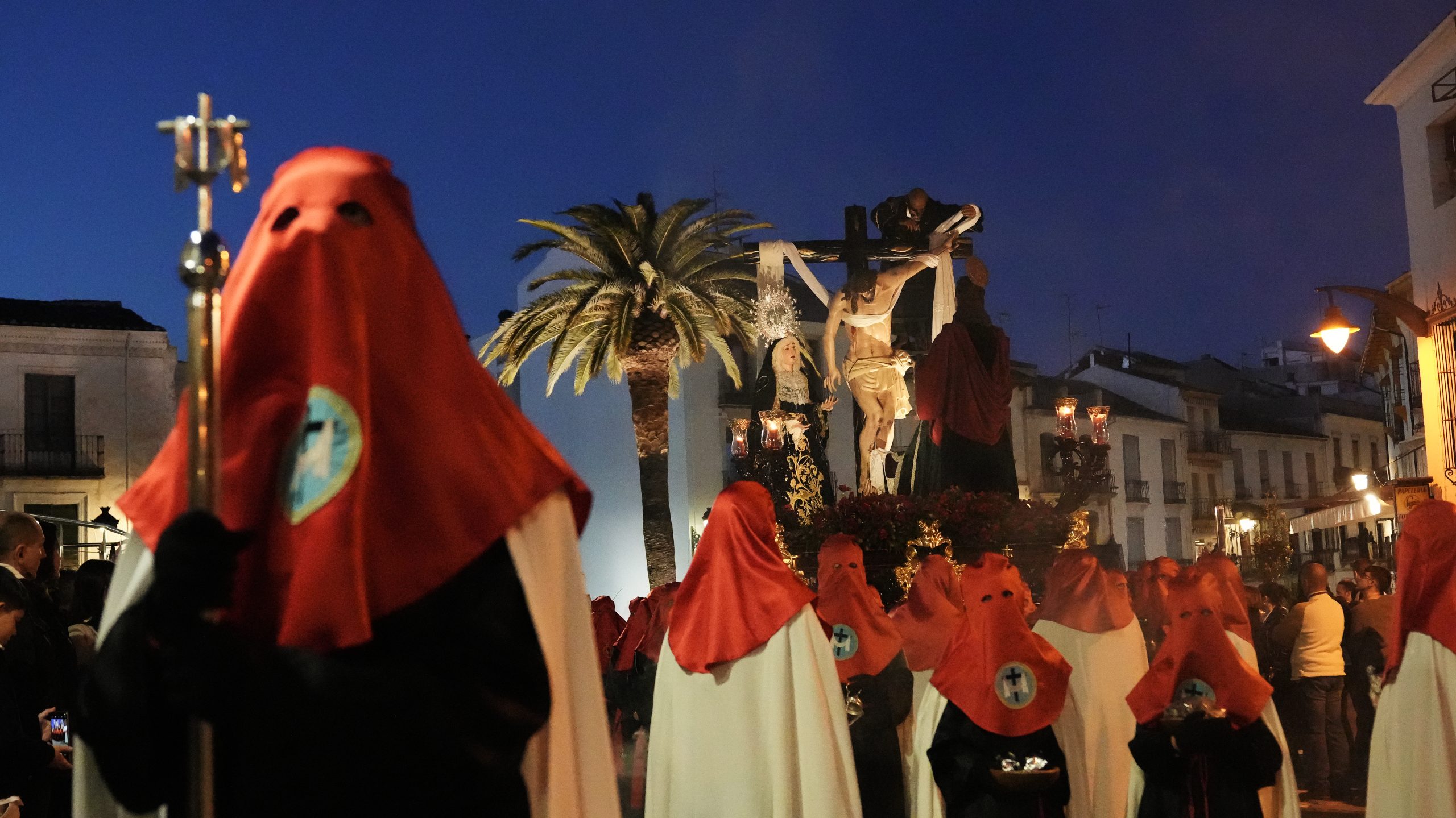
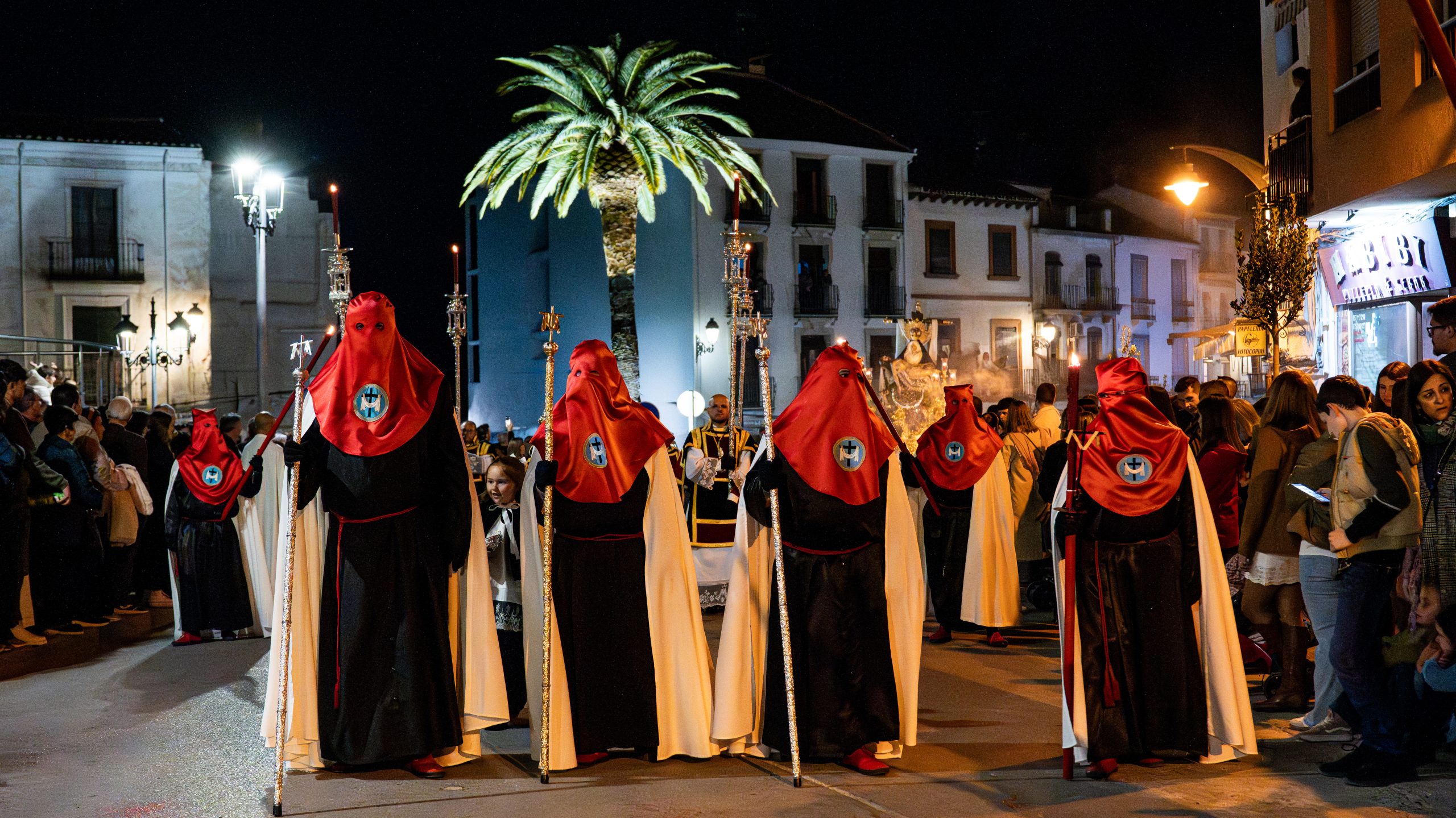
This procession first took place in 1970, with costaleros carrying the image from the church of Las Angustias. Chapter Four of the organisation’s statute decrees that “on Good Friday night, the brotherhood will undertake a solemn procession of penitence, accompanying the sacred image through the streets of Priego de Córdoba. The paso should be decorated with red carnations and white candles and the penitents should carry red candles: the brothers will march in an extremely ordered and disciplined way, following the director’s orders to the letter.”
The procession travels through Priego on this route: Calle Río, Carrera de las Monjas, Palenque, Obispo Pérez Muñoz, Cervantes, Málaga, Ancha, and returning to the church in Calle Río.
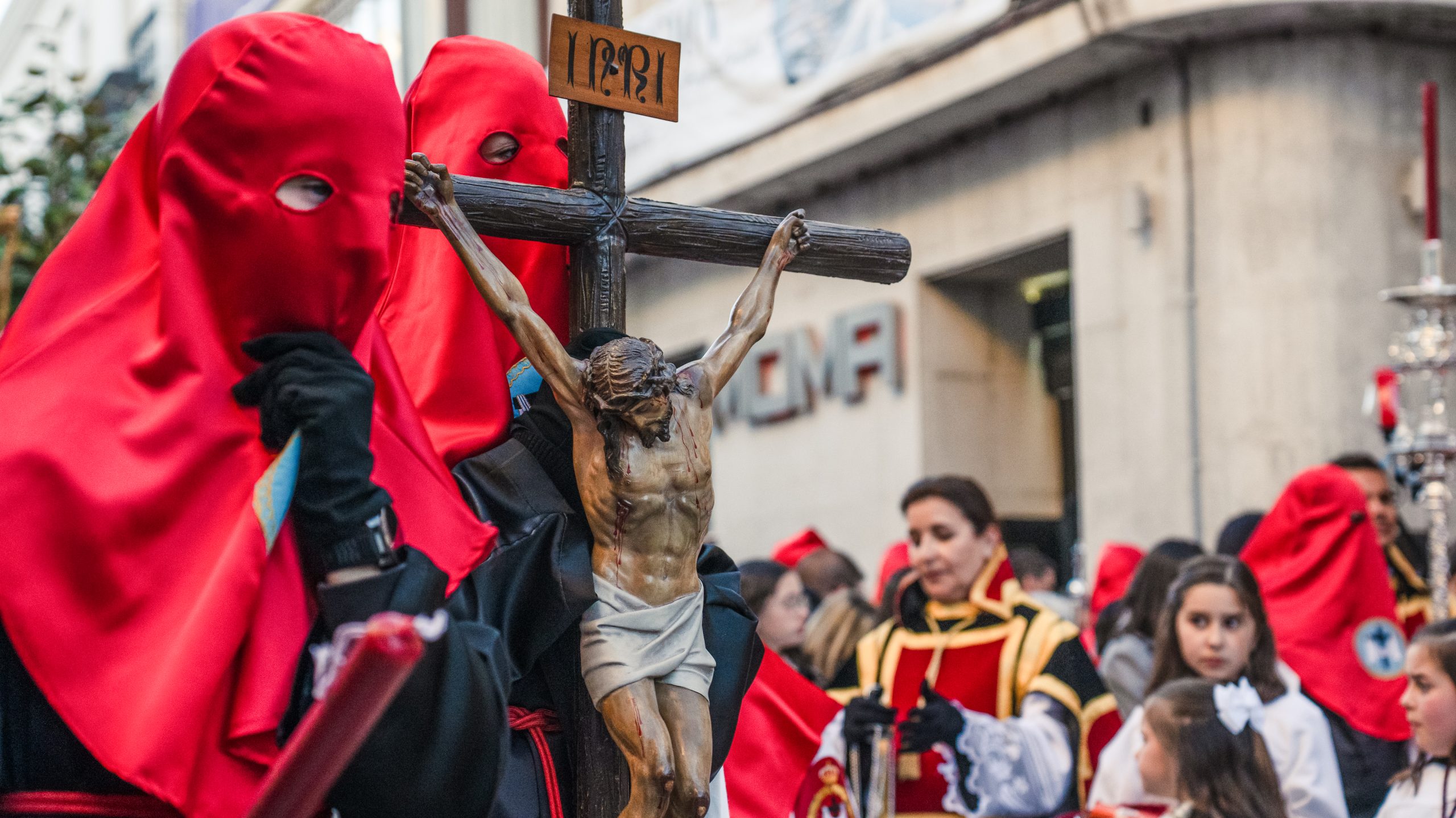
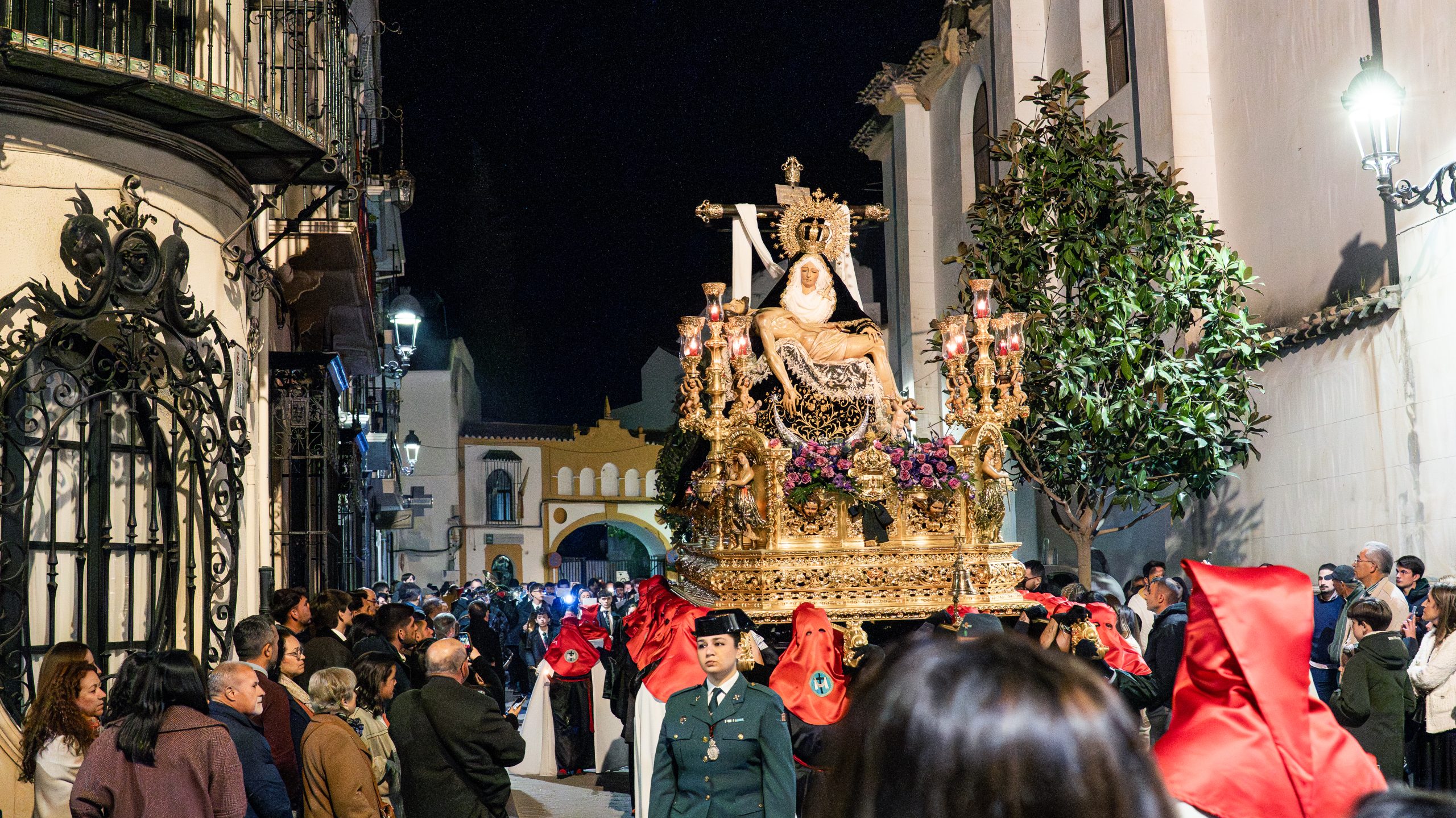
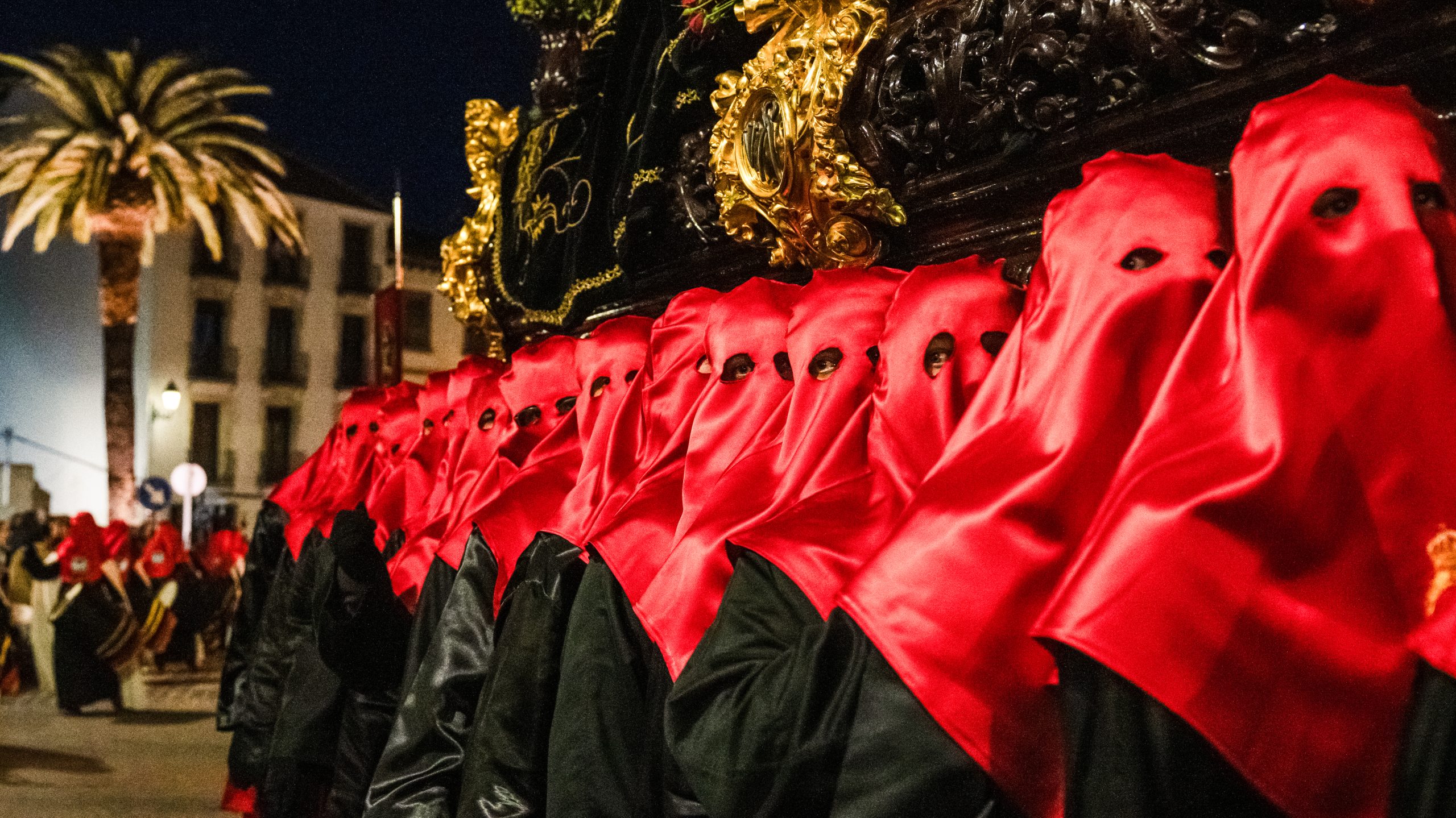
Some 300 penitents accompany the image; they wear black tunics, red hoods, cream cloaks, red belts and shoes, with black gloves and socks. The paso is carried by 68 costaleros, who carry the image without a break: they are directed by the ring of a bell — the first ring is to be ready, the second to take positions and the third to lift the platform onto their shoulders. In the past, the paso was paraded on wheels.
This Brotherhood was one of the first to form its own processional band in 1970, and today, it possesses a total of 60 drums and bass drums, which mark a solemn and dramatic rhythm, composed by Alonso Cano and Alonso Ávila. There are around 915 members in the brotherhood, and about 450 march with the procession.
The origins of the guild go back to 1670, when it was given permission by Abbot Alonso de San Martín to form a brotherhood. In 1787, the image was moved to its present day shrine, and a convent was founded there. In 1862, the mother superior and the chaplain sought approval for the statutes of a new brotherhood, the Worshipful Archcofradia of the Precious Blood of Our Lord Jesus Christ, affiliated to a brotherhood already established in the basilica of Saint Nicholas in Rome: permission was granted in 1864. In 1968, the cofradia was re-established, adding the title of Our Lady of Anguish.
The statutes which have governed the cofradía since 1968 are based on those of the Brotherhood of Christ of the Blessed Death and Our Lady of the Martyrs of Córdoba, which were re-ratified by the Second Vatican Council.
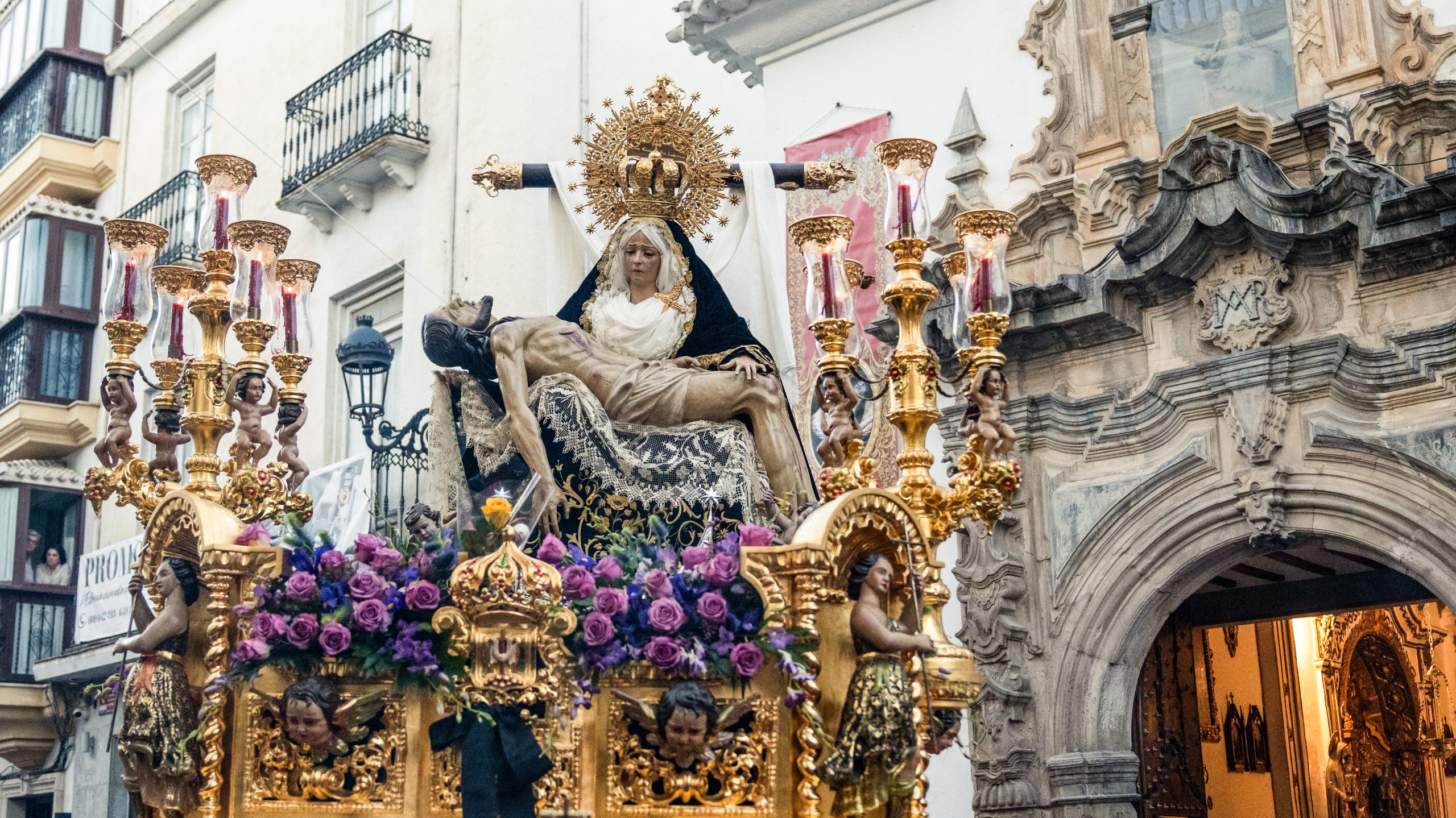
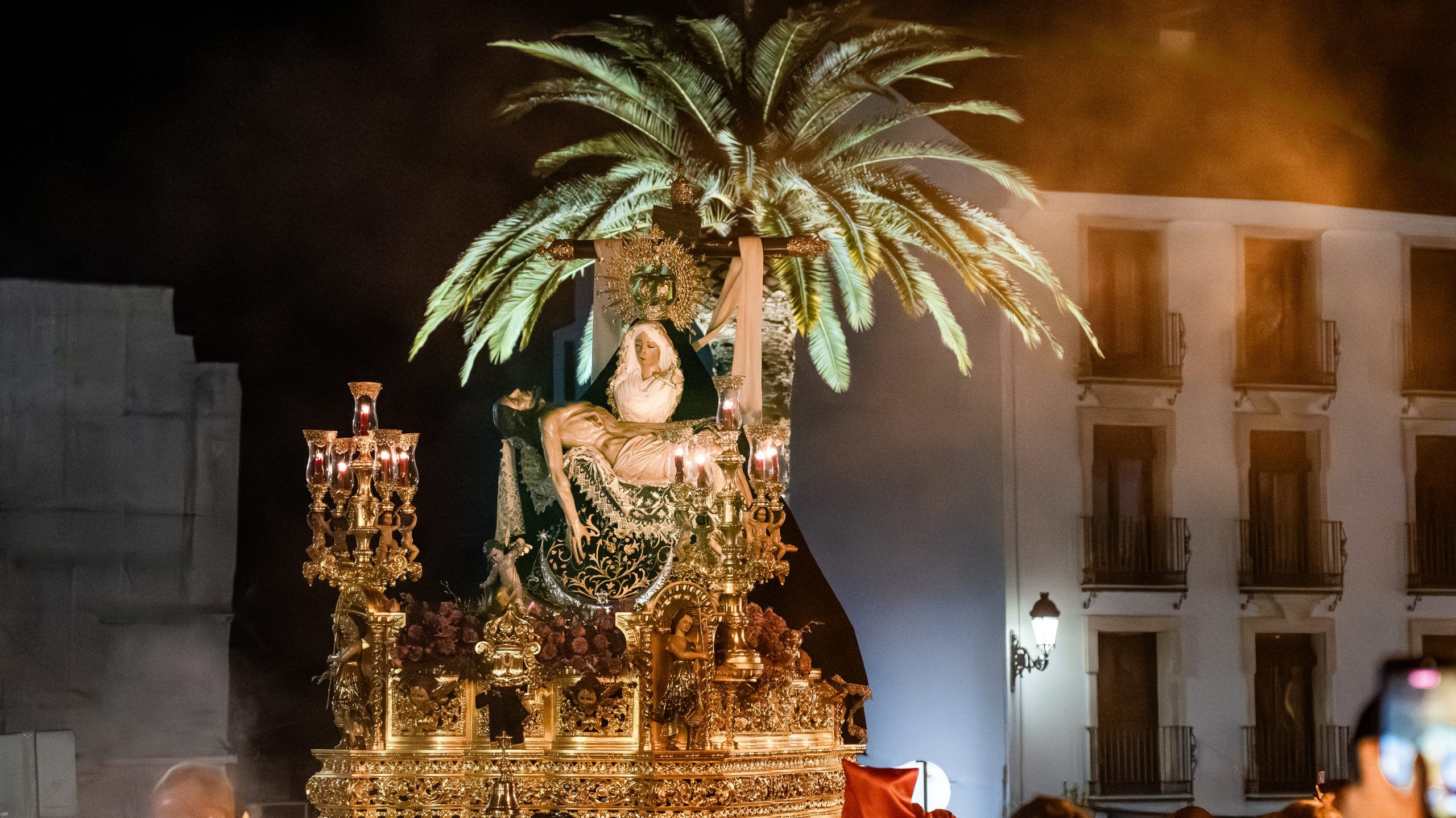
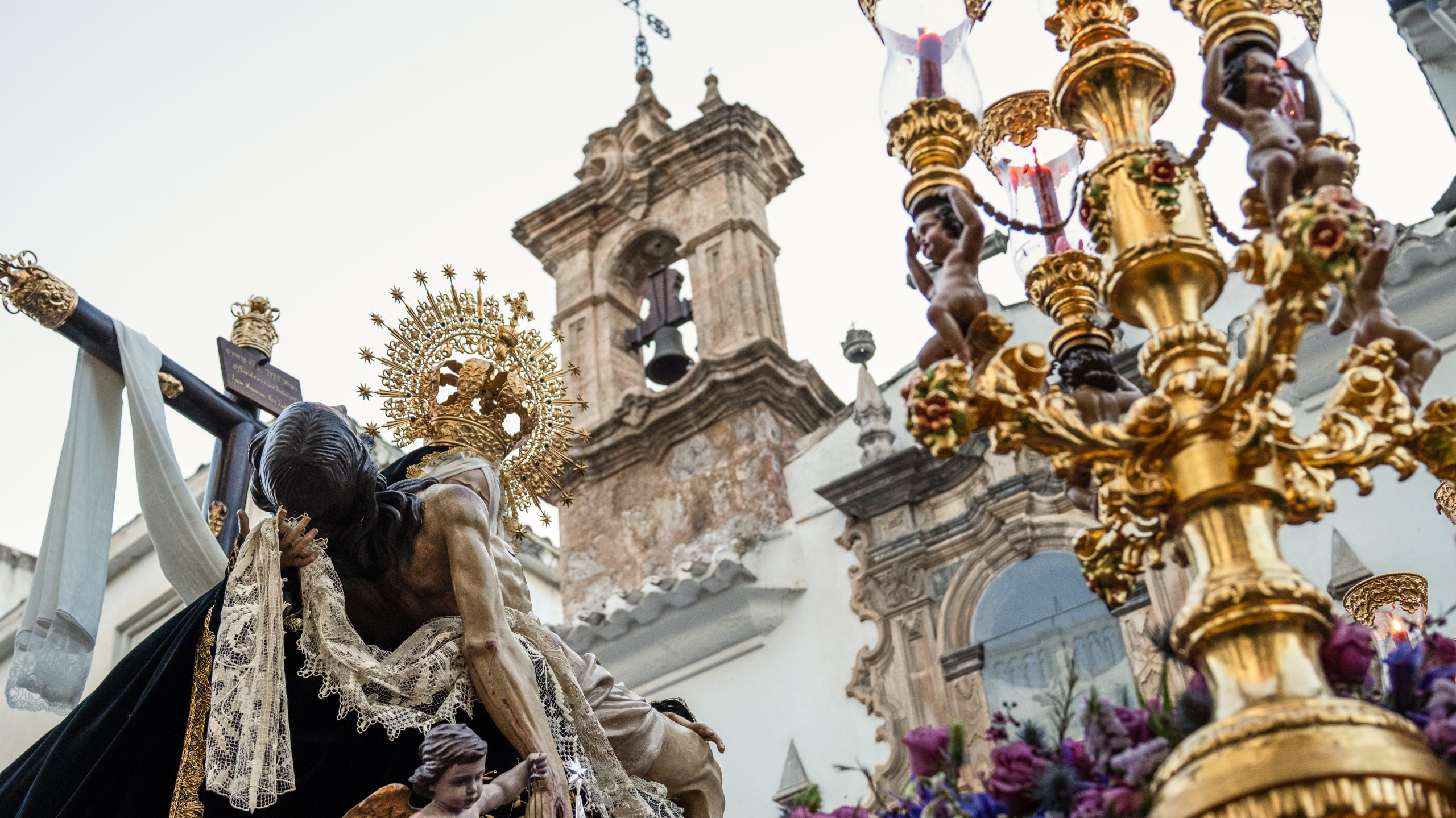
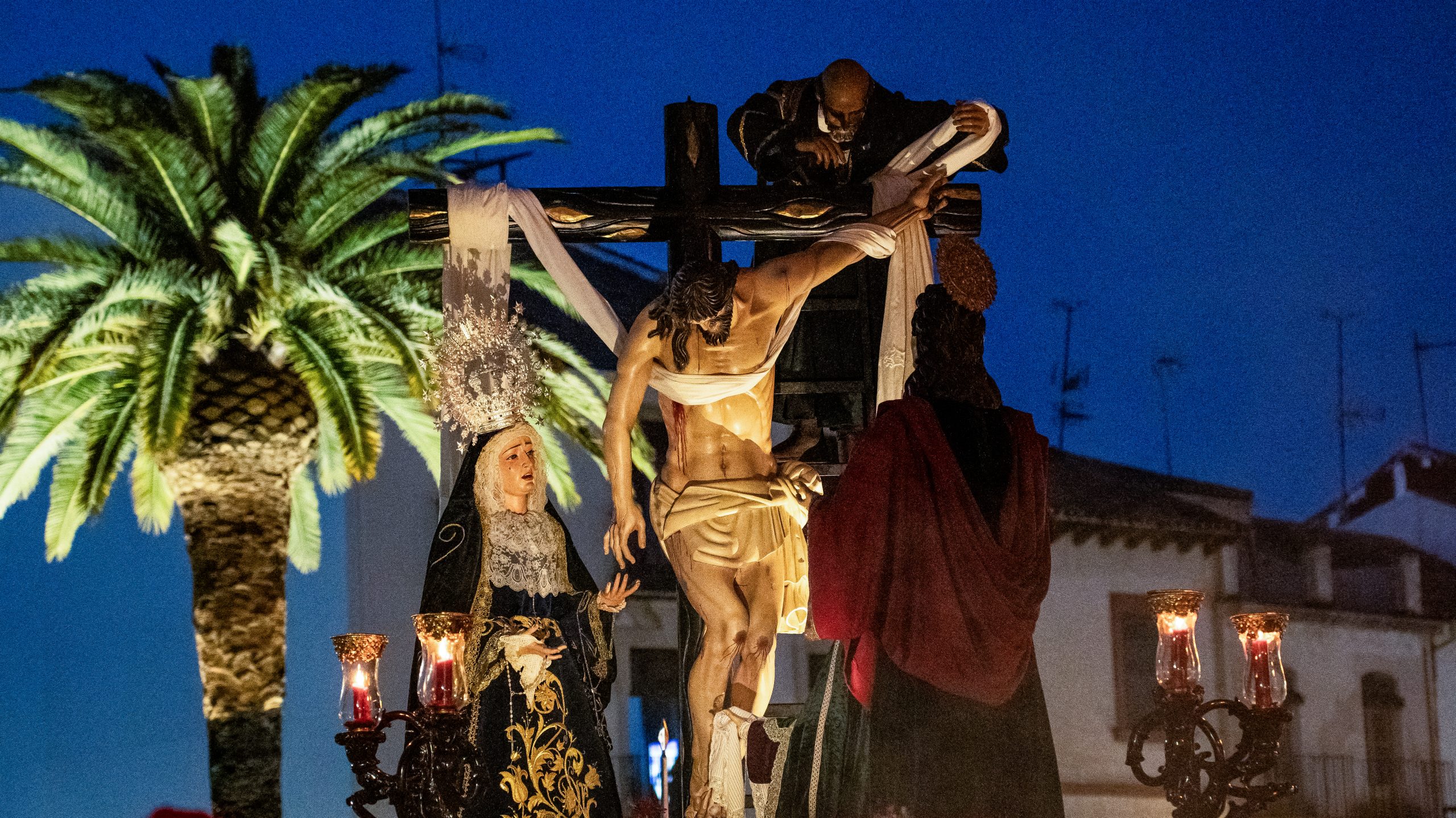
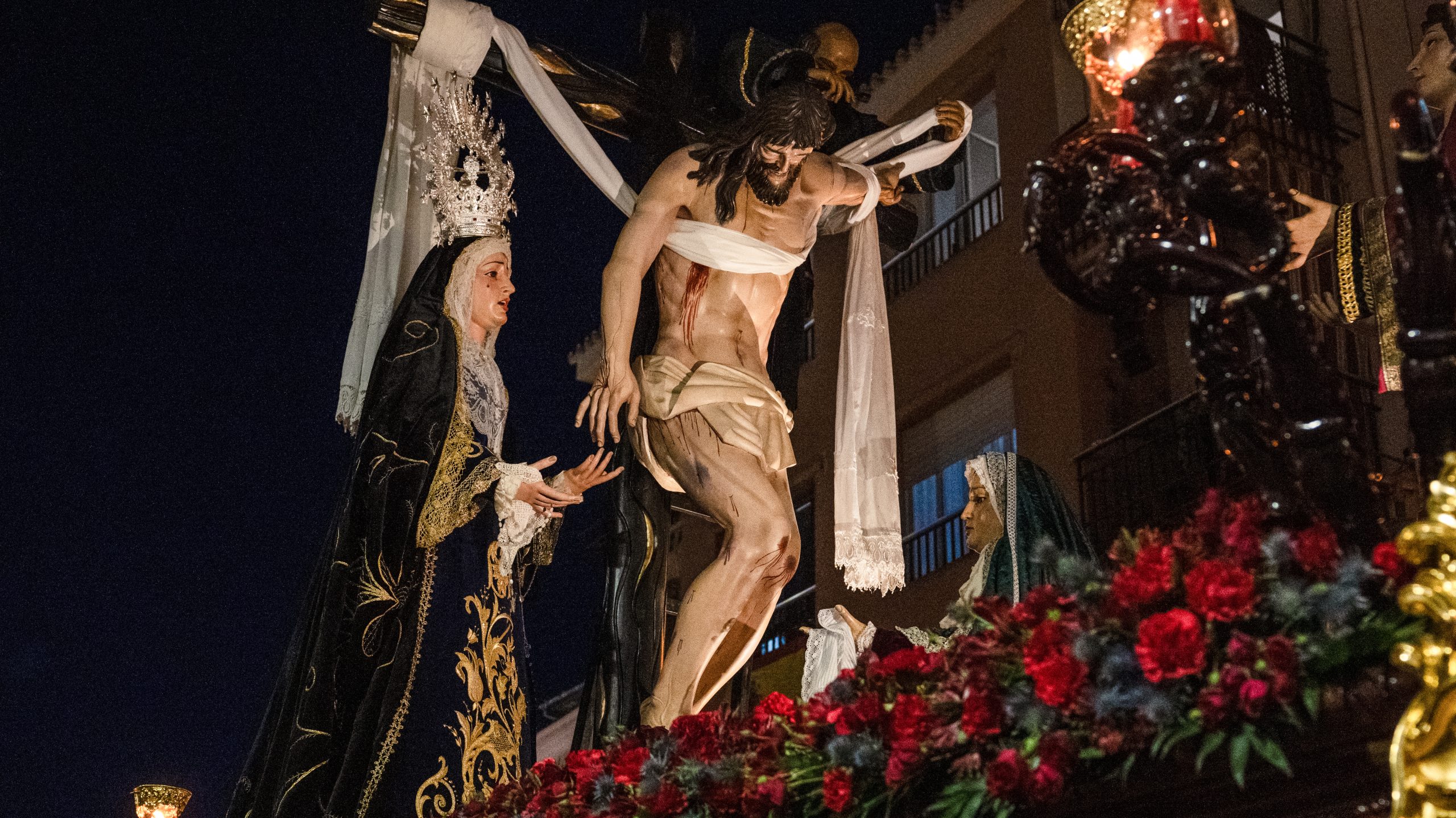
The baroque image of the Virgin in her Anguish, bearing the crucified Christ, was created by the Granadan school at the end of the seventeenth century and is thought to be the work of the Mora brothers. It is an image designed to be carried on a paso decked with candles: the Virgin wears an embroidered robe, and has carved and polychromed hands, face and neck.
The Virgin Mother’s face reflects her agony as she beholds the body of her crucified son. The figure of Christ is a masterpiece of anatomical detail – the downward sweep of his lifeless hand serves to heighten the dramatic scene.
The trono of Jesus Taken From the Cross includes a group of five images; it was made by the local master craftsman Niceto Mateo Porras and was first incorporated into the procession in 1995, to coincide with the twenty-fifth anniversary of the reforming of the cofradía.
On April 2nd, 1995, the paso was blessed by the Bishop of Córdoba, Don José Antonio Infantes Florido, in the parish church of la Asunción, where it is kept.
In the days leading up to Easter, a triduo – Mass on three consecutive days — is held in honour of the Virgin, and on Easter Sunday morning, carnations are placed on the trono which is paraded later that day, and people gather to kiss Our Lady’s hand
- Real Cofradía del Santo Entierro de Cristo y María Santísima de la Soledad Coronada
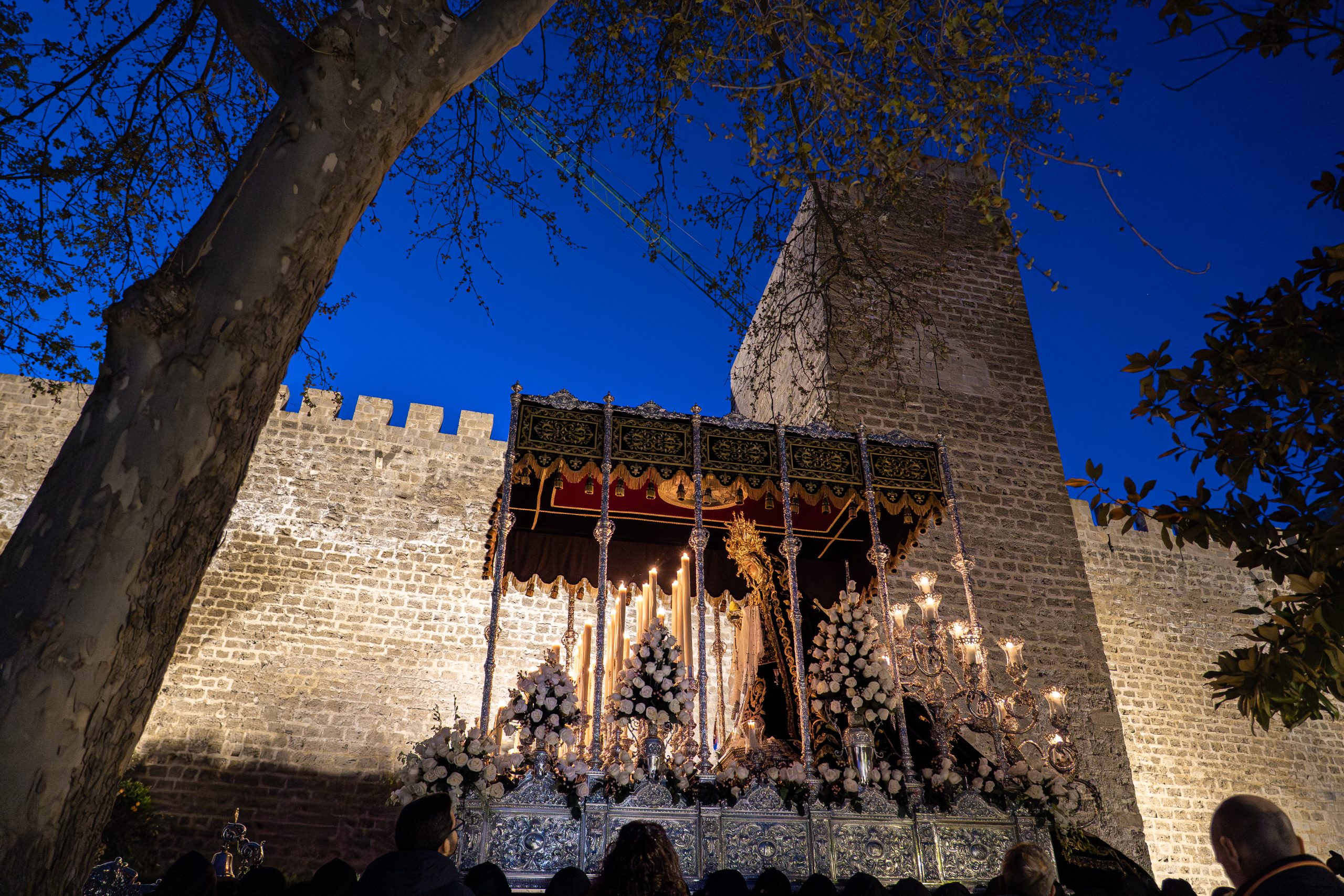
This procession leaves the church of San Pedro on Good Friday night and takes the following route: Plaza San Pedro, Ribera, Carrera de las Monjas, Palenque, Obispo Pérez Muñoz, Cervantes, Málaga, Ancha, Río, Ribera, and returns to the church of San Pedro.
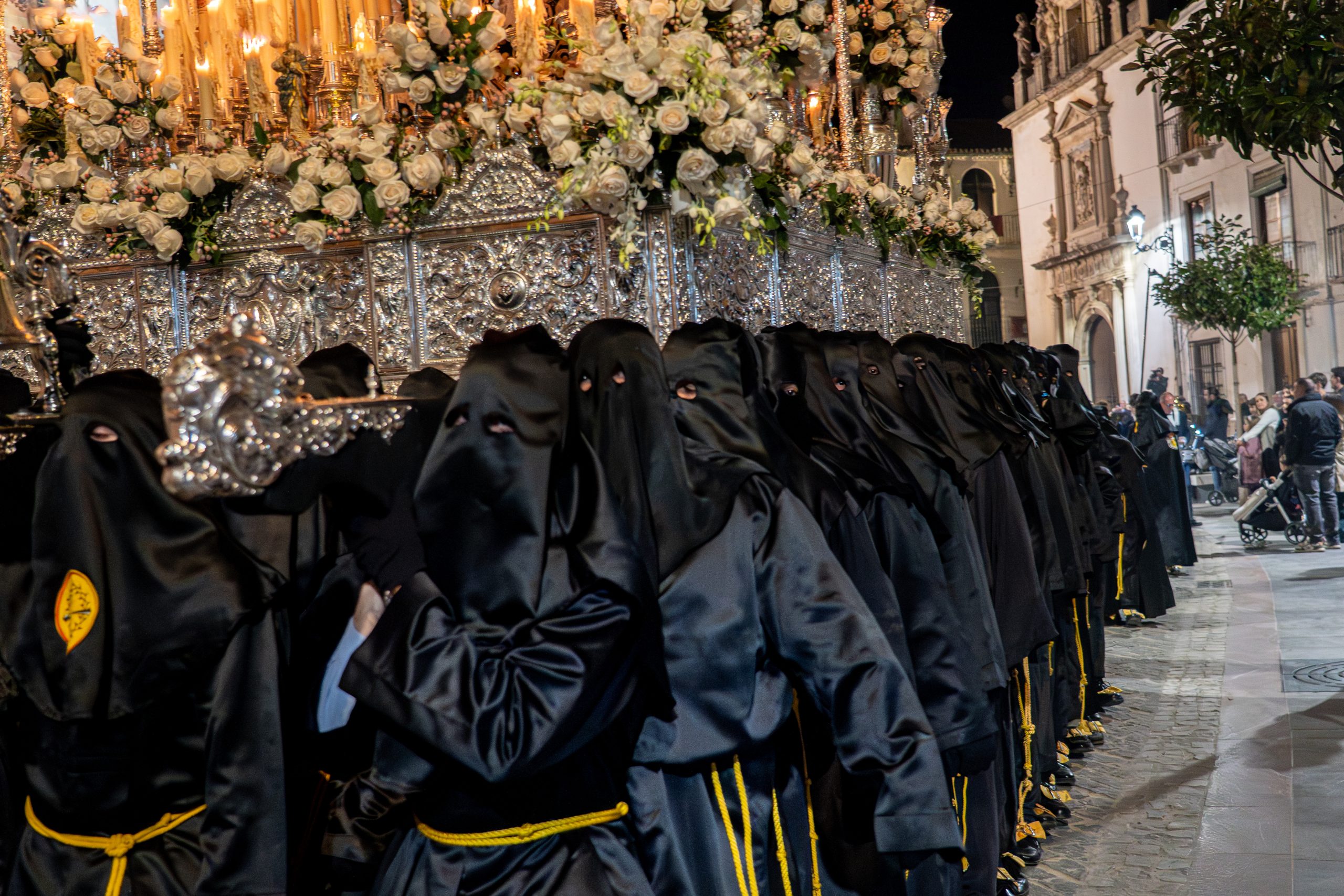
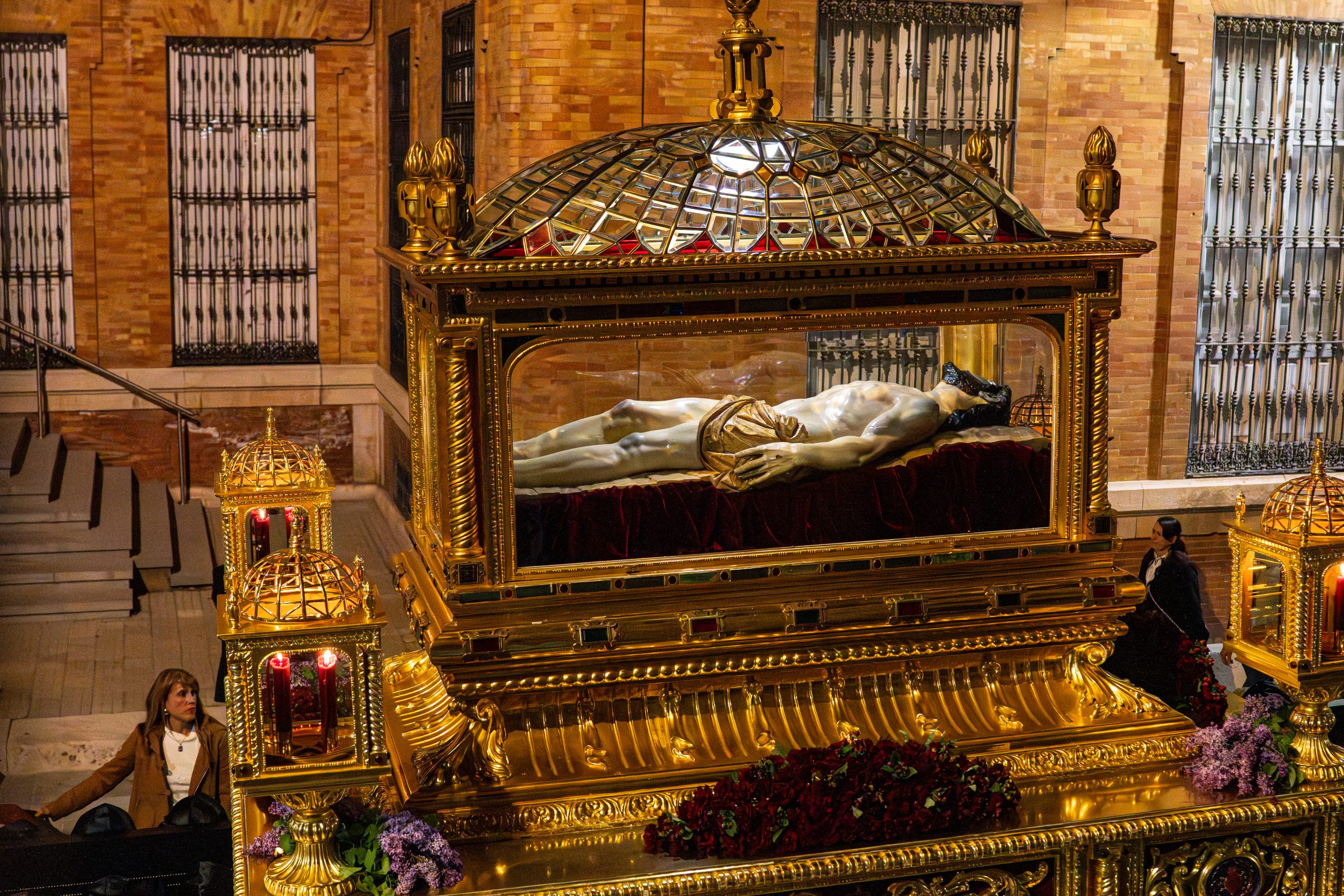
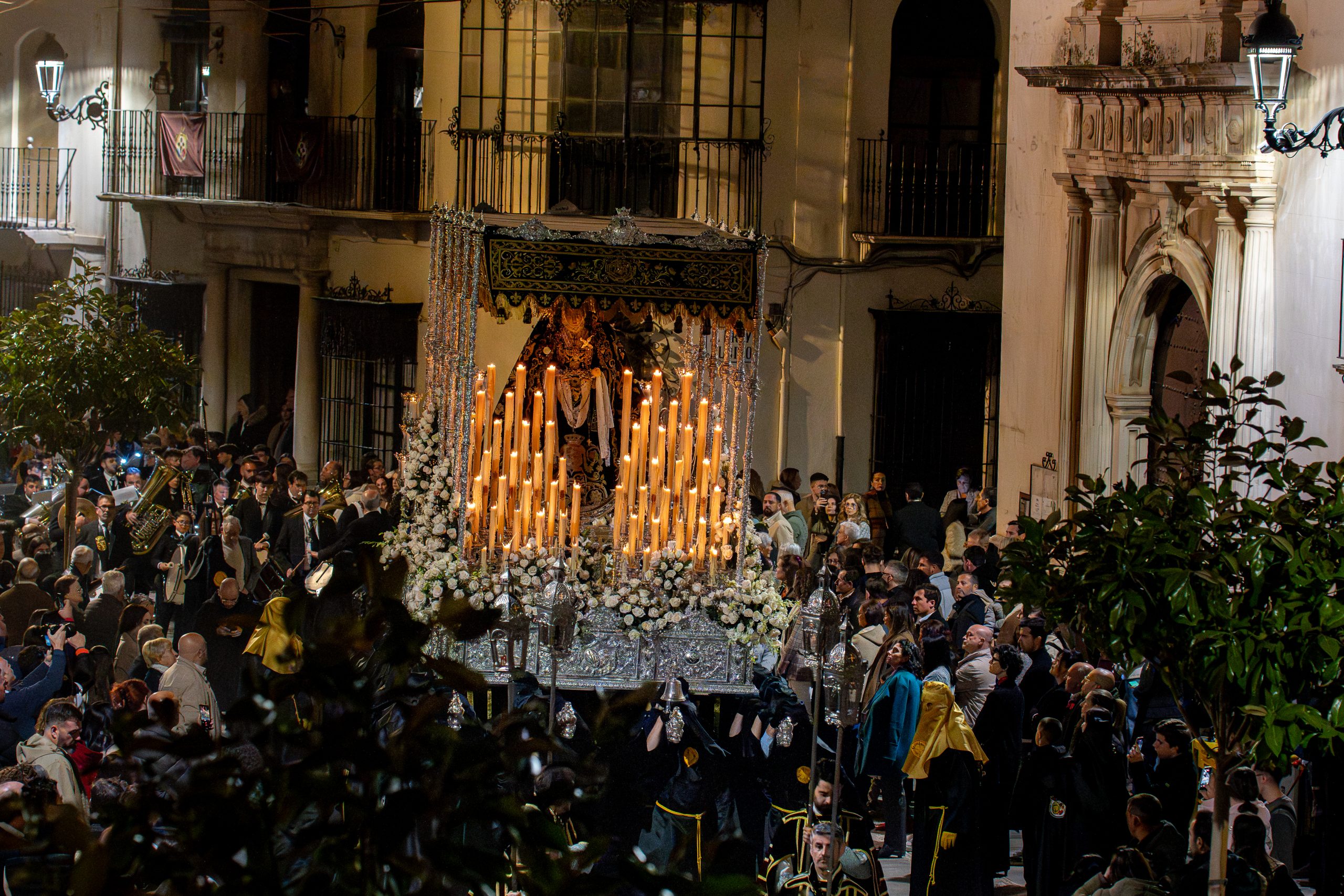
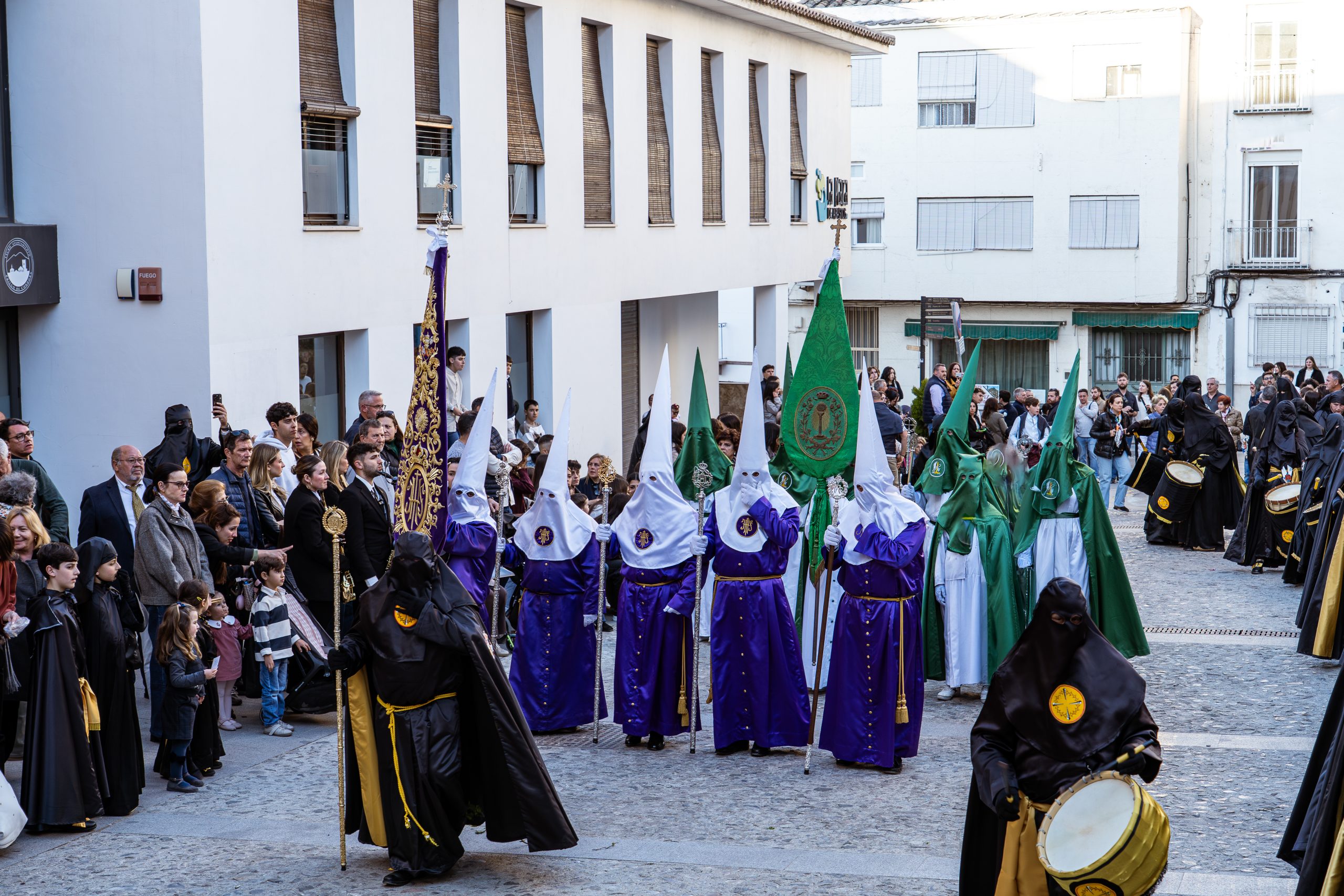
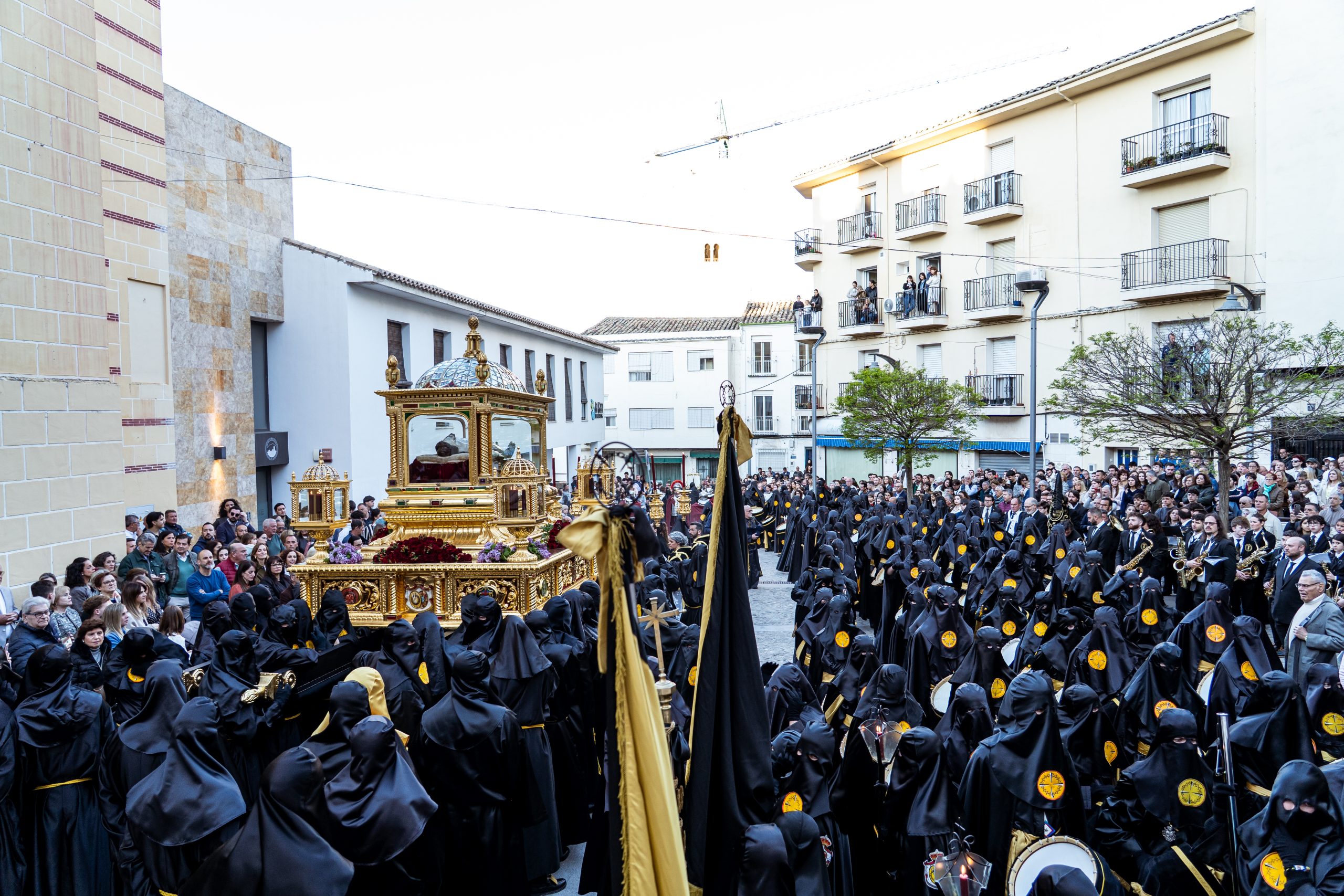
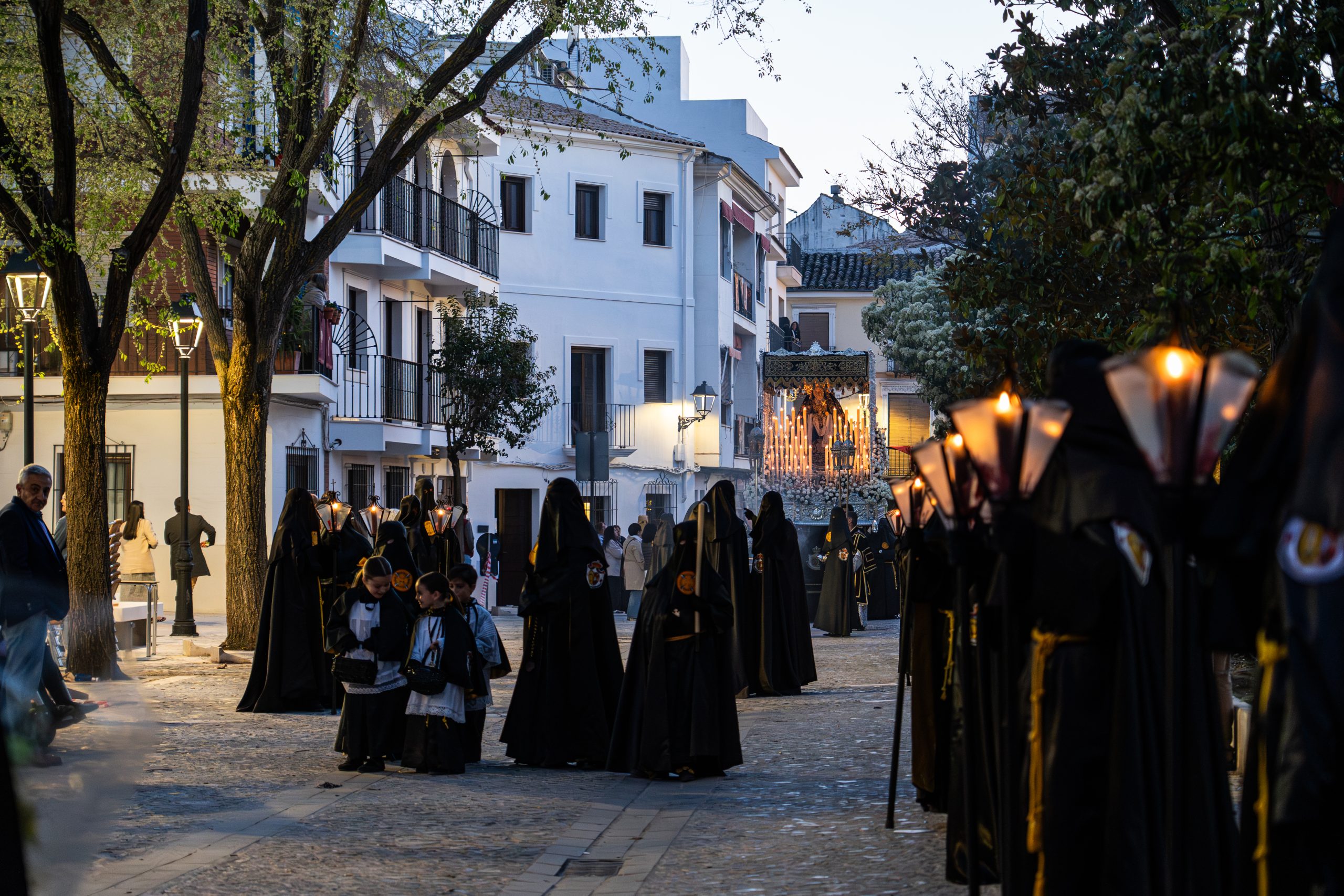
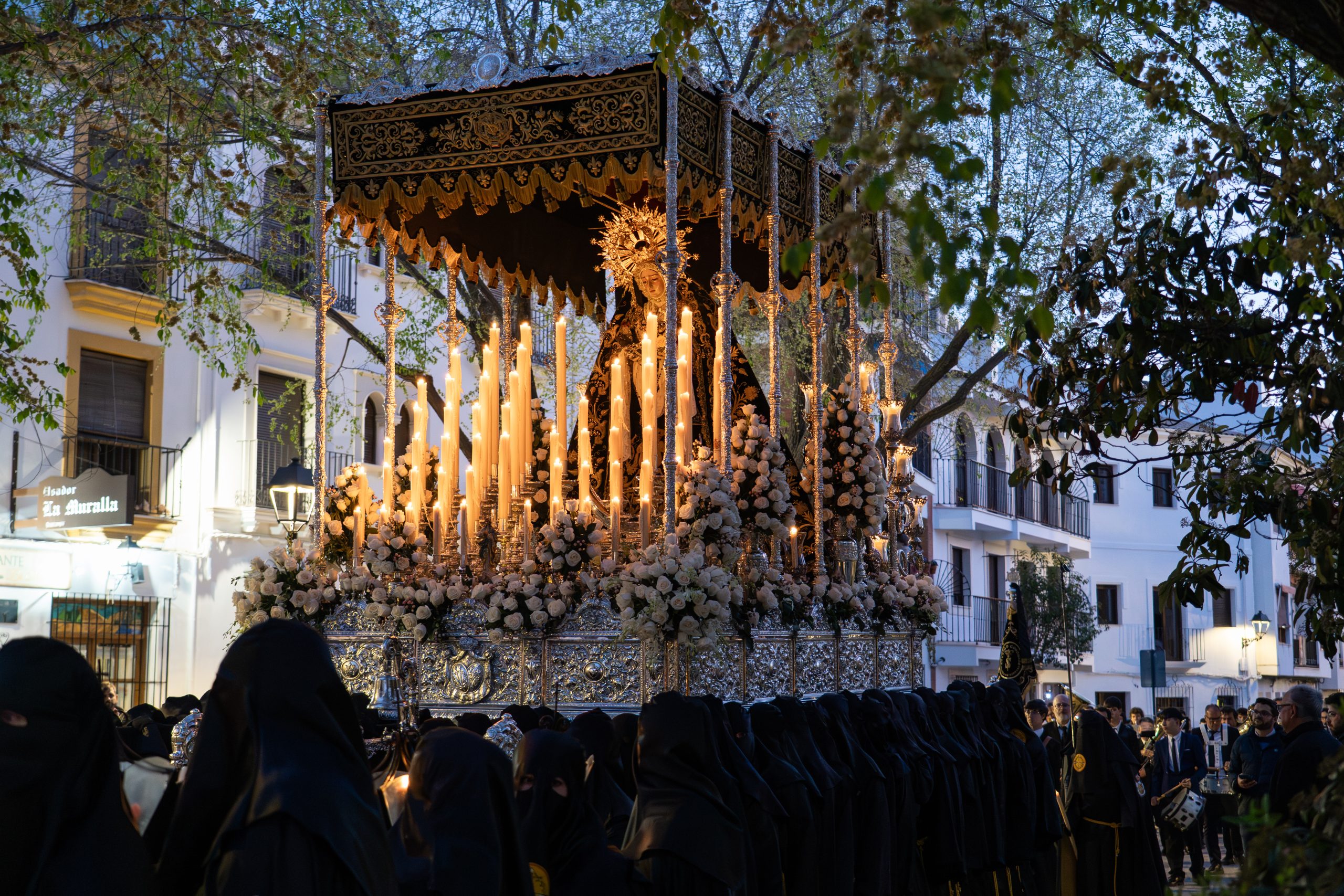
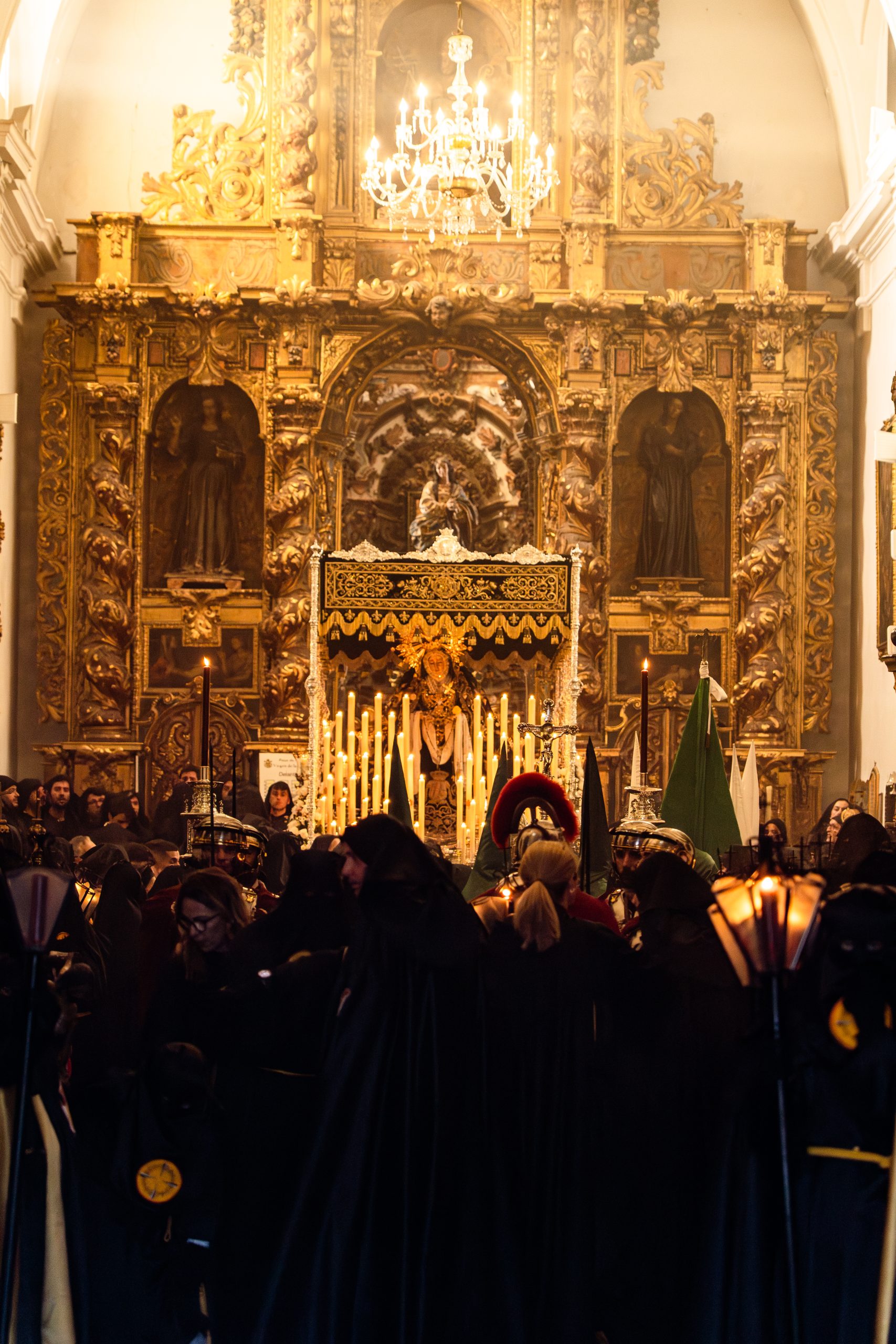
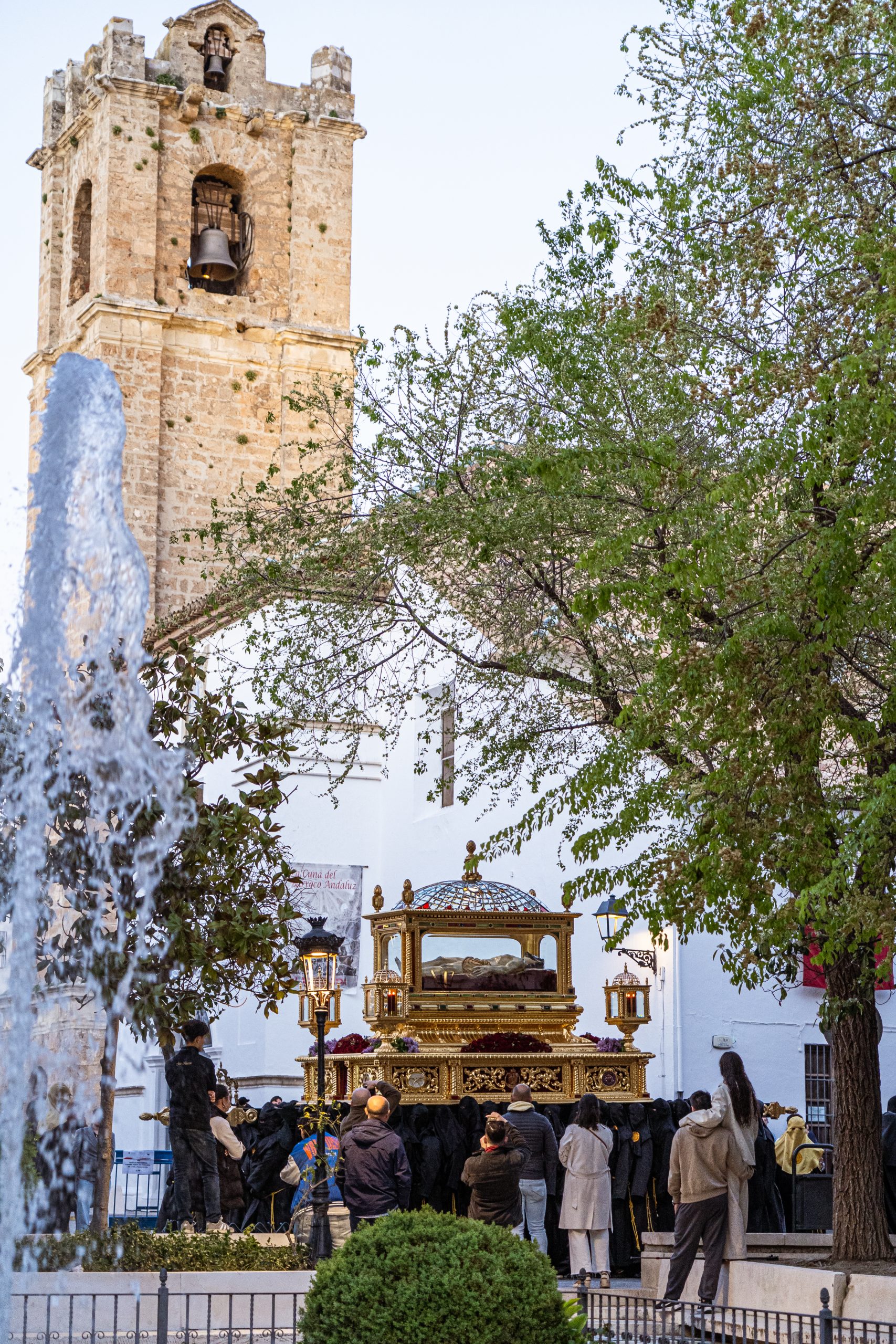
This is one of the most solemn moments of Holy Week: it is the town’s official procession, and includes members of all the cofradías of Priego, wearing their different-coloured robes, and carrying their respective banners, as well as representatives of the clergy, police and town hall. The figure of the Virgin is carried beneath a canopy by 90 costaleros, or bearers, on a silver platform, which was made in Seville in 1991. The figure of Christ in the Tomb is borne by 38 costaleros – all guided by the instructions of their directors, by means of ringing a bell.
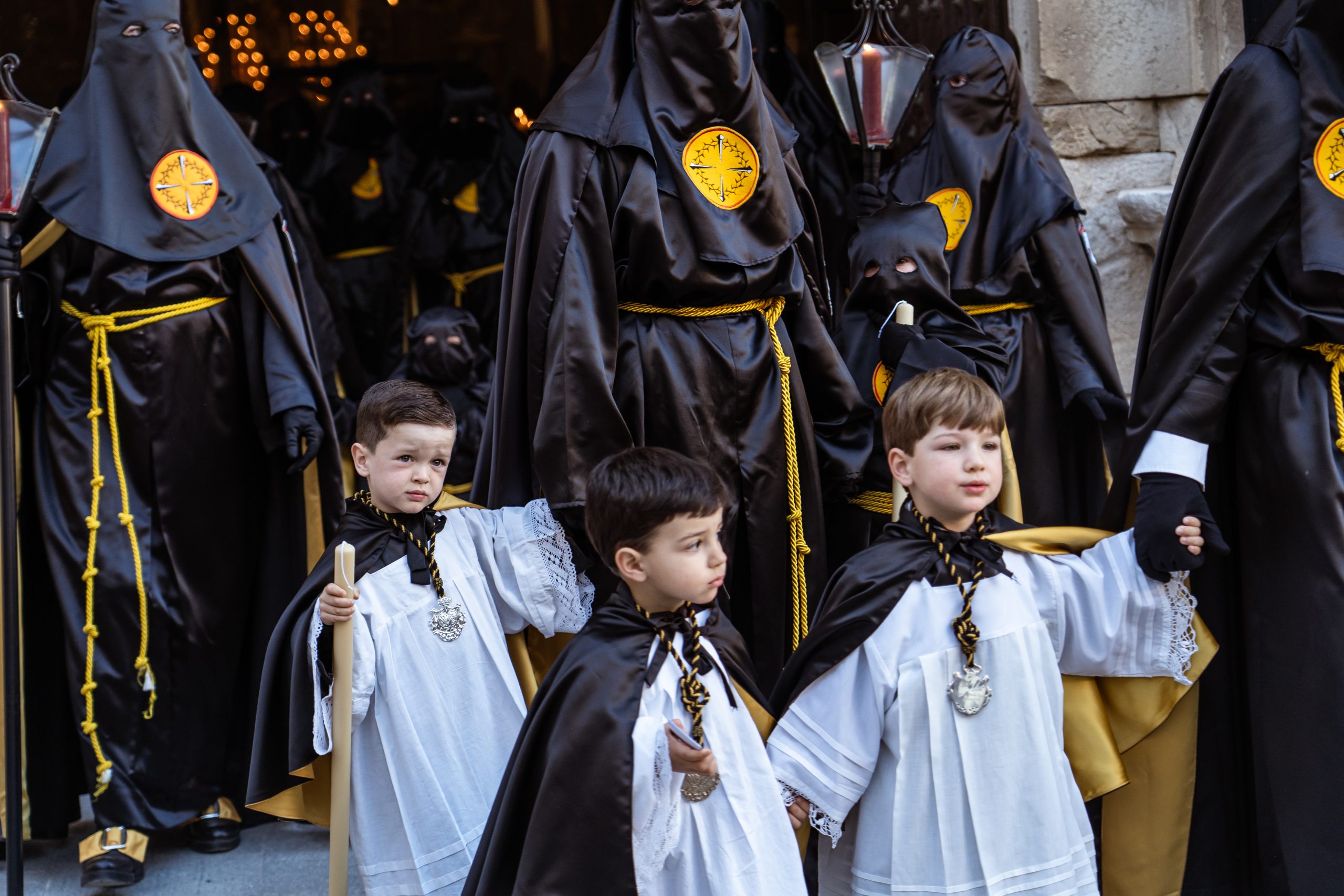
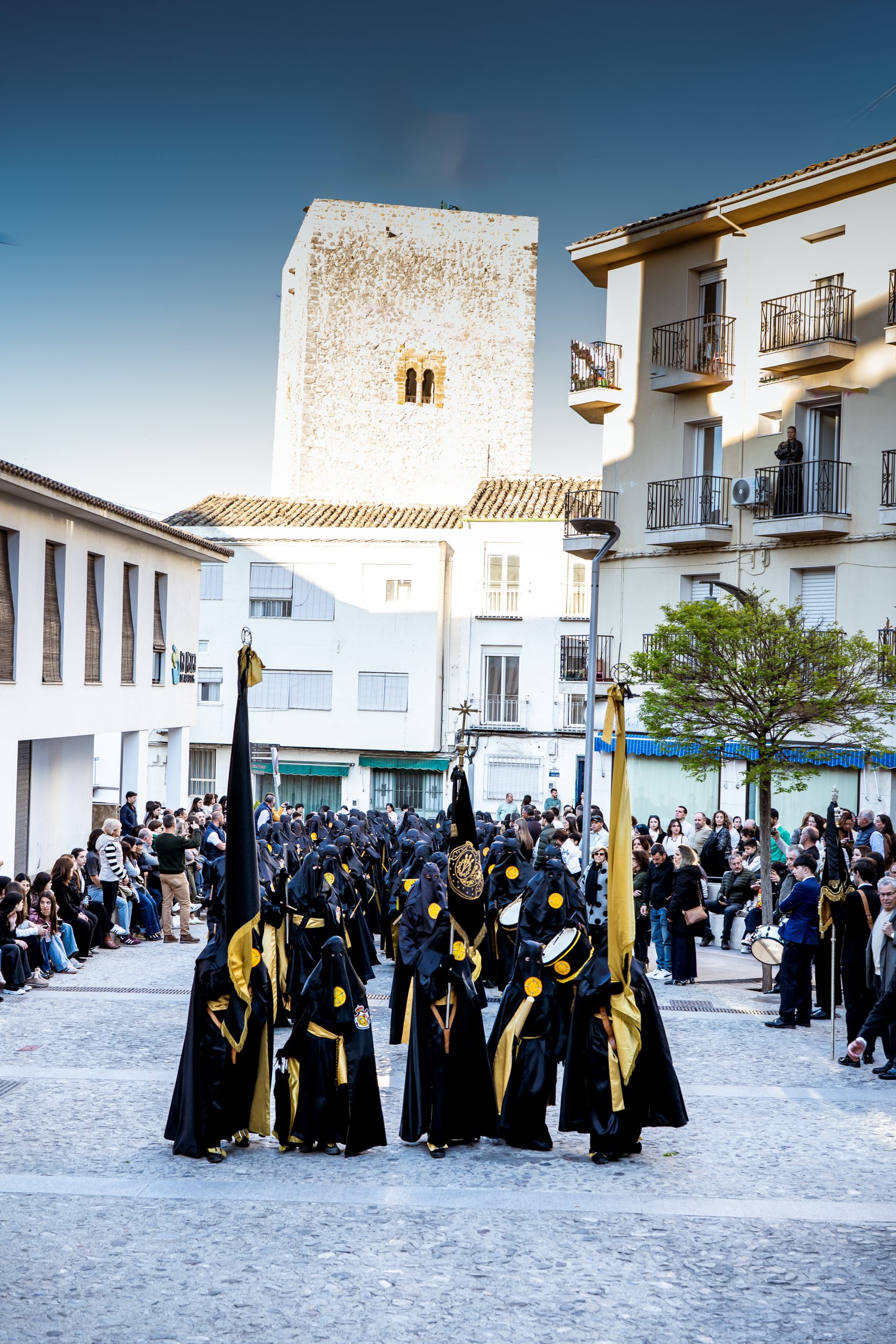
The penitents attached to this cofradía wear a black tunic and mask, with a yellow belt. The form the procession takes dates back to 1975: the brotherhood has its own band, with 55 drums and 15 bass drums, and it marches alongside the town band of Priego.
The music, composed by José Joaquín Alcalá, has different rhythms for leaving and returning to the church, and — in contrast to other processions – a more muffled beat, to emphasise that this is a funeral march: a Chinese drum gives a distinctive sound to the band.
The Cofradía of Our Lady of Solitude was founded on January 20, 1594, in the shrine of San Pedro. Its formation was proposed by Diego de Alcaraz, supported by townsmen and Doctor Marcos López, the leading cleric of Priego. It was approved by Bernabé Serrano Alférez, the governor of the Abbey of Alcalá la Real, in the time of Abbot Maximiliano de Austria.
The early statutes of the cofradía mention a dignified procession with the figure of Christ in the Tomb on the evening of Good Friday, and also at the burial of guild members. At this time, the main festival was celebrated on the third Sunday in Epiphany.
Early in 1684, following the founding of other cofradías in the town, the Brotherhood of Our Lady of Solitude was formed: it took on an intercessionary character and established the May cycle of prayers. In the same year, an accord was reached with the Brotherhood of the Holy Tomb, and another with the community of Franciscan friars, who were finishing building the church.
The two organisations worked closely together for many years. In 1789, in the reign of Carlos III, they merged and formed a new constitution, but part of the governing body broke away in 1821.
When in 1859 Queen Isabel II approved the new, and most extensive statutes so far, they united definitively, and became known as the Brotherhood of the Holy Tomb of Christ and Holiest Mary of Solitude. One year later, the queen was made Protector and Honorary Senior Brother, and the cofradía added the title Royal to its name. The statutes were revised in 1882, at a time when Ceferino González was bishop of Córdoba.
The statutes were revised twice in the twentieth century, in accordance with instructions from the senior cleric of the region. The last were approved in 1993, and apart from the traditional aims, new measures were taken to increase the apostolic, educational and charitable role of the cofradía. The royal tradition begun by Isabel II and continued by her son Alfonso XII has been upheld to the present day – King Juan Carlos is the Honorary Senior Brother and Queen Sofía is Honorary Camarera, a handmaiden of the icon.
In 1994, the cofradía celebrated its four hundredth anniversary and ceremonially crowned the figure of Our Lady of Solitude.
The Virgin is a baroque image by an unknown sculptor from the seventeenth century, probably from the Granadan school, and represents a style of icon which is traditionally elegantly dressed. Although tears stream down her face, she appears to be in control of her pain, barely letting a sob escape: her arms are crossed, as if trying to contain her suffering. The figure was restored in 1946, and its features were remodelled.
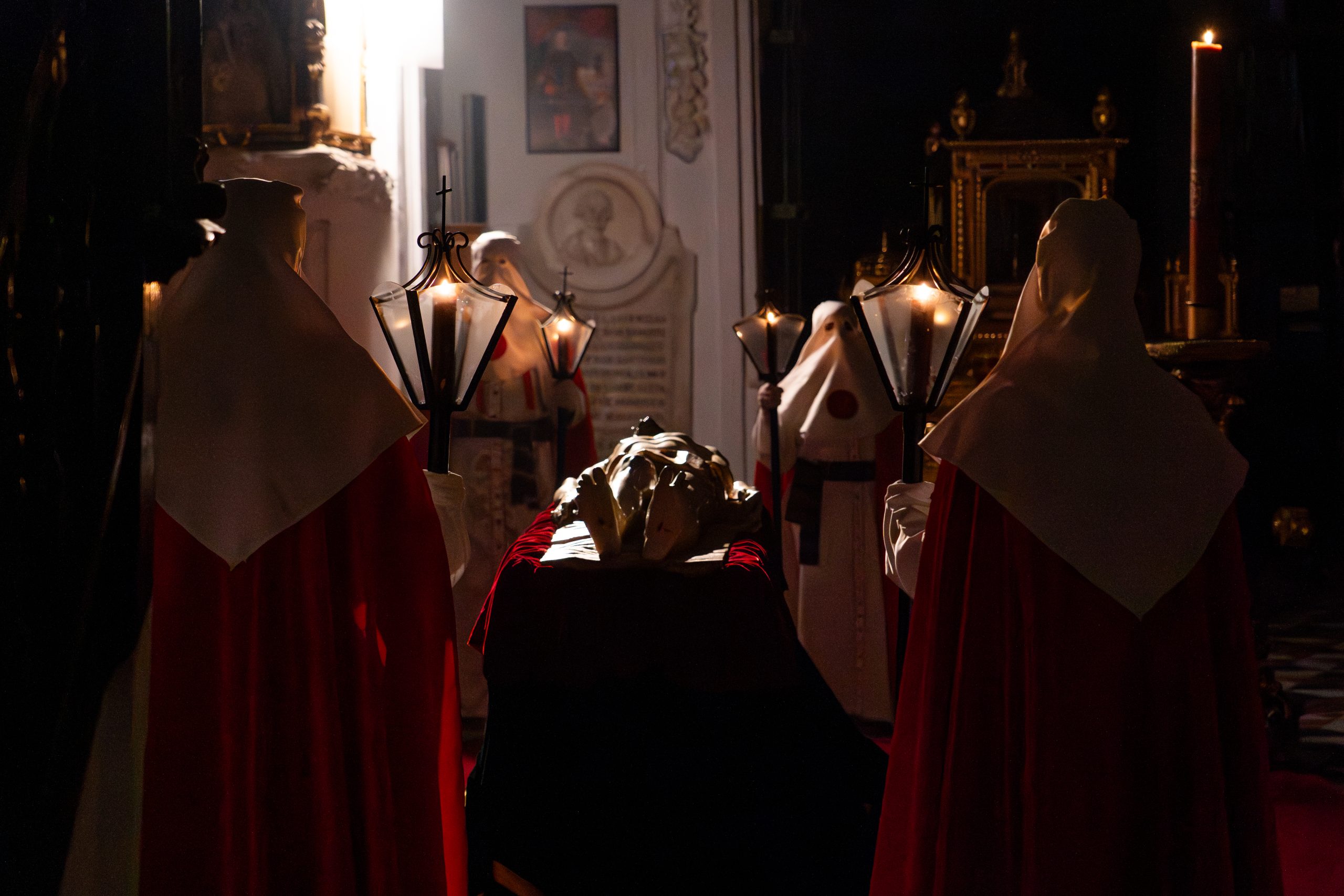
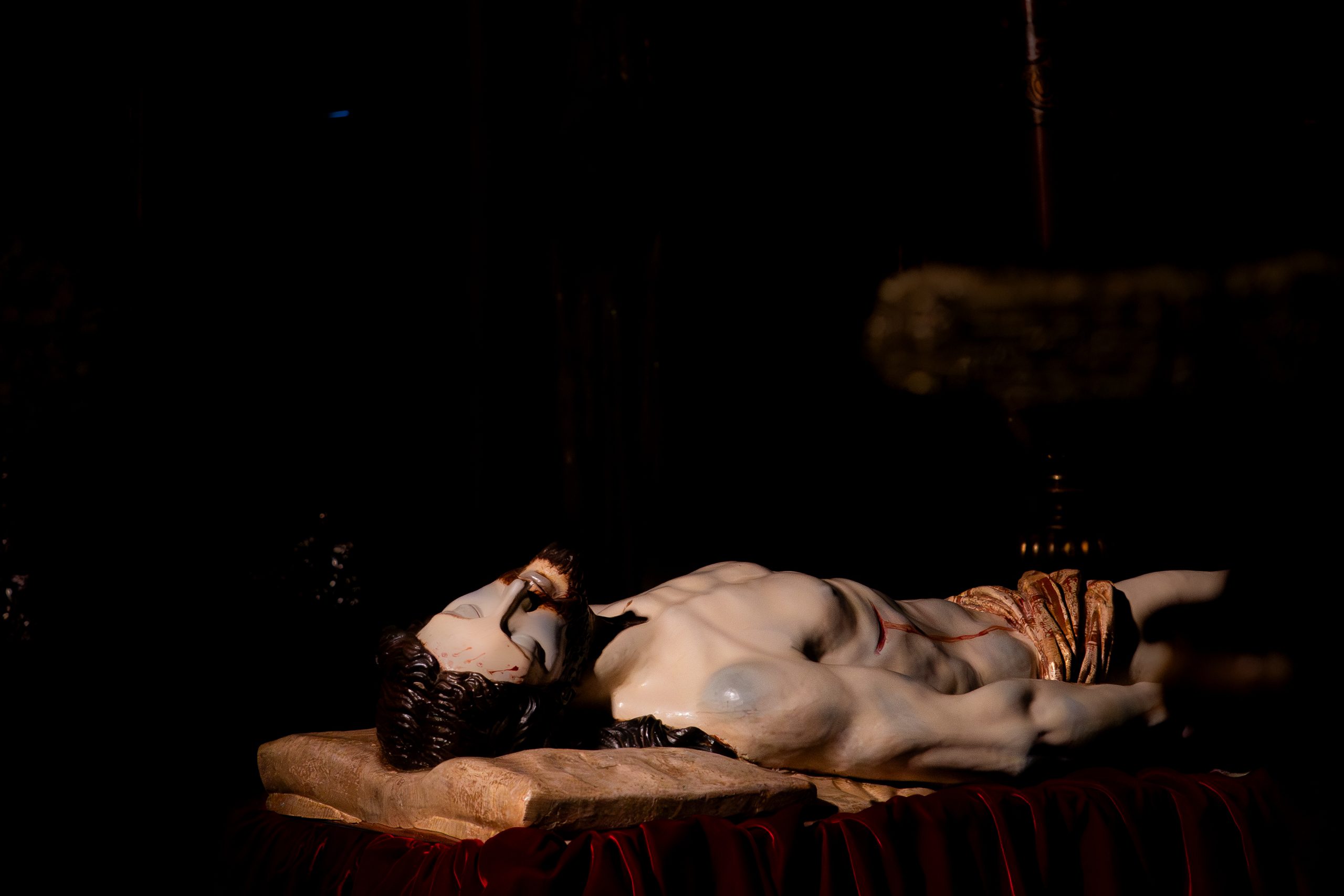
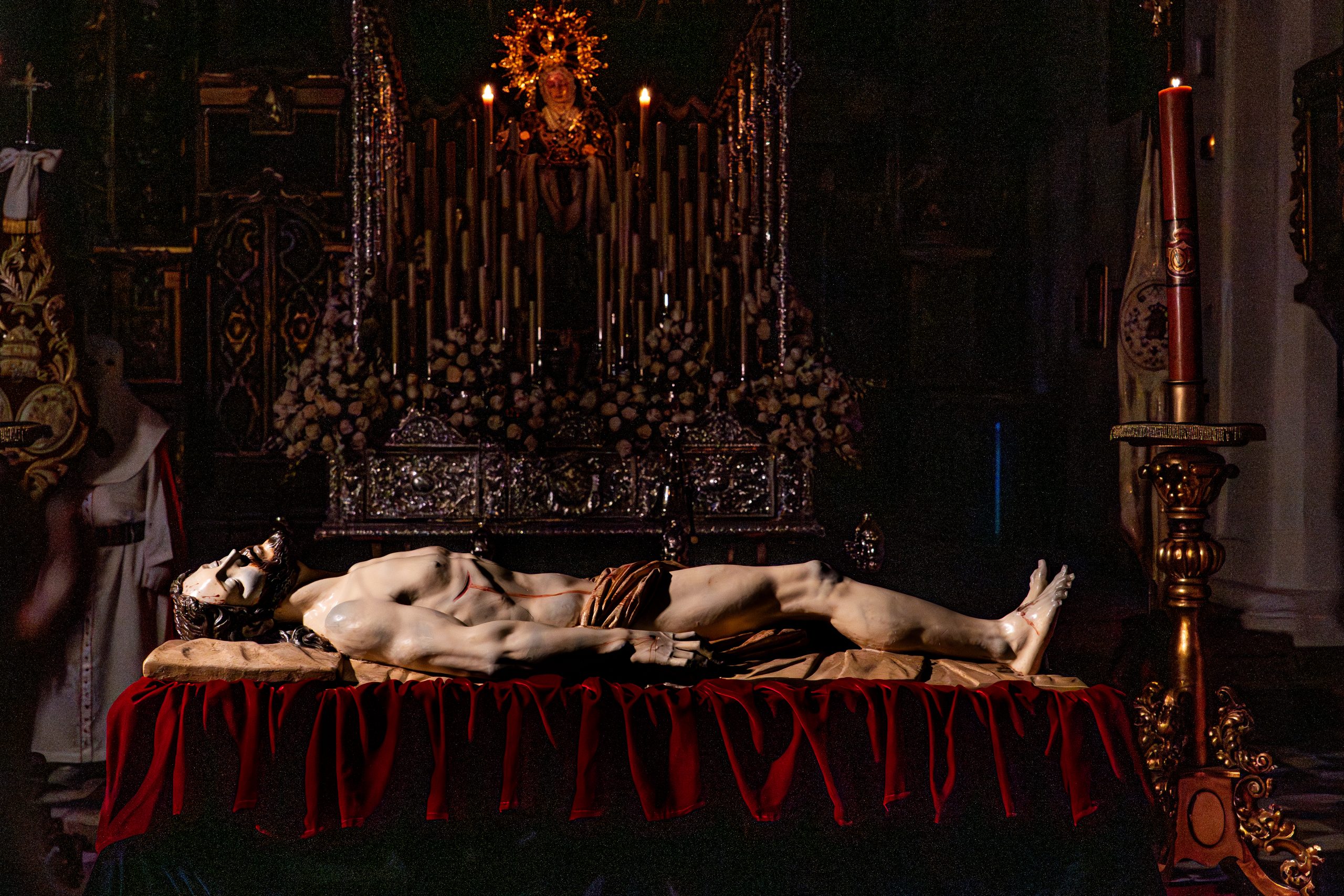
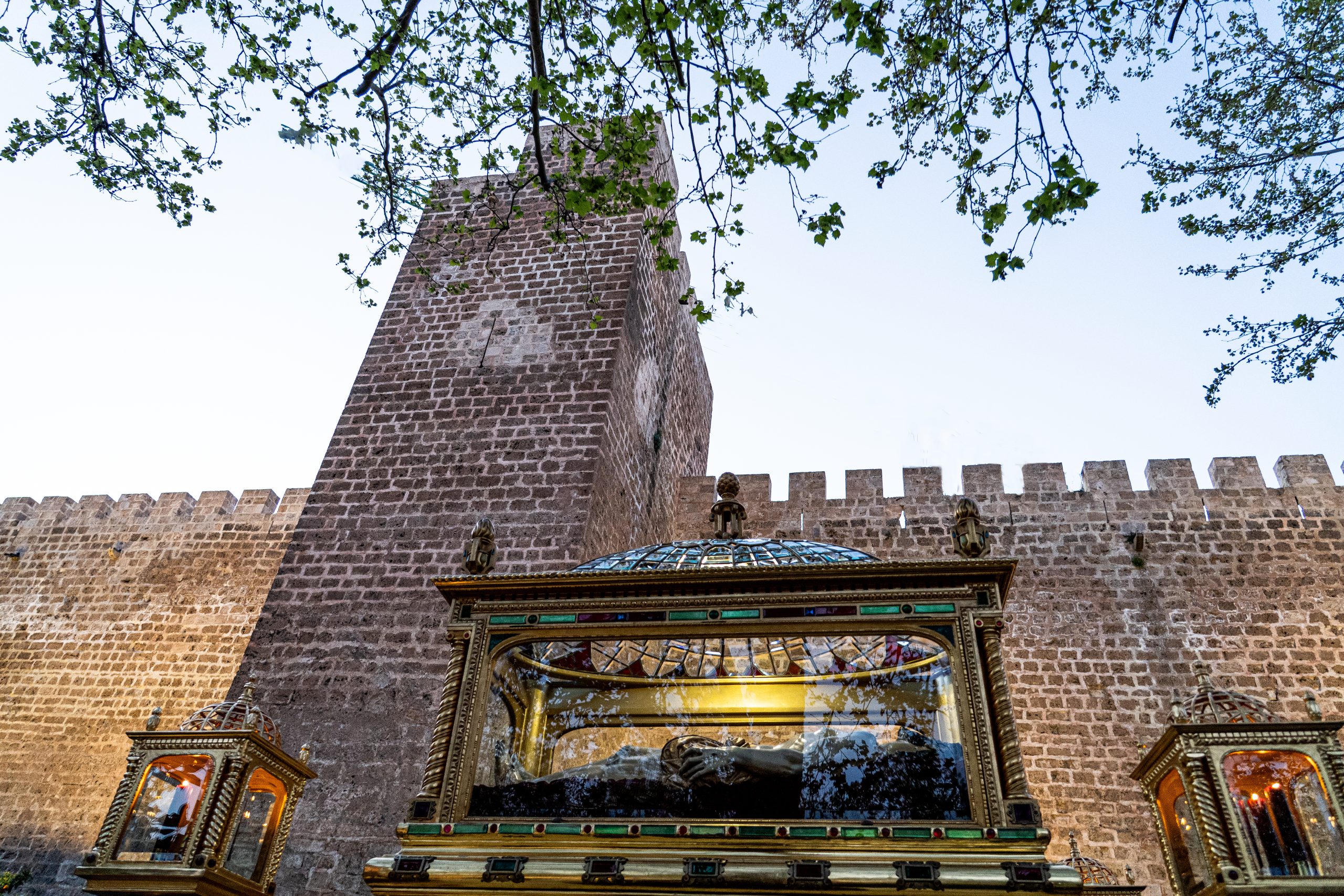
The figure of the entombed Christ dates from the end of the sixteenth century and is attributed to Pablo de Rojas – the likeness to his icon of Jesus of Nazareth is striking. His face is sombre, framed by a beard and locks of wavy hair. The anatomy is well executed, but not excessively detailed, laying emphasis on the overall form. The body is laid out amid all the parafernalia of burial, a reminder of the physical suffering of the Passion: it still has the patina of its original polychromed ivory, and there are no records of restoration. The tomb itself is another work of art, in glass and polychromed wood.
As well as the main icons, the church contains a figure of Christ Crucified, by the sculptor Juan Fernández de Lara: this, with the figures of Mary Magdalene and Saint John, is a central part of the ceremony of Jesus Taken Down from the Cross.
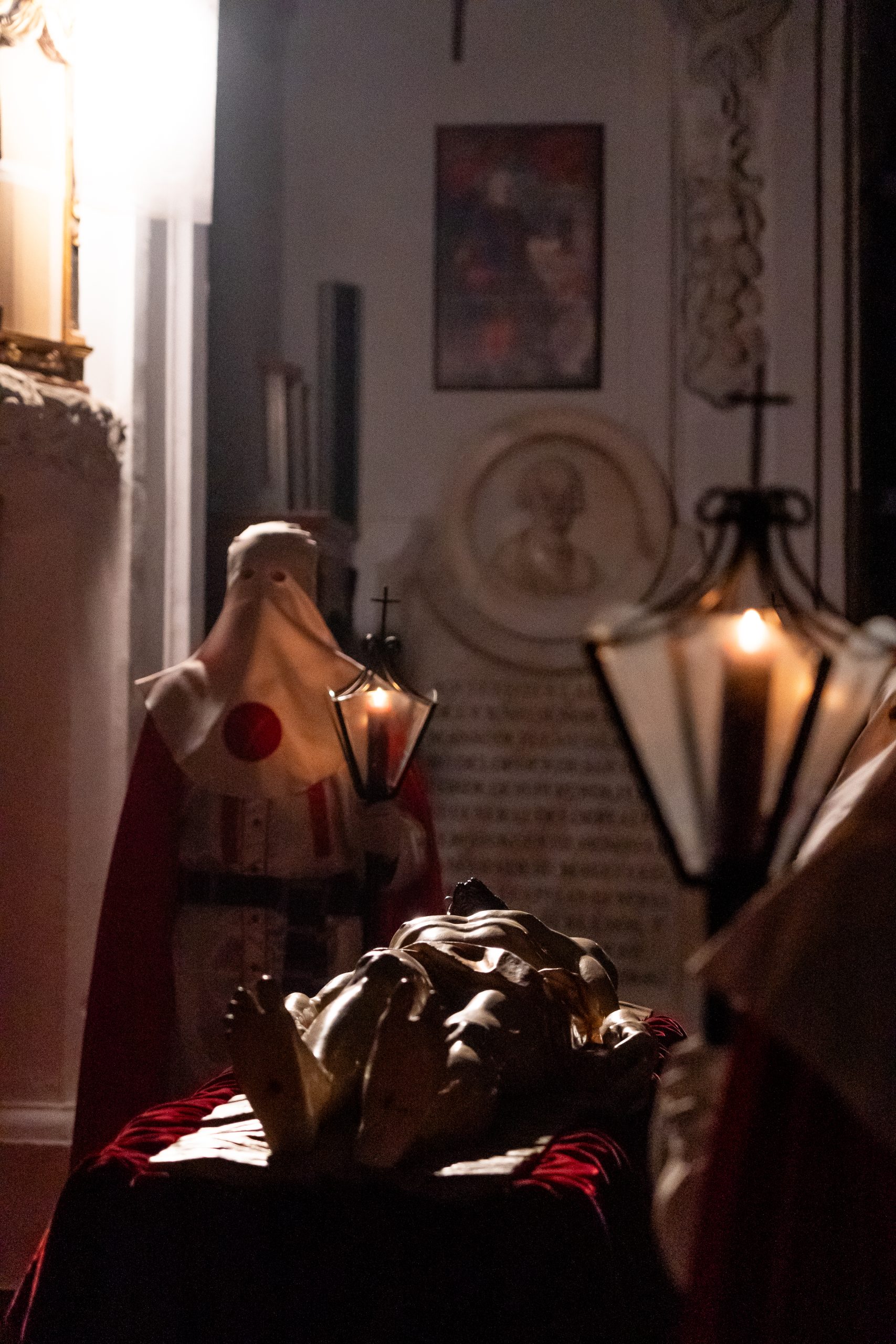
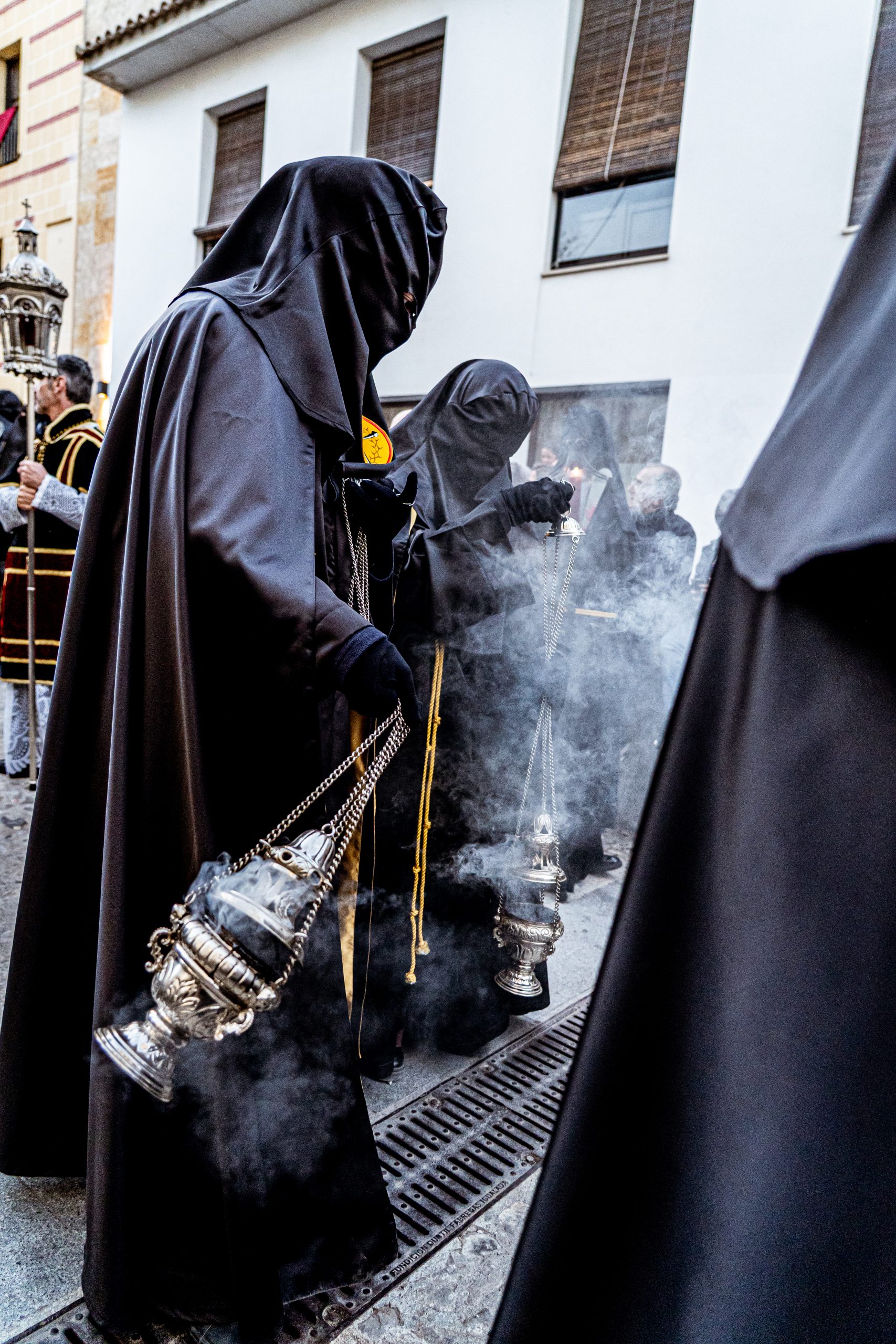
On Easter Thursday night, the figures of the Virgin of Solitude and the Holy Tomb of Christ are displayed in the church of San Pedro, alongside symbols of the cofradía. A all-night candlelit vigil is held before the prostrate figure of Christ, by the Knights of the Holy Tomb. The onlooker cannot help but be moved by the atmosphere, amid Gregorian chants, and the smell of candles and incense.
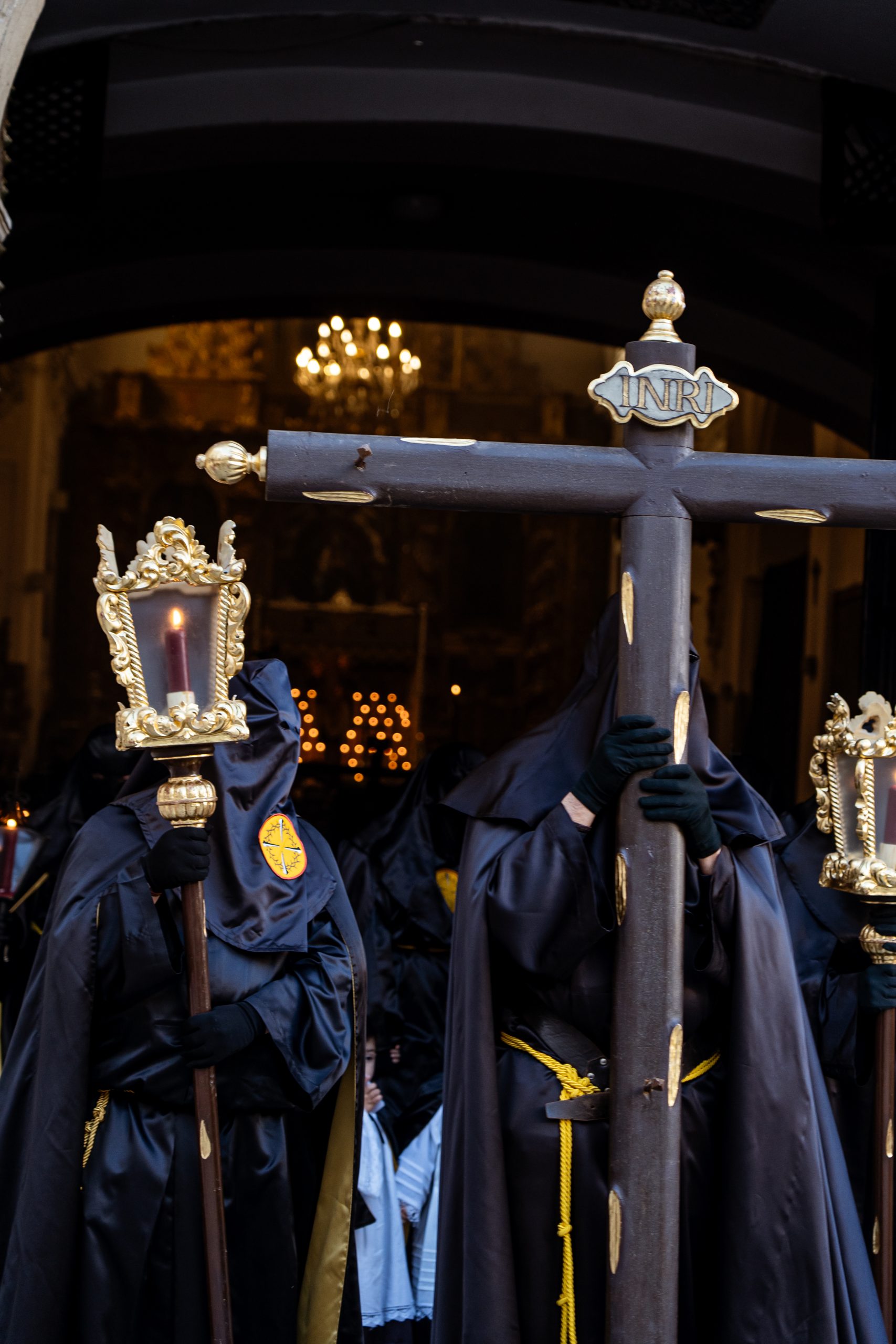
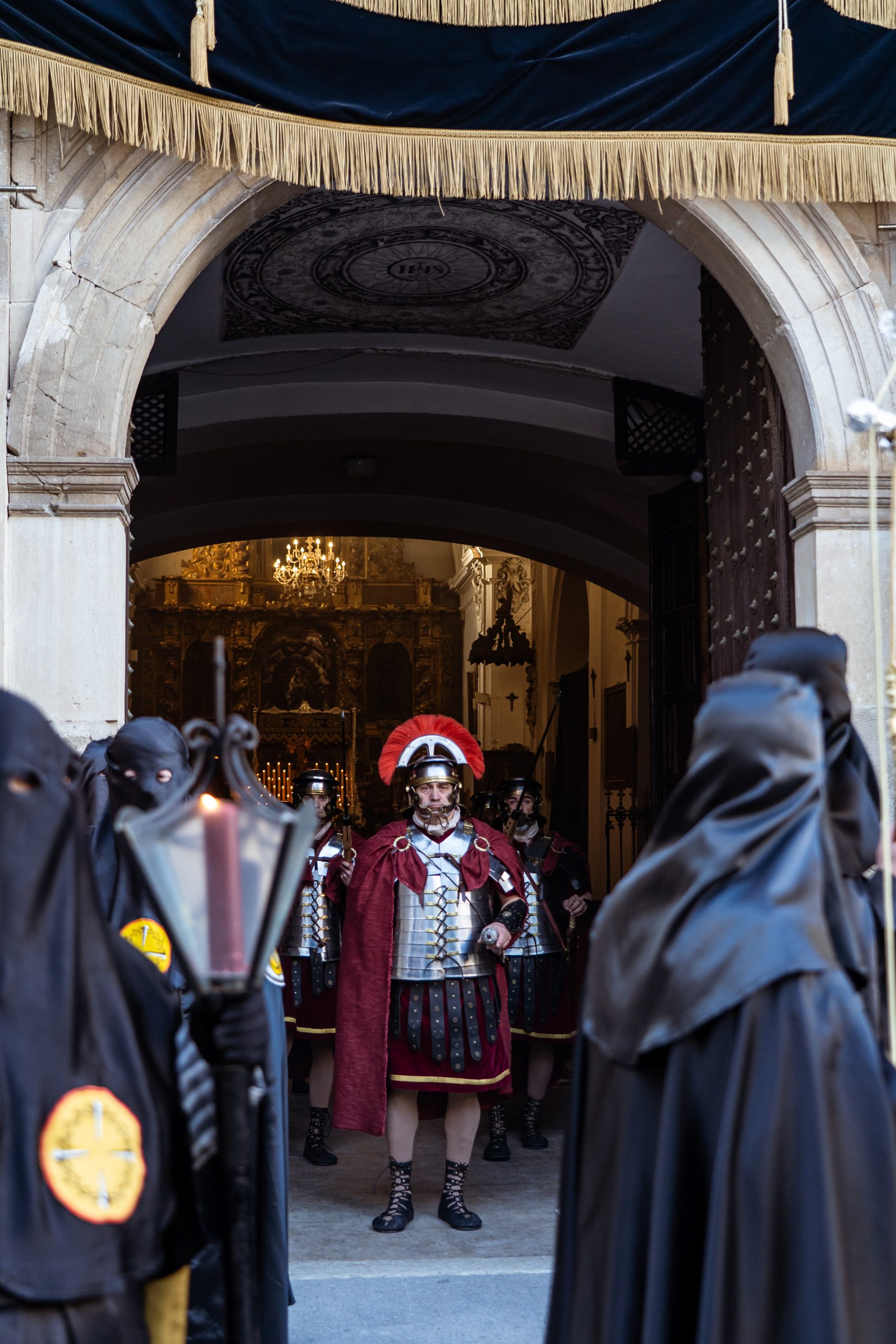
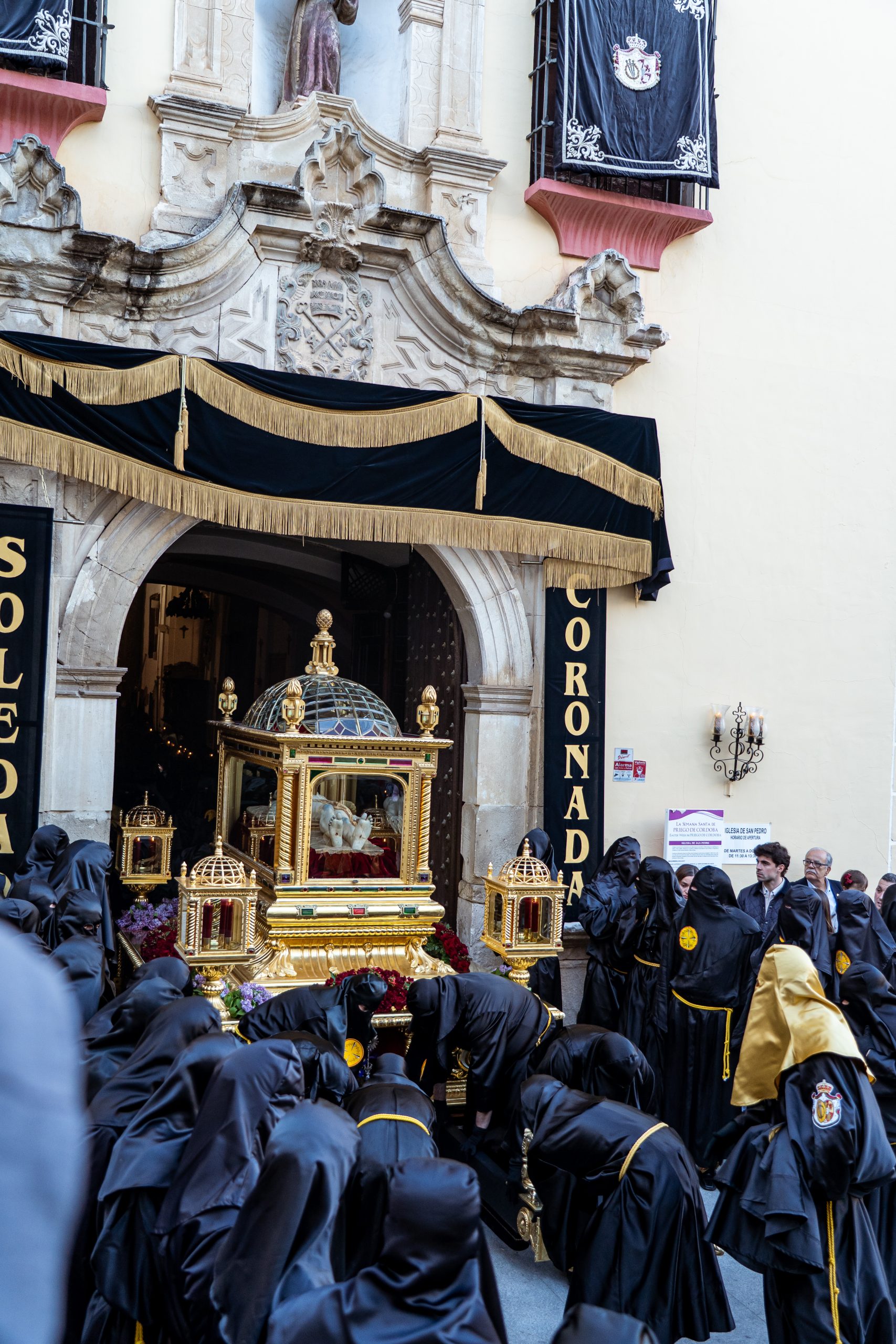
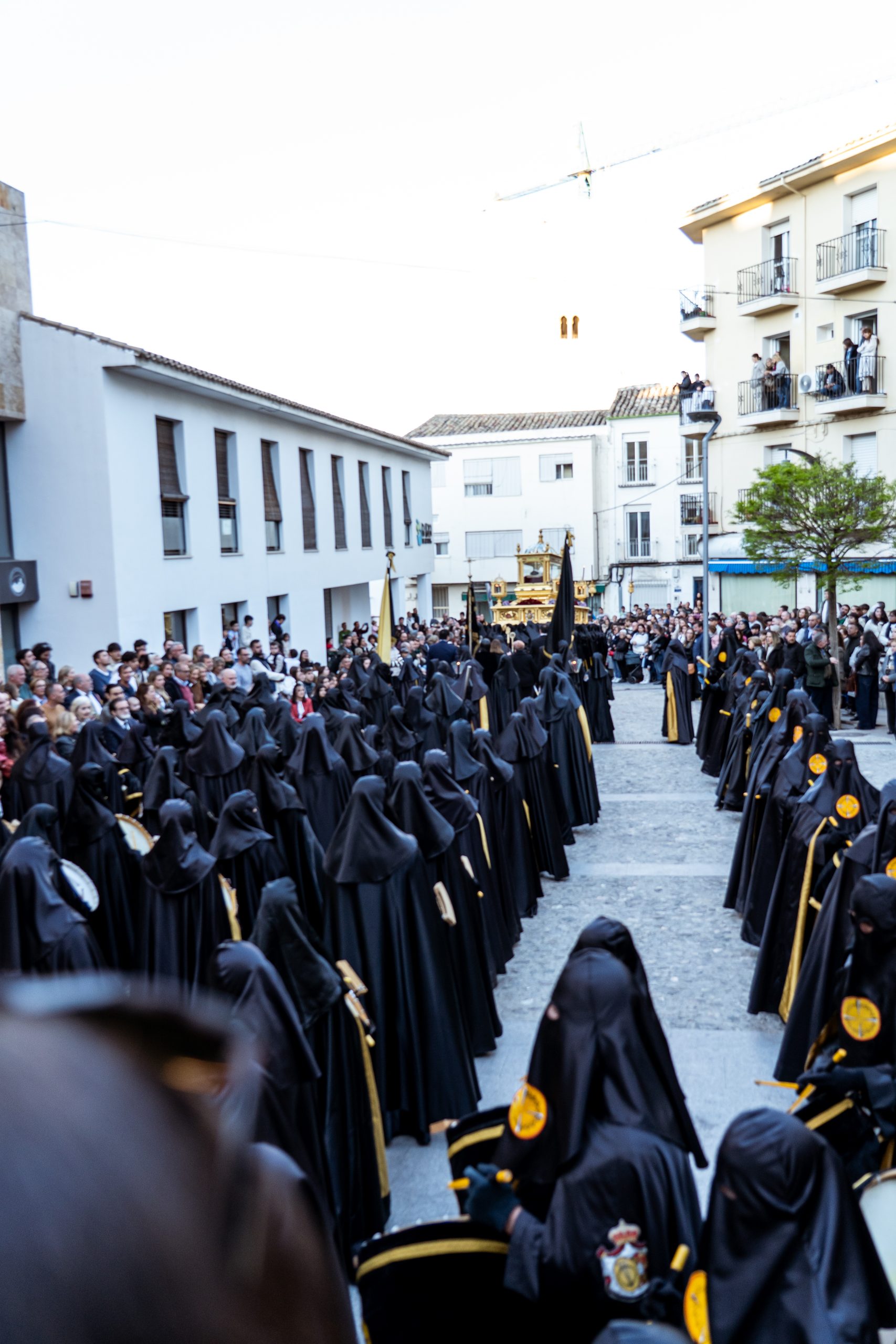
- Cofradía de María Santísima de los Dolores y Cristo de la Buena Muerte
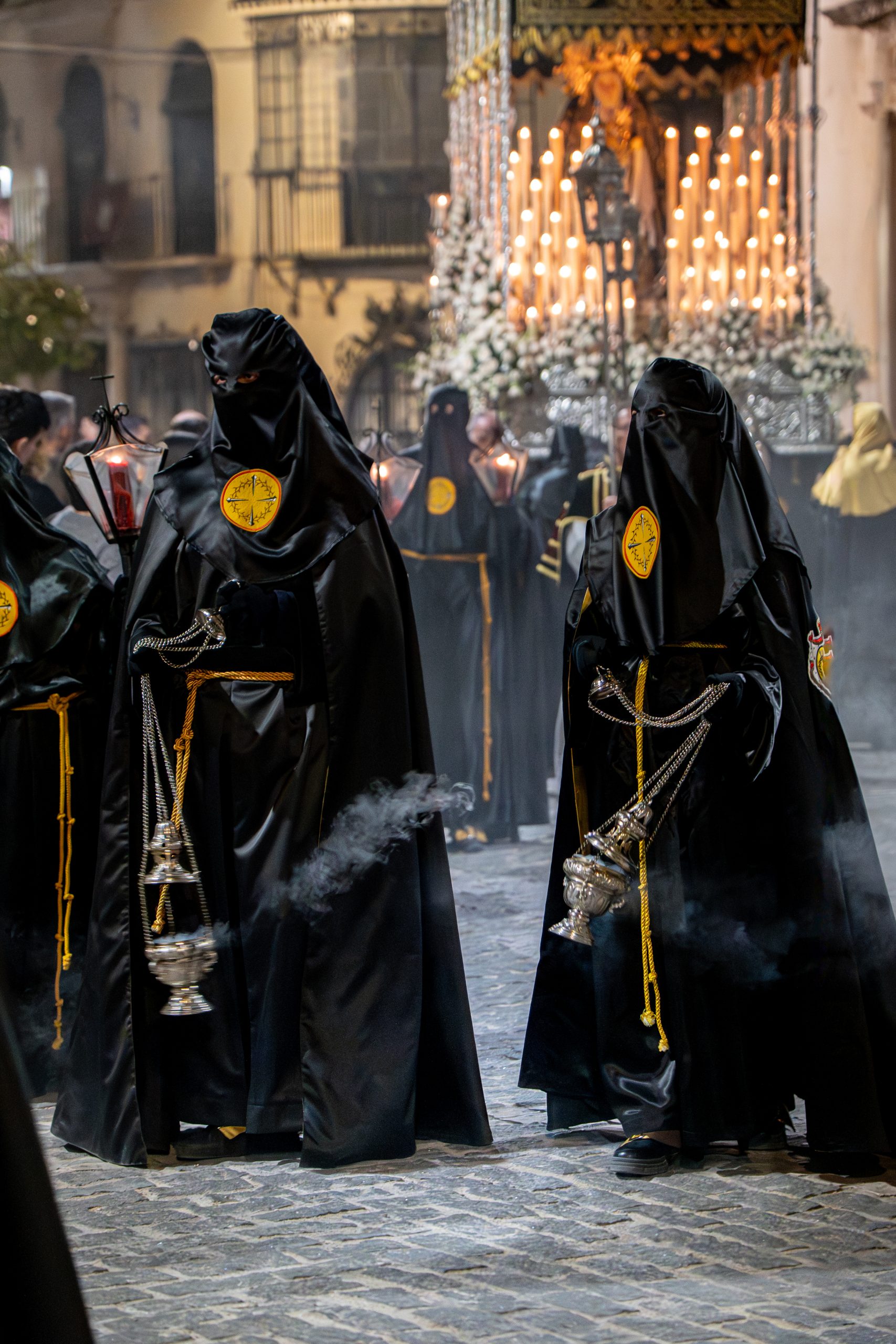
El lunes baja del Calvario la Cofradía de María Santísima de los Dolores y Cristo de la Buena Muerte, que sube de nuevo en procesión de silencio y penitencia, en la madrugada del Viernes Santo.
En junio de 1689, el abad de Alcalá, D. Pedro de Toledo, aprobó las constituciones de la Hermandad de Nuestra Señora de los Dolores que tuvo su sede en el desaparecido templo de Santiago. A partir de aquí, se pierden las referencias hasta 1928, en que ya, en la ermita del Calvario, deciden reorganizarla un grupo de hermanos. En 1931, el Obispo de Córdoba aprueba el reglamento de la Cofradía. Por último, sufre una tercera reorganización a partir de 1969 que es cuando comienza su máximo esplendor.
La imagen de Nuestra Señora de los Dolores se cree que es la que en 1635 fue donada por Marina de Pareja a la ermita del Santo Cristo del Humilladero, “con todos sus vestidos hechos para que se ponga en el altar”. Fue trasladada a la ermita del Calvario en el siglo XVIII cuando se terminó ésta.
Nada se sabe de su autoría, aunque se trata de una imagen de candelero del siglo XVII, que pertenece a la colección de imágenes de vestir que plasman los siete dolores de la Virgen, representados por el corazón llameante atravesado por siete puñales que luce en el centro del pecho. Hasta hace poco, mostraba en sus manos símbolos de la pasión, que se le quitaron en la última restauración realizada en 1978. Ya en 1956, se le había efectuado otra.
En el año 1970, se incorpora a la procesión, desde la iglesia de la Virgen de la Cabeza, el Cristo de la Buena Muerte, talla de la escuela granadina. Procede de la antigua ermita de San Luis. Durante un tiempo, estuvo depositado en el cementerio, hasta que se terminaron las obras de la iglesia de la Virgen de la Cabeza. Según se cree, es del siglo XVII, atribuido por unos a Juan Fernández de Lara y por otros a José de Mora. Iconográficamente se sitúa entre los cristos agonizantes.
Aunque no se especifica documentalmente, parece ser que fue en 1930 cuando la procesión salió por primera vez. Como ya se ha citado, en 1970 se incorporó la imagen del Cristo de la Buena Muerte. Esta procesión, aclamada popularmente como una de las mejores organizadas y de mayor belleza plástica de la Semana Santa prieguense, realiza un doble desfile procesional, bajando el Lunes Santo de la ermita del Calvario a la iglesia de la Asunción y retornando a la una de la madrugada del Viernes Santo ambos pasos a sus respectivas ermitas, en la Procesión del Silencio, que es la procesión oficial de la Cofradía. Los itinerarios que sigue son los siguientes:
Lunes: Calvario, Rute, Virgen de la Cabeza, Estación, Santo Cristo, Málaga, Ancha, Río, Ribera, Corazón de Jesús y Asunción.
Madrugada del Viernes: Sale de la Asunción, Corazón de Jesús, Ribera, Carrera de las Monjas, Lozano Sidro, Virgen de la Cabeza, Rute, veredas del Calvario y ermita.
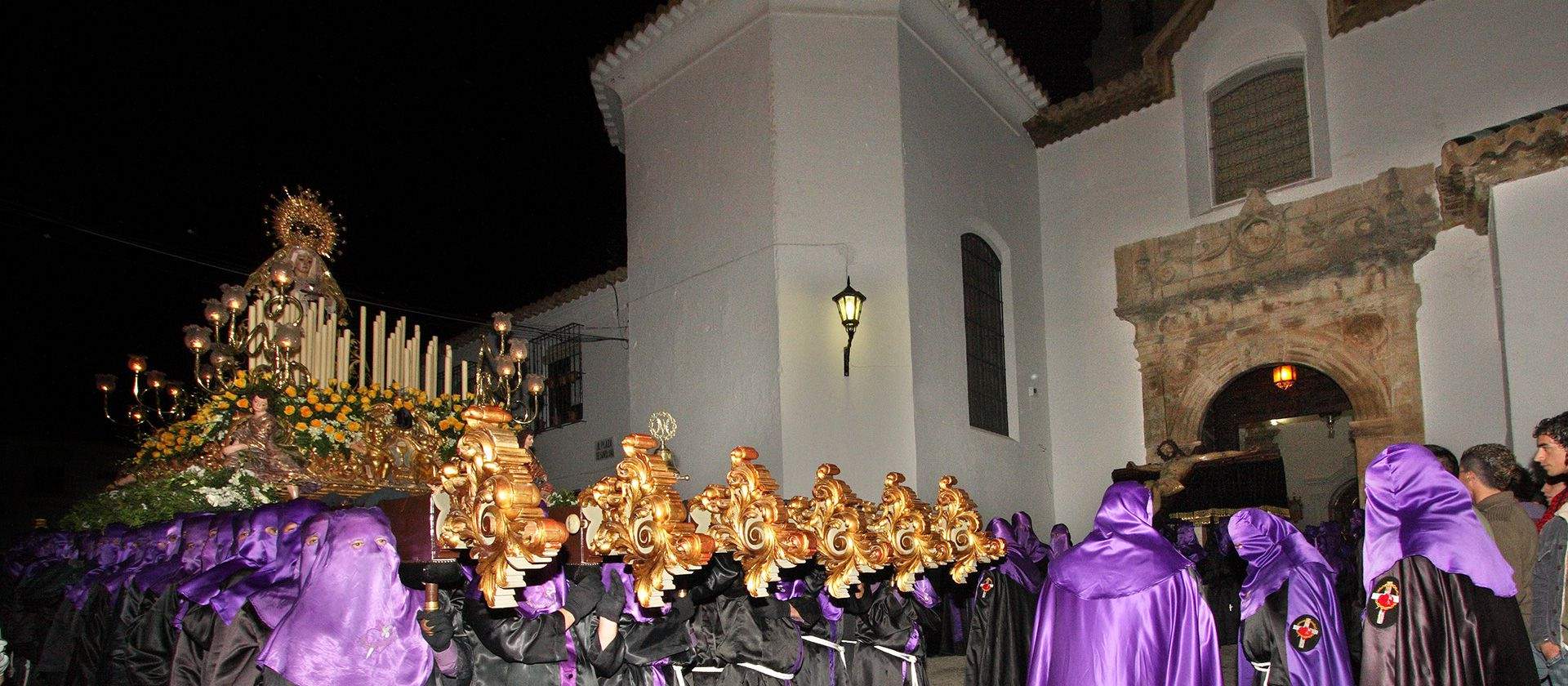
La Virgen procesiona a hombros de sus costaleros que visten túnica negra y capirote morado, siendo unos 110 los que portan el paso que, debido al largo recorrido y al peso, llevan unos 55 relevos. El capataz los dirige con una campana y dependiendo de la maniobra da un toque determinado.
El Cristo es llevado de una forma original, por sólo ocho costaleros. Va flanqueado por cuatro ingentes antorchas que prestan gran vistosidad al paso. El capataz que los dirige, lo hace realizando pequeñas señales con las manos y a veces con la capa.
En 1981, se incorporan a la procesión los “óvalos de los siete dolores” realizados por Manuel Rovira Casañer. Se trata de siete cuadros ovalados, que son llevados por penitentes sobre el pecho, representando los siete dolores de María.
El acompañamiento de la procesión corre a cargo de su banda de tambores que lo hizo por primera vez en 1971. Está compuesta en la actualidad por 38 tambores más el cabo y 12 bombos. El ritmo fue compuesto por Alonso Cano y Antonio López. Esta banda fue la primera que utilizó los famosos “raun” para la salida y entrada de sus imágenes, que son ritmos rápidos y estruendosos que dan especial emoción a esos momentos. También poseen una marcha de la Pasión compuesta para la Hermandad por Francisco José Serrano. En 1991, se introdujo una innovación sin antecedentes en nuestra Semana Santa, que fue la incorporación de seis clarines de fanfarria. Las piezas a tocar, entre las que se encuentra la Marcha del Silencio, han sido adaptadas al ritmo de la banda por Antonio Ureña.
La madrugada del Viernes Santo, en la Procesión del Silencio, la Capilla Musical de la Vía Sacra la acompaña en su subida al Calvario, interpretando una antigua música religiosa que antaño servía de complemento al canto de la Pasión y al rezo del Rosario (Stabat Mater y Miserere).
En cuanto a los cultos previos a la Semana Santa, durante todos los viernes de Cuaresma se realiza el Vía Crucis, terminando éste el viernes de Dolores, tras el cual la Hermandad invita a los asistentes. Posteriormente, se realiza el “Besamanos de la Virgen”. Otro de estos cultos es la realización de un “quinario” la semana que precede a la Semana Mayor.